
How to Choose Your NAD+ Injection Dosage

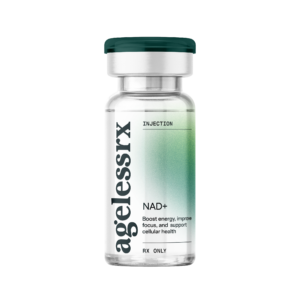
Most people starting NAD+ Injections have one question: how much should I take? The 2.5ml vs. 5ml debate comes up all the time, and there’s no single right answer. Your age, your goals, and how long you’ve been on a protocol all matter. A few simple questions can help you figure out where to start.
Key takeaways:
- Most protocols start at 2.5ml (500mg); clinicians reserve 5ml for those with 4+ weeks of tolerance
- Your vial’s concentration, and not the volume alone, determines how much NAD+ you actually receive per injection
- NAD+ levels drop roughly 50% between your 20s and 50s, making dose timing and frequency as important as volume
- Signs like flat energy, unchanged recovery, or persistent nausea signal your protocol may need a clinician review
Why NAD+ Injection Dosage Matters
NAD+ functions as a coenzyme in hundreds of metabolic reactions. Its levels drop by roughly 50% between your 20s and 50s. That drop affects cellular energy production and DNA repair capacity. Unlike pills and supplements, injections skip digestive breakdown entirely. NAD+ goes straight into circulation, giving you higher bioavailability than oral NAD+ formats. But higher bioavailability doesn’t automatically mean the right dose. Because NAD+ levels vary so much from person to person, the amount that works at one stage of life may not be enough at another. That’s why choosing between 2.5ml and 5ml is more personal than it might first appear.
How to Read Your NAD+ Injection Dosage
NAD+ Injection dosage is measured in a few ways. Getting them mixed up makes it easy to misjudge how much NAD+ you are actually taking.
- Milligrams (mg) refers to the amount of NAD+ compound in the vial, such as 500mg or 1,000mg.
- Milliliters (ml) refers to the liquid volume you draw into the syringe when preparing your dose.
How Concentration Connects Milligrams (mg) to Milliliters (mL)
Your vial’s concentration ties these together. The concentration is set when your product is prepared, so you don’t need to mix anything yourself. A 500mg vial at 250mg/ml means a 1ml injection delivers 250mg of NAD+. A 500mg vial at 500mg/ml means you only need 0.5ml to get that same 250mg dose. Always confirm the concentration on your vial label before drawing a dose.
|
Vial strength |
Concentration |
Dose in ml for 250mg |
Dose in ml for 500mg |
|---|---|---|---|
|
500mg |
250mg/ml |
1ml |
2ml |
|
500mg |
500mg/ml |
0.5ml |
1ml |
|
1,000mg |
500mg/ml |
0.5ml |
1ml |
What the 2.5ml Dose Is Typically Used For
The 2.5ml dose is where most clinicians start people new to NAD+ Injections. At this level, your body gets NAD+ support while you learn how you respond.
This dose works well for:
- General maintenance and everyday energy support, where the goal is steady, ongoing NAD+ availability instead of a rapid increase
- People who are sensitive to supplements or new to injectable protocols
- Those using NAD+ Injections as part of a broader longevity routine
What the 5ml Dose Is Typically Used For
The 5ml dose is generally reserved for people who have spent time on a lower dose and handled it well. Clinicians may consider it when more active repletion is needed. This includes people with greater NAD+ depletion tied to age, chronic health conditions, or other factors that drain NAD+ faster than the body can replace it.
A larger volume does not automatically mean better results, and the dose-response relationship may not be linear. Side effects tend to occur more often at higher doses, with some users reporting injection site discomfort and other symptoms at higher volumes. Moving up before you’ve confirmed clear tolerance adds more risk than benefit, which is why clinicians typically do not recommend starting here.
Factors That Influence Your Ideal NAD+ Injection Dose
A few personal health factors should shape where you begin and how you adjust over time.
- Your age and baseline NAD+ levels matter. NAD+ levels drop as you get older, so older adults often do well at higher doses. Younger users may see results at the lower end of the range.
- Your health goals play a role. General wellness may call for a different dose than recovery, cognitive support, or energy optimization.
- Your injection frequency affects total weekly intake, so spreading doses across 1–3 injections per week can add up differently depending on volume and schedule.
- Prior supplement history is worth considering: if you have used NAD+ precursors like NMN, your body may already have some adaptation.
Talking with a US-licensed medical provider before you start is the best way to match your dose to your own profile.
What to Expect at Different Dosages
At 2.5ml, mild warmth or flushing at the injection site is common and usually brief. At 5ml, those sensations may feel a bit stronger, though they remain mild for most users. How long effects last varies by person. Some report steady energy or mental clarity for several days after a weekly injection, while others notice a more gradual change over time. Frequency plays a role too, since one weekly injection at 5ml works differently than smaller doses spread across the week. Your response over the first few weeks will help show which rhythm suits you best.
Choosing Your Dose
Use these questions as a starting point before you talk with your clinician:
|
Question |
Lean toward |
|---|---|
|
Is this your first month using NAD+ Injections? |
2.5ml |
|
Have you completed 4+ weeks without notable side effects? |
5ml may be appropriate |
|
Is your primary goal maintenance or general longevity support? |
2.5ml |
|
Are you targeting active repletion, energy recovery, or cognitive support? |
5ml worth discussing |
Your answers here are context, not a prescription. A US-licensed medical provider can review your health history alongside these responses before settling on a starting dose.
NAD+ Injection Dosage by Health Goal
Your health goal shapes the conversation you have with your clinician before settling on a starting volume.
Energy and Fatigue Recovery
Most clinicians suggest starting at 2.5ml and watching how energy levels shift over the first few weeks. A limited response, or afternoon fatigue that doesn’t improve, may prompt a move to 5ml.
Longevity and Cellular Repair
Consistent weekly dosing may matter more than peak volume for cellular maintenance. Steady lower doses may support long-term NAD+ availability with fewer side effects that sometimes come at higher volumes.
Cognitive Function
When cognitive support is the main goal, some clinicians lean toward 5ml, especially when brain fog and fatigue overlap. Similar thinking applies with Methylene Blue for cognitive protocols. Response timelines here tend to run longer than with energy goals, and individual variation can be wide.
Signs Your Dose May Need Adjusting
Your body often gives better feedback than any chart. Give yourself at least four weeks at your current dose before drawing conclusions. If your energy hasn’t changed, your mood feels flat, or your body isn’t recovering better after a workout, your dose may be too low. Before raising the dose, it’s worth checking whether your frequency needs adjusting first.
Too much NAD+ can show up as nausea shortly after your injection, flushing that lasts more than a few minutes, or abdominal cramping. Disrupted sleep after NAD+ Injections is another sign worth bringing up with your clinician.
Neither set of signals should lead you to adjust on your own. A clinician reviewing your check-in data is better placed to decide whether to shift the volume, reduce frequency, or hold steady a little longer before making any changes.
Our NAD+ Injection Dosing Approach
Getting NAD+ dosing right is an ongoing process, not a one-time decision. That is the idea behind how AgelessRx builds its NAD+ protocols. Routine check-ins create a feedback loop so that dose decisions stay grounded in how you are actually responding, not in population averages or starting assumptions.
That approach generates real data. Across our patient population, by the third check-in, 83.2% of NAD+ Injection users reported better energy, 74.8% reported improved cognitive function, and 77.6% reported improved physical endurance. Increased energy is the primary reason people start: 47.6% of female users and 41.3% of male users list it as their main goal, and about 74% of our NAD+ users are women with an average age of 48. Results vary by individual, and each check-in is a data point that shapes how the protocol develops from there. The starting dose is never the final answer.
The numbers in any dosage chart are a starting point, not a finish line. NAD+ biology is still an active research area, with scientists continuing to study which tissues respond most to repletion, how delivery route affects cellular uptake, and what long-term supplementation means for aging. That evolving picture is why rigid dose rules rarely hold up. How you feel in the first few weeks matters most, so track your response and review it with a US-licensed clinician. That feedback will tell you far more than any static guideline, and a protocol that grows with your biology is the real goal.
Note: The above statements have not been reviewed by the Food and Drug Administration. This product is not intended to diagnose, treat, cure, or prevent any disease.