What GHK-Cu may support

How GHK-Cu works
Think of GHK-Cu like a repair note the skin already knows how to read. The peptide carries copper to skin cells, where it helps switch on enzymes involved in cellular renewal.1
Applied topically, GHK-Cu may help restore that signal, carrying copper into the repair pathways that remodel collagen and elastin to rebuild youthful structure.
GHK-Cu levels fall about 60% between ages 20 and 60. Human studies.1
GHK-Cu benefits

What we still don’t know
We take skin science seriously
GHK-Cu, guided by experts
GHK-Cu Copper Peptide Cream
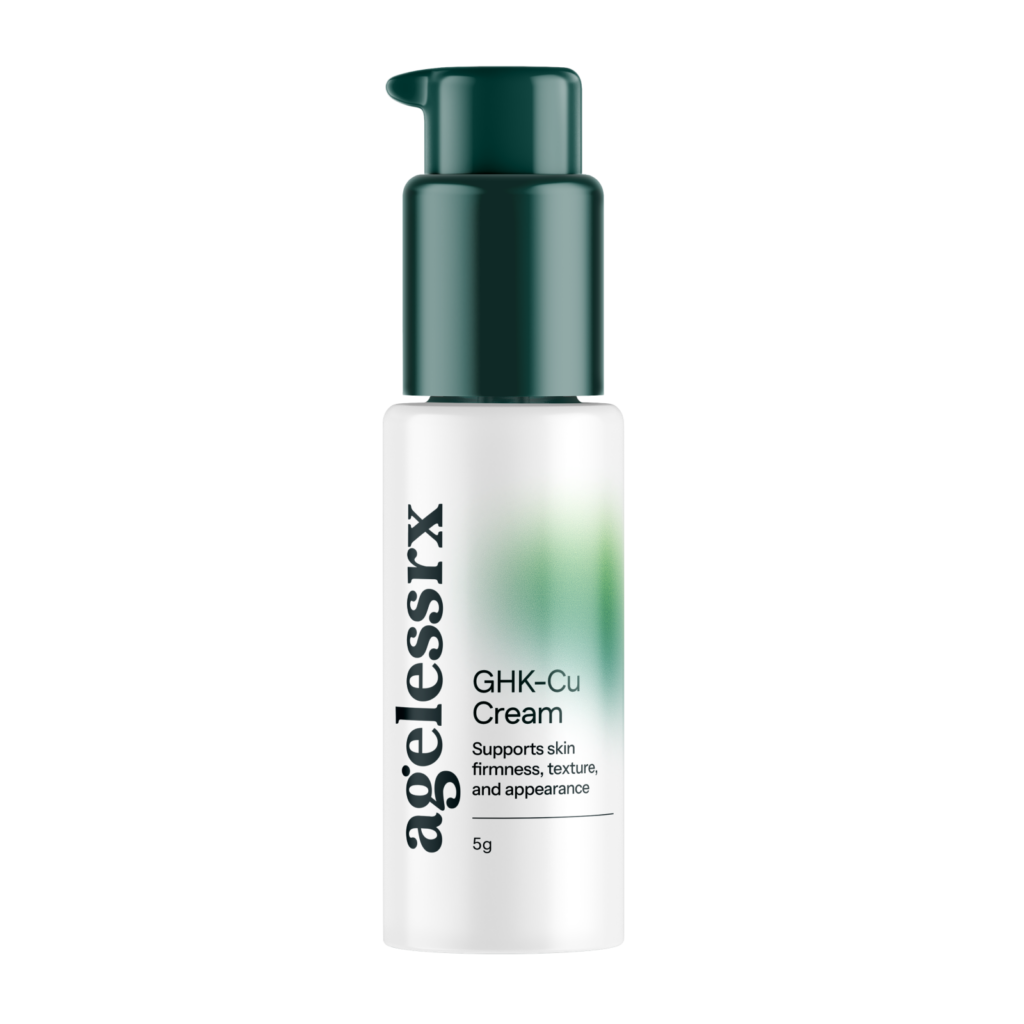
Support firmer, smoother-looking skin with a naturally occurring copper peptide that helps restore the repair and renewal processes that decline with age.

Frequently asked questions
GHK-Cu (copper tripeptide-1) is not FDA‑approved to treat any medical condition. It’s widely used in cosmetic dermatology to support the appearance of the skin, and that’s how AgelessRx offers it.
It’s a small peptide, three amino acids bound to a copper ion, that your body makes naturally. Levels are highest when you’re young and decline with age, which is part of why skin repairs more slowly over time.
Unlike retinoids, GHK-Cu works by signaling your skin’s own repair and collagen pathways. Many people find it gentle and easy to layer into a routine. Follow the product guidance, and check with a provider if you have sensitive skin.
Most people track the look and feel of their skin, firmness, texture, and fine lines, over several weeks. Results build gradually and vary from person to person.
Adults looking to support the appearance of firmer, smoother, more resilient skin, especially as natural peptide levels decline with age.
Often, yes. GHK-Cu is generally well tolerated, but some actives can interact, so follow the product guidance and check with a provider if you use prescription skincare.