Good to know
Glutathione (GSH) is made from three amino acids: glutamate, cysteine, and glycine.
Your cells make it to neutralize reactive oxygen species before they can damage DNA, proteins, and cell membranes, playing an important role in the liver’s natural detoxification pathways.1
Those jobs share a common thread: helping your body defend itself against the oxidative stress that builds over time.
What Glutathione may support


How Glutathione works
Think of oxidative stress like cellular wear and tear. Normal metabolism, inflammation, and other stressors can create reactive oxygen species, unstable molecules that damage important parts of a cell.
Glutathione may help neutralize those molecules before they do damage, then work within the body’s antioxidant system to keep that defense going.1
Glutathione can fall by about 50% in high-stress conditions like rheumatoid arthritis.2

Longevity benefits
Why direct delivery can matter

What we still don’t know

Our research
We’re experts in Glutathione
Our in-house Stanford PhD-led Research Team reviews the evidence behind the therapies we offer and conducts original, peer-reviewed longevity research of its own.
We’re a top 10 finalist team in the $101M XPRIZE Healthspan competition, putting longevity interventions to the test against measurable changes in age-related function.
Our delivery formats and the science behind each

Choose the experts in Glutathione
Glutathione Injection
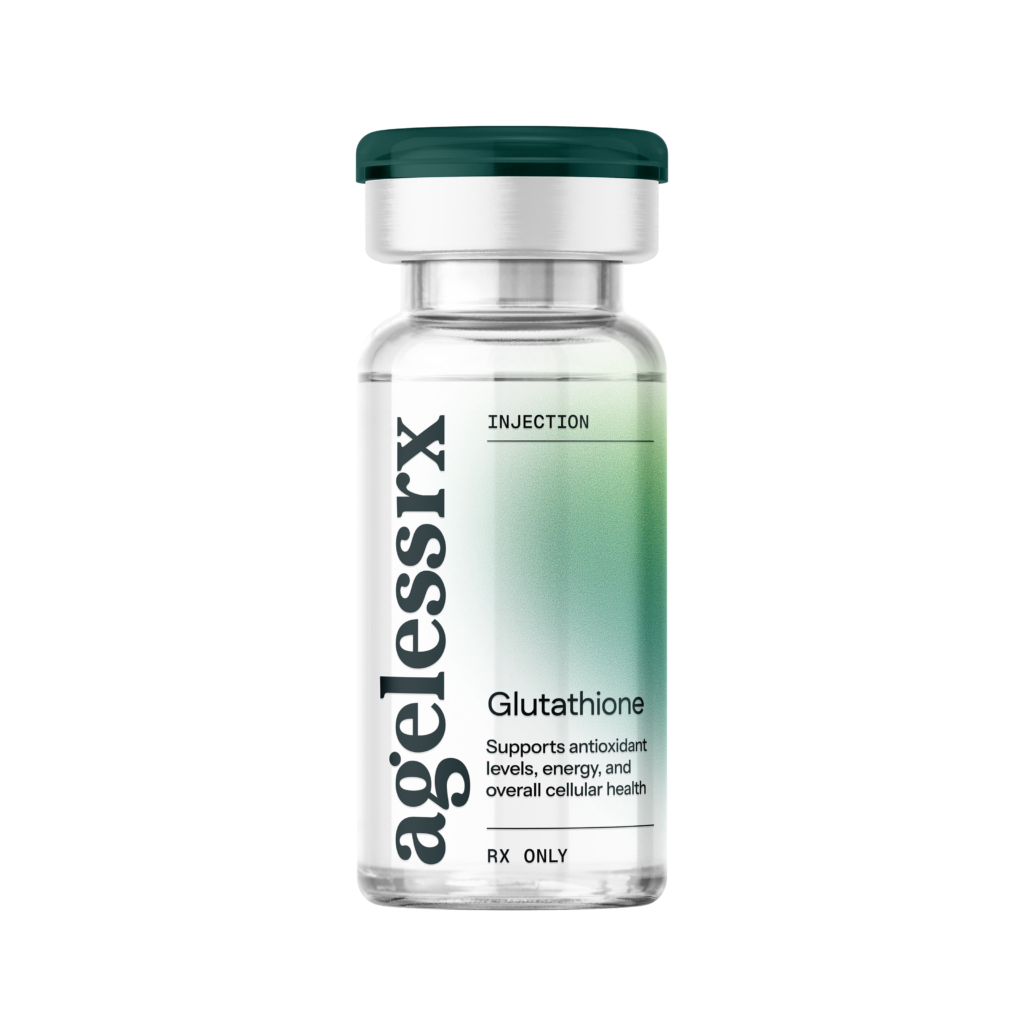
Support energy, immunity, cellular detox, and healthy skin by helping replenish the body’s master antioxidant that naturally declines with age.
Glutathione Nasal Spray
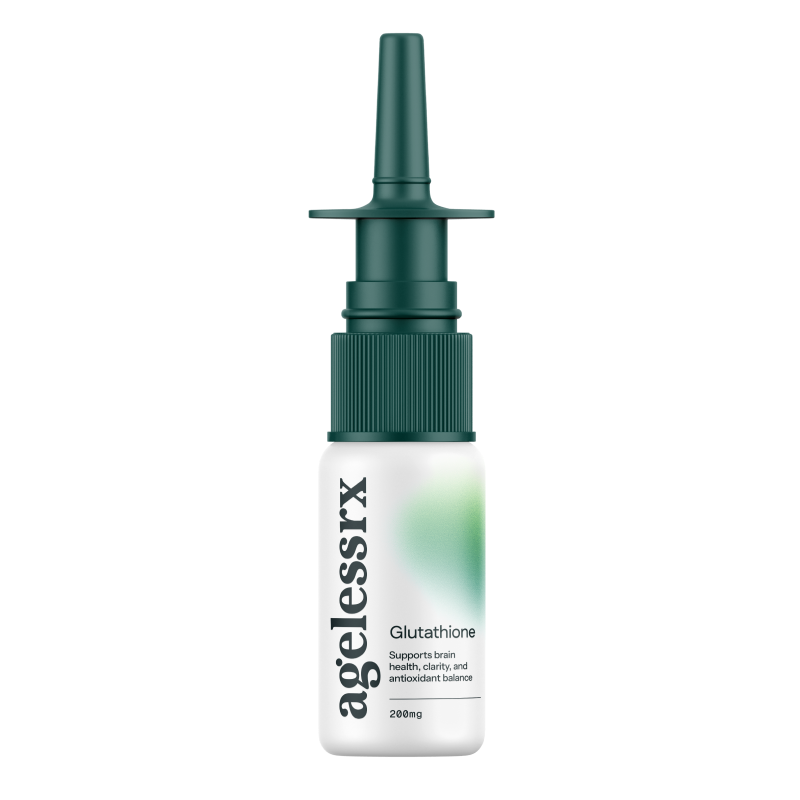
A daily nasal spray that may help support clearer thinking, steadier focus, and brain antioxidant defense when mental fog makes the day feel harder than it should.
Glutathione Patches
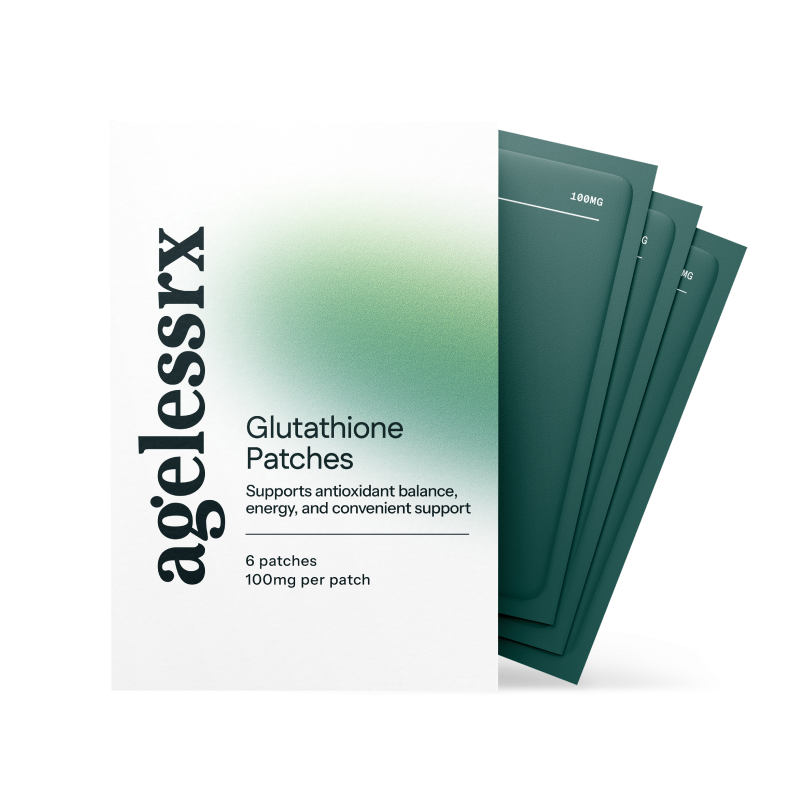
A once-weekly patch for those who want whole-body antioxidant support without adding injections to their routine, helping support energy, detox pathways, and healthy-looking skin.

Frequently asked questions
AgelessRx offers Glutathione as an Injection, Nasal Spray, and Patch because each reaches the body differently.
Injections and patches deliver Glutathione directly, bypassing much of the gut and liver metabolism that limits how much an oral dose absorbs intact.
The nasal spray is designed to skip digestion by a different route. A clinician helps match the format to what a member is looking for.
Oral Glutathione is broken down during digestion before much of it reaches the bloodstream, limiting how much cells actually get. Direct-delivery formats bypass more of that loss.
Our prescription formats are built around this route-of-administration research. The field is still mapping exactly how much of each format reaches target tissue, and we would rather be transparent about that than overstate it.
There is no single at-home test that confirms cellular Glutathione levels are rising. Members and their care team track self-reported changes over several weeks, plus standard bloodwork a clinician may already be monitoring.
Blood Glutathione testing exists in research settings but is not yet a validated individual-level tool.
Glutathione is best suited for adults already caring for themselves through diet, sleep, and exercise who want extra support against oxidative stress.
Glutathione is not a treatment for a diagnosed condition and is not appropriate during pregnancy or breastfeeding without clinician guidance. A clinician reviews each member’s health history first.
NAC is a precursor the body converts into Glutathione through additional steps, similar in concept to how NMN relates to NAD+.
Our formats deliver Glutathione itself more directly, reducing reliance on how efficiently a person converts an oral precursor. This page notes which studies used direct Glutathione and which used a precursor, since the two are not interchangeable.
Glutathione status depends on someone’s own baseline and how efficiently their body makes, recycles, and uses it, which is affected by inflammation, toxin exposure, and other individual factors.
People who are more genuinely depleted to start with often notice more, compared with those who have less room to improve.
This is why we do not treat Glutathione as a one-size-fits-all protocol, and why tracking your own markers over time matters more than chasing a universal target.