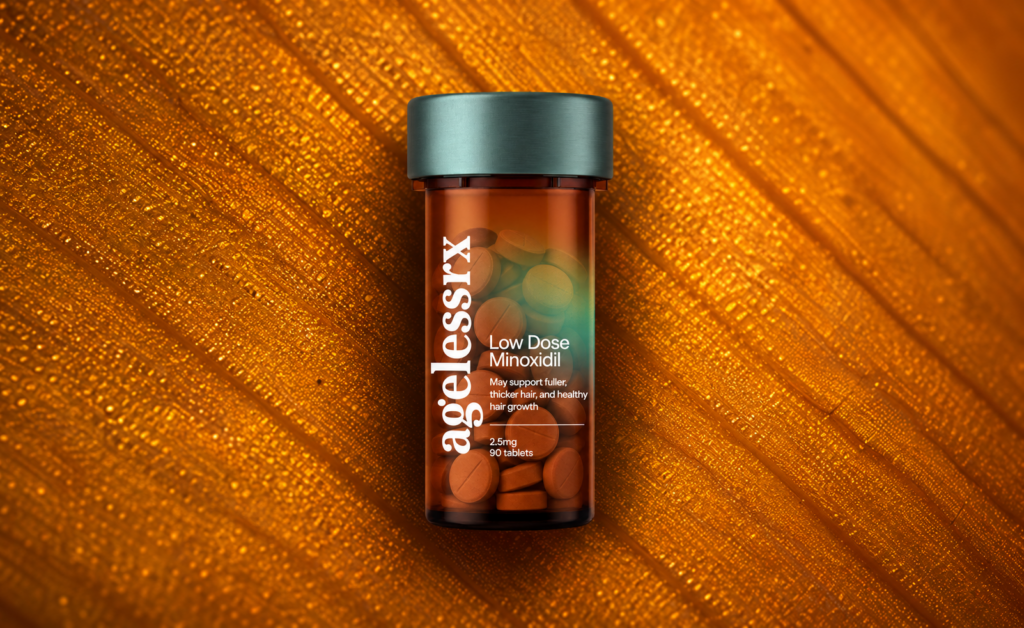
Low-dose Oral Minoxidil: What Research Reveals About Results

Oral Minoxidil is a prescription pill originally designed to lower blood pressure, but researchers found it could also promote hair growth. Today, it’s prescribed off-label at lower doses to help treat hair loss. Published research suggests low-dose Oral Minoxidil may help many people, though factors like individual enzyme activity and cardiovascular health can influence how well it works. So, what does the research actually tell us about its effectiveness, results, and risks?
Key Takeaways:
- Oral Minoxidil may promote hair growth and improve scalp blood flow
- Hair loss doses are lower than blood pressure doses and require clinician guidance
- Visible hair regrowth may take several months
- Unwanted face or body hair growth is a potential side effect
- Combining treatments may help target different causes of pattern hair loss
What Is Oral Minoxidil?
Oral Minoxidil is a prescription medication originally developed to treat high blood pressure. But during early clinical trials, researchers noticed something unexpected: patients were growing more hair. This discovery eventually led clinicians to prescribe low-dose Oral Minoxidil off-label for hair loss.
So, how does it help? Oral Minoxidil works by opening potassium channels and widening blood vessels, which may improve blood flow to the scalp and extend the active growth phase of hair follicles. In other words, it may help hair grow thicker and longer, particularly in follicles affected by hair thinning and hair loss. However, Oral Minoxidil is not FDA-approved for hair loss, so its use for this purpose is considered off-label.
How Does Oral Minoxidil Work for Hair Loss?
Interestingly enough, Oral Minoxidil needs to be activated by the body before it can work. Special enzymes called sulfotransferases help convert it into minoxidil sulfate, its active form. Once activated, it may improve blood flow around hair follicles, extend their growth phase, and help prevent the shrinking of follicles associated with pattern hair loss.
Why Results Vary From Person to Person
Not everyone responds to Oral Minoxidil the same way. Differences in sulfotransferase enzyme activity may help explain why. Research has connected higher enzyme activity to better responses to topical minoxidil, although its role in Oral Minoxidil results is less clear. As a result, two people using the same treatment may see very different results.
How Does Oral Minoxidil Compare to Topical Minoxidil for Hair Loss?
Both Oral Minoxidil and topical minoxidil work in similar ways to promote hair growth. The biggest difference is how they reach your hair follicles.
Topical minoxidil is applied directly to the scalp, where absorption can vary depending on the concentration, how often it’s applied, and the condition of your skin. Oral Minoxidil, on the other hand, travels through the bloodstream to reach hair follicles throughout the body. This may help explain why some people who see limited results with topical minoxidil respond better to the oral form.
But there’s a trade-off. Because Oral Minoxidil circulates throughout the body, it may be more likely to cause unwanted face or body hair growth, known as hypertrichosis. It can also affect cardiovascular health, with potential side effects including fluid retention and changes in heart rate, particularly at higher doses.
|
Factor |
Oral Minoxidil |
Topical Minoxidil |
|---|---|---|
|
Absorption |
Consistent, systemic |
Variable, scalp-dependent |
|
Convenience |
Once-daily pill |
Daily application required |
|
Hypertrichosis risk |
Higher |
Lower |
|
Cardiovascular exposure |
Present |
Minimal |
|
Scalp coverage |
Unknown/variable |
Application-dependent |
|
Non-responder rescue |
May help topical non-responders |
First-line standard |
For some people, taking Oral Minoxidil once daily may be easier than applying topical minoxidil once or twice a day. However, because Oral Minoxidil affects the entire body, clinician guidance is especially important to help manage potential side effects.
What Does Research Show About Oral Minoxidil Dosing for Men and Women?
Research on Oral Minoxidil for skin and hair health has focused on doses much lower than those traditionally used for high blood pressure. Doses often differ between men and women, with studies testing a range of amounts for each.
Research suggests that even lower doses may support meaningful hair growth. Higher doses may increase the risk of side effects without necessarily producing better results.
Because Oral Minoxidil is prescribed off-label for hair loss, a clinician determines the appropriate starting dose based on factors like cardiovascular health, sex, and individual tolerance. Doses may then be adjusted based on how someone responds.
How Effective Is Oral Minoxidil? What the Evidence Shows
Research on low-dose Oral Minoxidil is promising. Studies have reported improvements in hair density and overall hair growth in both men and women, although results vary and more research is needed.
One thing to keep in mind is that hair growth takes time. Some people experience increased shedding when starting treatment as their hair follicles adjust to a new growth cycle. While this can be discouraging, it doesn’t necessarily mean the treatment isn’t working. Visible regrowth may take several months, with improvements building over time through consistent use.
Of course, everyone’s experience is different. Some people may notice thicker, fuller hair, while others see more modest changes. Individual factors, including the type and severity of hair loss, may influence how well someone responds to Oral Minoxidil.
Which Types of Hair Loss Might Respond to Oral Minoxidil?
Most research on Oral Minoxidil has focused on androgenetic alopecia, also known as pattern hair loss. This includes both male pattern baldness and female pattern hair loss.
Beyond pattern hair loss, researchers have also explored Oral Minoxidil for other types of hair loss, including:
- Chronic telogen effluvium: Ongoing hair shedding lasting more than six months, often seen in women. Oral Minoxidil may help support a more stable hair growth cycle.
- Alopecia areata: An autoimmune condition that causes patchy hair loss. Early research suggests possible benefits, but evidence remains limited.
- Scarring alopecia: Conditions where inflammation and scarring permanently damage hair follicles. Oral Minoxidil may support growth from surviving follicles, but it cannot reverse existing scarring.
Oral Minoxidil works on existing hair follicles, so if follicles have been permanently destroyed, treatment is unlikely to restore hair growth in those areas.
What Are the Side Effects of Oral Minoxidil?
One of the most common side effects of Oral Minoxidil is hypertrichosis, or unwanted hair growth on the face or body. Because Oral Minoxidil reaches hair follicles throughout the body, it can encourage growth beyond the scalp. This is often mild and may improve after stopping treatment.
Other possible side effects include:
- Fluid retention: Swelling, particularly around the ankles.
- Faster heart rate or palpitations: A racing or noticeably pounding heartbeat.
- Dizziness or lightheadedness: Especially when standing up quickly.
- Headaches: Often temporary, particularly when starting treatment.
It’s also important to understand the cardiovascular risks. Oral Minoxidil carries an FDA boxed warning for serious heart-related effects, including pericardial effusion (fluid buildup around the heart). These risks were identified primarily during treatment for high blood pressure at much higher doses.
Although hair loss doses are much lower, serious side effects are still possible for individuals with heart conditions. This is why a clinician should review your cardiovascular history before prescribing Oral Minoxidil.
Is Low-Dose Oral Minoxidil Safe for Long-Term Use?
Research suggests that low-dose Oral Minoxidil is generally well tolerated by many patients, making it a promising option for ongoing hair loss management. While long-term safety research is still developing, existing studies and clinical experience offer encouraging insights into its use.
With clinician guidance, low-dose Oral Minoxidil can be part of a long-term hair care routine. Your provider may recommend periodic check-ins to monitor blood pressure, heart rate, and any side effects, helping confirm treatment continues to be appropriate for you.
For people with pattern hair loss, consistency is especially important. low-dose Oral Minoxidil supports hair growth while you’re taking it, so continuing treatment is typically necessary to maintain results. Stopping treatment may gradually reverse some of the progress you’ve made.
Who Should and Should Not Use Oral Minoxidil?
Oral Minoxidil may be a convenient option for adults experiencing pattern hair loss or ongoing hair shedding, especially those who haven’t seen their desired results with topical treatments or prefer a daily oral medication.
As with any prescription treatment, finding the right fit starts with understanding your health history. Because Oral Minoxidil can affect blood pressure and circulation, a clinician will review your medical background to determine whether it’s appropriate for you.
Certain conditions may require additional consideration or make Oral Minoxidil unsuitable, including:
- Previous heart complications: Such as pericardial effusion (fluid around the heart) or pericarditis (inflammation around the heart)
- Serious heart conditions: Including heart failure or a recent heart attack
- Low blood pressure: Or medications that lower blood pressure
- Kidney problems: Which may increase the risk of fluid retention
- Pregnancy or breastfeeding: Oral Minoxidil is generally avoided due to potential risks and limited safety data
Everyone’s health history is different, which is why personalized care matters. A clinician can review your medical history, current medications, and overall health to help determine whether Oral Minoxidil is a safe and appropriate option for your hair growth goals.
Can Oral Minoxidil Be Combined with Other Hair Loss Treatments?
Yes! Oral Minoxidil can be combined with other hair loss treatments under clinician guidance. Since hair loss often involves several underlying factors, combining treatments that work in different ways may help support better results.
For pattern hair loss, clinicians sometimes pair Oral Minoxidil with medications like finasteride or dutasteride. While Oral Minoxidil helps support the hair growth cycle, finasteride and dutasteride reduce dihydrotestosterone (DHT), a hormone connected to shrinking hair follicles. Together, these treatments may target different factors contributing to hair loss, although results vary.
For women with pattern hair loss, spironolactone may also be considered. This medication helps block the effects of certain hormones that contribute to hair thinning. When combined with Oral Minoxidil, a clinician may monitor blood pressure and electrolyte levels to confirm treatment remains appropriate.
Combining Oral and Topical Minoxidil
What about combining oral and topical minoxidil? While it’s possible, research hasn’t clearly shown that using both provides better results. Combining them may also increase the likelihood of unwanted body hair growth, so clinicians may recommend switching to Oral Minoxidil instead of using both.
The best approach depends on your individual needs. A clinician can help determine which treatments work well together while considering potential side effects and your overall health.
Final Thoughts on Oral Minoxidil Side Effects and Effectiveness
Hair thinning can be frustrating, especially when you’re not sure which treatments actually work. Fortunately, research on Oral Minoxidil offers some encouraging findings. Studies suggest that lower doses may help improve hair density and support regrowth in both men and women, although results vary.
Like any prescription medication, Oral Minoxidil has potential side effects, and finding the right treatment depends on your health history, goals, and how your body responds.
If you’re ready to look into your options, a licensed provider can help you decide whether low-dose Oral Minoxidil makes sense for you. With the right guidance and a little patience, you can take a more informed approach to supporting your hair health.
Note: The above statements have not been evaluated by the Food and Drug Administration. This product is not intended to diagnose, treat, cure, or prevent any disease.