
Thousands Report GLP-1 Benefits Beyond Weight Loss

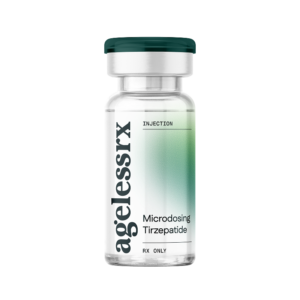
For years, GLP-1 medications have been discussed mainly through two lenses: weight loss and blood sugar control.
But a broader story is rapidly forming.
A recent New York Times feature highlighted what many patients and clinicians are now seeing in real life: people taking GLP-1s are reporting unexpected health benefits that go far beyond appetite and weight.
Here’s what we’ll cover in this blog post:
- What GLP-1 benefits patients are reporting beyond weight loss
- How GLP-1s address a broad range of health conditions and symptoms
- Why lower dose GLP-1 protocols are gaining attention
- How Microdosing GLP-1 may fit in your longevity protocol
What benefits are GLP-1 patients reporting beyond weight loss?
Nearly one in eight adults in the U.S. has now taken a GLP-1, that’s roughly 40 million people. With that many data points, patterns of broader health benefits are emerging beyond what clinical studies have been able to capture.
Among more than 2,000 GLP-1 users surveyed by the New York Times:
- 59% reported better productivity
- 45% noticed better memory
- 40% saw improvements in fertility
And that barely scratches the surface.
Patients are reporting unexpected benefits beyond what the drug was originally prescribed for, many happening before meaningful weight loss, including:
- Less arthritic joint pain
- Reduced migraines
- Decreased anxiety and brain fog
- Relief from irritable bowel and long-COVID symptoms
- Less addiction to drugs, alcohol, gambling, and social media
- Improved menopausal symptoms
And most surprising? Nearly two-thirds of the surveyed individuals said they would continue the medication even if it didn’t deliver on weight-loss benefits.
The science is still developing, but emerging research is beginning to offer a plausible explanation for why so many people are reporting benefits that extend beyond weight loss.
GLP-1 weight loss benefits are due to binding receptors in the gut and brain that regulate appetite, insulin response, and blood sugar regulation.
But GLP-1 receptors are also found on cells throughout the body, including the heart, immune system, blood vessels, and several brain regions. Activating these receptors may influence several biological pathways that regulate cellular repair, metabolic resilience, hormone balance, reward signaling, and inflammation.
Where real-world stories meet the science
The New York Times essay described the use of GLP-1s as a kind of large-scale real-world experiment. And behind each datapoint is a fascinating story of how they have transformed patients’ lives.
Some of these benefits may come from weight loss, improved blood sugar control, or lifestyle changes that happen alongside GLP-1 treatment. But the number and range of reports, often independent of weight loss, have made researchers ask a deeper question: could GLP-1s be acting on a shared root cause across several chronic conditions?
Intriguingly, recent evidence suggests a unifying mechanism through which GLP-1s may support their broad range of patient-reported benefits. Arthritis, alopecia, long-COVID, and neuropsychiatric disorders have a common biological driver: chronic inflammation.
How do GLP-1s reduce inflammation?
Chronic low-grade inflammation is one of the major hallmarks of aging associated with metabolic dysfunction, joint pain, cardiovascular disease, cognitive decline, fatigue, and many inflammatory syndromes. In fact, it’s such a common feature of age-related symptoms and diseases that researchers have coined the term “inflamm-aging”.
Research suggests that GLP-1 drugs may help regulate systemic inflammation:
- Indirectly: through weight loss and reduced visceral fat and blood sugar, factors that can drive inflammation when present in excess.
- Directly: by activating receptors in the brain and immune cells that quiet pro-inflammatory signaling and support a more balanced immune tone, like an immune reset.
Large, long-term outcome studies show that GLP-1 therapies improve outcomes and reduce the incidence of diseases closely linked to inflammation, including osteoarthritis, cardiovascular disease, fatty liver disease, chronic kidney disease, Alzheimer’s, and autoimmune conditions.
Importantly, many of the anti-inflammatory benefits of GLP-1 are observed at low doses or independent of meaningful weight loss.
This early clinical observation, combined with increased accessibility, is what popularized the strategy of Microdosing GLP-1.
Why are people interested in microdosing GLP-1 for longevity?
On the surface, arthritis, long COVID, addiction, fertility issues, fatigue, and brain fog look like separate problems. And clinically, we often label and treat them separately.
But biologically, many of these conditions share overlapping drivers:
- chronic inflammation
- immune dysregulation
- insulin resistance
- altered brain reward signaling
- mitochondrial stress
- hormone imbalance
GLP-1s may be effective for so many different conditions because they target shared biological pathways that contribute to many age-related and inflammation-linked conditions.
That is why Microdosing GLP-1 has become so interesting. Lower-dose protocols may allow patients not seeking significant weight loss to explore the broad range of health benefits of GLP-1s while aiming to reduce side effects, preserve muscle, and keep treatment aligned with their long-term health goals.
How Microdosing GLP-1 may fit in your longevity protocol
GLP-1 weight-loss protocols are designed for people who are overweight or obese and involve gradually increasing to a standardized maintenance dose that supports the patient’s weight loss goals.
Microdosing GLP-1 takes a different, more nuanced strategy that involves the clinician and patient working together to find the lowest effective dose to support personal goals such as improved mental clarity and energy, reduced inflammation, improved cardiometabolic health, moderate weight loss, or disease prevention and longevity.
The key with Microdosing GLP-1 protocols is not simply taking less, it’s measuring more. Whether that be metabolic labs, inflammatory blood markers, biological age clocks, or symptom check-ins – the measurement is what guides the protocol.
This is how we’ve developed our Microdosing GLP-1 protocol at AgelessRx: personalized, clinician-guided, prevention-focused, and backed by real-world outcomes from thousands of patients.
We’re also running one of the first clinical trials studying Microdosing GLP-1 for longevity, exploring how it improves inflammation, pain, brain fog, metabolic health, and advanced biomarkers of biological aging.
Our research is helping build the future of GLP-1 care, advancing the science so we can develop smarter, more personalized Microdosing GLP-1 protocols built for disease prevention and longevity.
Learn more about Microdosing GLP-1 and see if it fits your longevity goals.
–
Note: The above statements have not been evaluated by the Food and Drug Administration. This product is not intended to diagnose, treat, cure, or prevent any disease.