
Wolverine Stack: What Research Shows About BPC-157 and TB-500

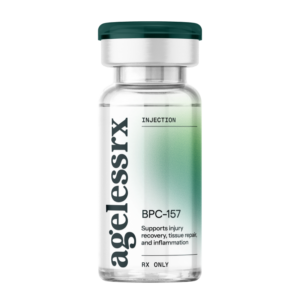
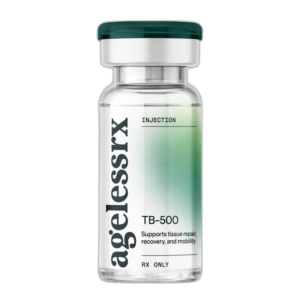
The Wolverine Stack combines BPC-157 and TB-500, two peptides that have gained attention for their potential role in recovery and tissue repair. But does the research actually support the hype? The short answer is that the preclinical data is genuinely interesting, while human research remains sparse. The regulatory picture has also shifted in ways worth understanding. Here’s what the research actually tells us about BPC-157 plus TB-500, where the evidence falls short, and what to know before forming an opinion on the Wolverine Stack.
Key Takeaways:
- BPC-157 and TB-500 make up the “Wolverine Stack”
- Human research on the combination is extremely limited
- Both peptides received FDA advisory committee recommendations for inclusion on the 503A Bulk Drug Substances list
- AgelessRx currently offers both BPC-157 and TB-500
What Is the Wolverine Stack?
The Wolverine Stack is an informal name for a peptide combination of BPC-157 (Body Protection Compound-157) and TB-500, a synthetic fragment of Thymosin Beta-4. The name is a nod to Marvel’s Wolverine and his famous ability to heal quickly, which helps explain why this combination has gained so much attention in recovery and biohacking communities.
The idea behind combining BPC-157 and TB-500 is that the two peptides may play complementary roles in tissue repair. BPC-157 research has focused on signaling involved in repair at the site of injury, while TB-500 research has looked at processes involved in cell movement and organization. Researchers are interested in whether one could help create a more favorable environment for repair while the other helps repair-related cells get where they need to go.
While the proposed mechanisms are promising, more human research is needed to understand how these peptides work together. Neither peptide is FDA-approved, and most existing evidence comes from preclinical studies rather than controlled human trials.
How Does BPC-157 Work?
BPC-157 is a synthetic 15-amino-acid peptide based on a protein sequence found in gastric juice. Researchers have studied BPC-157 primarily in preclinical models, looking at its potential effects on tissue repair, new blood vessel formation, nitric oxide signaling, and inflammation across muscle, tendon, ligament, and gastrointestinal tissue.
In rodent studies, the picture has been fairly consistent. BPC-157 appears to possibly influence several processes involved in healing, including cell migration, blood vessel formation, and inflammatory signaling. Together, these mechanisms may help create an environment that supports tissue repair after injury.
The important caveat is that human research remains very limited. A small clinical case series reported symptom improvement in patients with interstitial cystitis following a procedure involving BPC-157 injections. A separate retrospective case series reported reduced knee pain in patients who received BPC-157 alone or with TB-500. These findings are interesting, but studies this small cannot tell us whether BPC-157 is broadly effective or how reliably these results would translate to larger populations.
How Does TB-500 Work?
TB-500 is a synthetic peptide corresponding to residues 17 through 23 of the full Thymosin Beta-4 (TB4) protein. That may sound like a complicated technical distinction, but it’s an important one when weighing the research.
TB-500 and full-length TB4 are not the same compound, even though the names sound quite similar. Research on full-length TB4 cannot automatically be used as evidence for TB-500, even though you’ll often see the two discussed interchangeably online.
Preclinical research has looked into TB-500’s potential role in processes such as actin regulation, cell migration, new blood vessel formation through VEGF signaling, and inflammatory signaling. Put more simply, researchers are interested in whether these mechanisms could help cells move, organize, and respond during tissue repair.
Even though there is a lot of discussion online about TB-500, the evidence remains quite limited. As of April 2026, no completed, published human randomized controlled trials have directly investigated TB-500 for musculoskeletal or tissue-repair applications. Full-length TB4 has reached early-phase human research in areas such as corneal wound healing and cardiac repair, but those findings cannot simply be transferred to TB-500. We’ve said it once, and we’ll say it again: TB-500 and TB4 are not interchangeable.
Because TB-500 is a much shorter fragment, it may behave differently in the body than full-length TB4. Until researchers study TB-500 itself in well-controlled human trials, that evidence gap is important to keep in mind when weighing claims about what the peptide can do.
BPC-157 vs. TB-500: Side-by-Side Comparison
|
BPC-157 |
TB-500 | |
|---|---|---|
|
Full name |
Body Protection Compound-157 |
Synthetic fragment (residues 17 to 23) of Thymosin Beta-4 |
|
Structure |
15-amino-acid synthetic peptide sourced from gastric juice protein |
Shorter fragment of the full TB4 protein; distinct pharmacokinetics |
|
Proposed primary mechanism |
Local repair signaling: angiogenesis, nitric oxide pathway, anti-inflammatory effects |
Systemic effects: actin-binding, cell migration, VEGF-driven angiogenesis |
|
Strongest preclinical evidence |
Tendon, ligament, muscle, and gastrointestinal tissue repair models |
Muscle, connective tissue, corneal wound healing models |
|
Human trial status |
Small case series; Phase 2 trial registered |
No completed human RCTs specific to TB-500; full-length TB4 in early-phase trials |
|
WADA status |
Prohibited under S0 (Non-Approved Substances) since 2022 |
Prohibited under S2 (Growth Factors and Growth Factor Modulators) since 2018 |
|
2026 regulatory update | Category 2 restriction lifted April 2026; advisory committee voted 8 to 6 to recommend 503A listing (July 2026) ; HHS issued a draft interim policy: it does not intend to take enforcement action against qualifying pharmacies and physicians that compound BPC-157 acetate (injectable, oral or topical) while FDA completes rulemaking. The committee’s vote is advisory, rulemaking has not begun, and BPC-157 is not FDA-approved (October 2026) | Same advisory committee session recommended 503A listing (July 2026); The draft interim policy covers TB-500 acetate by subcutaneous or intramuscular injection only. The vote is advisory, rulemaking has not begun, and TB-500 is not FDA-approved (October 2026) |
|
Available through AgelessRx | Yes, currently available through AgelessRx | Yes, currently available through AgelessRx |
Why Are BPC-157 and TB-500 Stacked Together?
So, why put BPC-157 and TB-500 together in the first place? The rationale comes down to a proposed division of labor during tissue repair.
Think of it like a construction site. BPC-157 is being studied for processes that may help prepare and support the area where repairs need to happen. TB-500 is being studied for processes that may help the repair crew move into place and get organized. The theory is that these two roles could complement each other.
On paper, that makes biological sense. But for now, it remains a theory.
The only published human data involving the combination comes from a 2021 knee chart review in which four patients received both peptides, and three reported improvement. At a glance, a 75% improvement rate sounds like magic in the making. But four people in a retrospective chart review simply isn’t enough to confirm whether the combination works, what an appropriate protocol would look like, or how the two peptides may interact.
What Does the Evidence Actually Show for the Wolverine Stack?
Let’s separate what’s promising from what’s proven.
BPC-157 has a relatively extensive preclinical research history, spanning multiple tissue types and injury models across decades of rodent research. Full-length Thymosin Beta-4 also has a substantial preclinical research record and has reached early-phase human research in areas such as corneal and cardiac repair. TB-500, however, is a shorter fragment of TB4 and has a much thinner evidence base of its own.
Once we get to human research, the picture becomes much less clear. The strongest clinical signals for BPC-157 come from small case series and retrospective chart reviews instead of large, controlled trials. Research on BPC-157 and TB-500 used together is even more limited, with published human evidence coming from only a handful of patients.
So, what can we actually take away from the research? There are biologically plausible mechanisms and interesting preclinical signals worth continuing to study. Similar early-stage research is happening with compounds such as the KPV peptide. What we don’t yet have is enough human evidence to confidently say that the Wolverine Stack is effective for a specific injury, dose, or protocol. While BPC-157 and TB-500 are now available through AgelessRx, more controlled human research is needed to better understand their potential benefits, particularly when used together.
What Is the Current Regulatory Status of BPC-157 and TB-500?
The regulatory picture for BPC-157 and TB-500 has changed considerably in 2026, but neither peptide is FDA-approved yet, and the rules are still being settled.
FDA placed BPC-157 and TB-500 in Category 2 of its compounding bulks policy in September 2023, a designation for substances it said raised significant safety concerns. In April 2026, FDA removed them from Category 2. Although this change did not establish a finalized compounding pathway, subsequent interim federal guidance outlined conditions under which qualifying pharmacies and clinicians may compound these peptides while formal FDA rulemaking remains pending.
On July 23 and 24, 2026, FDA’s Pharmacy Compounding Advisory Committee voted 8 to 6, with one abstention, to recommend adding BPC-157 to the 503A list. TB-500 received the same 8 to 6 recommendation. The committee considered BPC-157 for ulcerative colitis and TB-500 for wound healing, not for athletic or anti-aging use, and its votes are advisory.
On October 28, 2026, HHS issued a draft interim policy. Under it, HHS does not intend to take enforcement action against state-licensed pharmacies, federal facilities or licensed physicians that compound these peptides when certain conditions are met, while FDA completes formal rulemaking. For BPC-157 acetate, the policy covers subcutaneous, intramuscular, oral and topical forms. For TB-500 acetate, it covers subcutaneous or intramuscular injection. The conditions include an FDA-registered source with a certificate of analysis, a patient-specific prescription, and adverse-event reporting.
That is meaningful, but it is not the same as FDA approval. Formal rulemaking to add them to the 503A list has not begun and can take 12 to 24 months.
BPC-157, TB-500, and AgelessRx
BPC-157 and TB-500 are now available through AgelessRx as separate, clinician-prescribed injections compounded by licensed 503A pharmacies. Both require a medical consultation.
When access to a peptide is available through a compliant clinical pathway, there is a meaningful difference between that and buying a product through the gray market. A clinical pathway can include US-licensed clinician oversight, accredited pharmacy partners, traceable API sourcing, and lot-specific testing for identity, potency, sterility, and endotoxin levels. The AgelessRx Peptide Standard explains how we evaluate peptide programs across sourcing, product quality, evidence, and clinical oversight.
As formal rulemaking around BPC-157 and TB-500 moves forward, we’ll continue following the evidence and regulatory picture to understand what those changes may mean for safe, clinician-guided access.
What Does the Wolverine Stack Research Really Tell Us?
The Wolverine Stack has a promising scientific rationale, and research continues to explore its potential applications in tissue repair and recovery. While BPC-157 and TB-500 are now available through clinician-guided care, more controlled human studies are needed to better understand their safety and effectiveness, particularly when combined.
Interested in exploring BPC-157 or TB-500? Connect with a licensed clinician to discuss whether BPC-157 or TB-500 may be right for you.
Note: The above statements have not been reviewed by the Food and Drug Administration. This product is not intended to diagnose, treat, cure, or prevent any disease.