
Tadalafil 2.5 mg vs. 5 mg Daily: What’s the Difference?


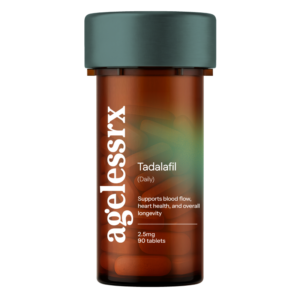
Daily Tadalafil at 2.5 mg and 5 mg can look almost interchangeable. But choosing between them isn’t quite as simple as it sounds.
That extra 2.5 mg may seem minor, but depending on why you’re taking Tadalafil, it can make a meaningful difference. At the same time, more isn’t automatically better. The right starting dose depends on your goal, how your body responds to the way Tadalafil relaxes blood vessels, and whether benign prostatic hyperplasia (BPH) is part of the picture.
So, is 2.5 mg enough, or should you start with 5 mg? Let’s look at what the research actually shows.
Key Takeaways
- Daily Tadalafil at 2.5 mg or 5 mg creates steadier levels in the body, typically reaching a steady state within about five days
- Both 2.5 mg and 5 mg can improve erectile function, with the right dose depending on your response, goals, and tolerability
- More isn’t automatically better. The goal is to find the lowest effective dose while reducing risk of side effects
- Researchers are studying daily Tadalafil beyond sexual health, including potential vascular, brain, and healthy aging benefits
- Your clinician can help determine the right dose based on your health history, medications, and individual goals
What Does Daily Tadalafil Do in the Body?
Tadalafil belongs to a class of medications called PDE5 inhibitors. PDE5 is an enzyme that breaks cGMP down. Tadalafil temporarily blocks that enzyme, allowing a molecule called cGMP to stick around longer and helping blood vessels stay relaxed. Think of blood flow like traffic on a highway. cGMP helps keep the lanes open by relaxing the smooth muscle around blood vessels, allowing blood to flow more easily.
Tadalafil has a relatively long half-life of about 17.5 hours, meaning roughly half of a dose is still in the body 17.5 hours later. Take another dose the next day, and some of the previous dose is still there. With consistent daily use, Tadalafil gradually builds to a steady level in the bloodstream, typically reaching what researchers call “steady state” within about five days.
At steady state, overall Tadalafil exposure is about 1.6 times that of a single dose. That steady, ongoing PDE5 inhibition is one reason researchers are interested in daily low-dose Tadalafil beyond its traditional use for erectile function, including its potential effects on vascular and broader systemic health.
What Are the Tadalafil Dosage Options?
Tadalafil comes in four oral strengths: 2.5 mg, 5 mg, 10 mg, and 20 mg, each serving a distinct purpose depending on the condition you’re treating and how you use the medication.
|
Dose |
Use Pattern |
Primary Indication |
|---|---|---|
|
2.5 mg |
Daily |
Longevity |
|
5 mg |
Daily |
Longevity |
|
10 mg |
As needed |
ED |
|
20 mg |
As needed (ED) or daily (PAH) |
ED, PAH |
The 10 mg and 20 mg doses are taken on an as-needed basis for ED, generally one to two hours before sexual activity, no more than once every three days. At 40 mg daily (two 20 mg tablets), Tadalafil is also FDA-approved for pulmonary arterial hypertension under the brand name Adcirca.
Daily vs. As-Needed Tadalafil: How Do They Differ?
As-needed Tadalafil is pretty straightforward: you take a higher dose, typically 10 mg or 20 mg, before anticipated sexual activity. The medication reaches its highest concentration within a few hours, then gradually declines. It works well for many people, but there’s one obvious tradeoff: you have to plan around taking it.
On the other hand, daily Tadalafil takes a different approach. Instead of waiting for a specific moment, you take a much smaller dose daily. Because Tadalafil stays in the body for a relatively long time (up to several days), each daily dose overlaps with some of the previous one. After about five days, levels generally settle into a steady state.
Think of the difference like filling a bathtub. As-needed dosing turns the faucet on high, then lets the water gradually drain. Daily dosing keeps a smaller, steadier stream running. You don’t get the same high peak, but you also avoid dropping all the way back down between doses.
This steadier exposure may also help reduce the concentration peaks associated with dose-related side effects such as headache and flushing. As-needed use relies on a larger single dose to produce an effect when you need it. Daily dosing maintains more consistent PDE5 inhibition over time. This steadier exposure may also help reduce the concentration peaks associated with dose-related side effects such as headache and flushing.
Researchers are also studying the potential effects beyond ED and BPH, including vascular function and broader systemic health.
What Does Clinical Evidence Show About 2.5 mg vs. 5 mg Daily?
Both 2.5 mg and 5 mg have clinical evidence behind them. The difference matters most depending on what you want from your Tadalafil protocol.
For erectile dysfunction (ED), both 2.5 mg and 5 mg once-daily Tadalafil have been studied in randomized, placebo-controlled trials. Researchers often measure results using the International Index of Erectile Function (IIEF-EF), essentially a standardized scorecard for erectile function. Both daily doses improved erectile function compared with placebo, suggesting that 2.5 mg may be enough to provide meaningful ED support for some people.
The evidence is more clear-cut for benign prostatic hyperplasia (BPH). Researchers measure BPH-related urinary symptoms using another scorecard called the International Prostate Symptom Score (IPSS), which looks at issues like urinary frequency, urgency, and difficulty emptying the bladder. In clinical trials, 5 mg daily Tadalafil produced measurable improvements in these symptoms. That’s one reason 5 mg has the stronger evidence base when BPH symptoms are part of the treatment goal.
For ED, there isn’t one dose that works best for everyone. Some people may get the benefit they’re looking for at 2.5 mg, while others may need 5 mg or an as-needed dose of 10-20 mg. The goal is to find the lowest dose that delivers the intended benefit while remaining well tolerated.
That decision should be made with a clinician who can consider why you’re taking Tadalafil, how you respond to it, your health history, and any other medications you take.
When Might 2.5 mg of Tadalafil Be a Good Starting Dose?
For people taking daily Tadalafil for ED without BPH symptoms, 2.5 mg is often a reasonable starting point.
Starting lower can also make sense if you tend to be sensitive to medications or side effects. Tadalafil can cause headache, flushing, indigestion, muscle aches, or back pain in some people, and a lower starting dose gives you and your clinician a chance to see how your body responds. If you tolerate 2.5 mg well but aren’t getting enough benefit, your clinician can determine whether increasing your dose to 5 mg makes sense.
When Is 5 mg Daily Tadalafil Recommended?
For daily Tadalafil, 5 mg is the FDA-approved dose for BPH and for people managing both BPH and ED. If symptoms like urinary urgency, a weak stream, or difficulty fully emptying the bladder are part of the reason you’re taking Tadalafil, this is where the evidence for 5 mg becomes especially relevant.
For those interested in Tadalafil from a cardiovascular or longevity perspective, daily dosing also provides the steady, ongoing PDE5 inhibition researchers are studying for potential effects beyond ED and BPH.
How Does Tadalafil Dose Affect Side Effects and Tolerability?
Daily low-dose Tadalafil is generally well tolerated, but side effects can still happen, and taking more can increase the chance of experiencing them.
The most common side effects include:
- Headache and flushing, which are often temporary and may resolve as your body adjusts
- Indigestion, back pain, muscle aches, and nasal congestion, which are also commonly reported with Tadalafil
Daily dosing keeps Tadalafil levels steadier than taking 10 mg or 20 mg at once. Think of it as a gentle hill instead of a sharp peak. You’re maintaining a lower, more consistent level of the medication instead of introducing a larger dose all at once.
What Serious Tadalafil Side Effects Should You Watch For?
Serious side effects are rare, but they’re important to know about. Seek medical attention right away if you experience sudden vision loss in one or both eyes, a sudden decrease or loss of hearing, or an erection lasting longer than four hours (priapism). If these reactions happen, seek medical care quickly.
What Medications Should You Not Take With Tadalafil?
Before starting Tadalafil, your clinician needs to know what else you’re taking. That includes prescription medications, over-the-counter medications, and supplements. Some combinations can change how Tadalafil works, while others can be dangerous.
The most important interaction is with nitrates, including medications such as nitroglycerin and isosorbide that are commonly used for chest pain and certain heart conditions. Tadalafil and nitrates both lower blood pressure, and combining them can cause blood pressure to fall to dangerous levels. For that reason, they should not be used together.
Other medications that require particular attention include:
- Riociguat, another medication that affects blood vessel signaling and can cause blood pressure to fall too low when combined with Tadalafil
- Other PDE5 inhibitors, such as sildenafil (Viagra) or vardenafil (Levitra), which should not be combined with Tadalafil unless a clinician directs otherwise
- Certain medications that slow the breakdown of Tadalafil, including ketoconazole and ritonavir. These can leave more Tadalafil in your system and increase the risk of side effects
- Medications that speed up Tadalafil’s breakdown, such as rifampin, which can reduce how much Tadalafil your body is exposed to and potentially make it less effective
- Alpha-blockers, which are sometimes used for high blood pressure or prostate symptoms. Because these medications can also lower blood pressure, combining them with Tadalafil requires careful clinical guidance
Your health history matters just as much as your medication list. Tadalafil may not be appropriate for everyone, including people with certain cardiovascular conditions, serious liver or kidney problems, very low or uncontrolled blood pressure, or certain inherited eye conditions.
Does Kidney or Liver Function Affect Tadalafil Dosage?
Yes. Your kidney and liver function can affect how your body handles Tadalafil. The liver primarily breaks down Tadalafil. The body then needs time to clear the medication. If your liver or kidneys aren’t working as efficiently as they normally would, Tadalafil can stay in your system longer and potentially reach higher levels than intended.
For people with kidney or liver impairment, a clinician may recommend a lower dose, adjust how often you take Tadalafil, or determine that daily use isn’t appropriate. Your clinician will consider your level of kidney or liver function, along with your other medications and overall health.
How and When Should You Take Daily Tadalafil?
Consistency matters. Take Tadalafil around the same time each day to help keep the amount in your body relatively steady.
The best time is usually the one you’ll actually remember, whether that’s with your morning coffee, after brushing your teeth, or as part of your bedtime routine. Tadalafil can also be taken with or without food, so you don’t need to plan your dose around meals. If you miss a dose, follow the instructions from your clinician instead of taking extra medication to make up for it.
And remember, these are general guidelines. Your clinician may give you different instructions based on your dose, other medications, and health history, so always follow the plan they provide.
Daily Tadalafil at AgelessRx
At AgelessRx, we look at Tadalafil through a broader lens than sexual health alone. Recent research has raised interesting questions about what consistent PDE5 inhibition could mean for vascular health and healthy aging over time. The science is still evolving, and we’re careful not to turn promising associations into proven outcomes.
For eligible men and women interested in daily low-dose Tadalafil, we offer two ways to make it part of your routine.
Our new Tadalafil Longevity Gummy is a compounded once-daily chewable with 2.5 mg Tadalafil and 600 IU Vitamin D3. Prefer a more traditional format? Daily Tadalafil tablets are also available, giving you another simple option for consistent daily dosing.
Whichever format fits your routine, every Tadalafil prescription at AgelessRx starts with a clinician review. A US-licensed provider considers your health history, current medications, and individual risk factors to determine whether Tadalafil is appropriate for you and which dose makes sense.
Ready to consider daily Tadalafil? Start your consultation to see if the new Tadalafil Longevity Gummy or daily Tadalafil tablets could be a fit for you.
Note: The above statements have not been reviewed by the Food and Drug Administration. This product is not intended to diagnose, treat, cure, or prevent any disease.