
Tadalafil (Cialis): Uses, Dosage, Benefits & Longevity Research

Tadalafil, the generic form of Cialis, is an FDA-approved prescription medication used to treat erectile dysfunction (ED) and benign prostatic hyperplasia (BPH). It works by inhibiting phosphodiesterase type 5 (PDE5) enzymes, which relaxes blood vessels and improves blood flow to support erectile function.
Beyond its approved uses, growing clinical research points to possible longevity-related benefits, including cardiovascular support, anti-inflammatory effects, and cognitive improvements. This guide covers how Tadalafil works, available dosages, how it compares to other ED medications, and what the science says about its broader health effects.
Key Takeaways
- Tadalafil (generic Cialis) is FDA-approved to treat erectile dysfunction and benign prostatic hyperplasia, available by prescription in daily and as-needed doses.
- Unlike other ED medications, daily low-dose Tadalafil supports readiness at any time and has a duration of action of up to 36 hours when taken as needed.
- Clinical research suggests Tadalafil may support cardiovascular health, reduce inflammation, improve cognitive function, and slow certain aging processes.
- One epidemiological study found an association between Tadalafil use and a reduction in all-cause mortality of up to approximately 44%; more research is needed to confirm this finding.
- Side effects are generally mild and short-lived; Tadalafil requires a prescription and clinician review to determine the appropriate dose for each individual.
What Is Tadalafil and How Does It Work?
Tadalafil is the generic form of Cialis, an FDA approved medication to treat erectile dysfunction in men since 2003. It is also FDA approved to treat enlarged prostate, a condition called benign prostatic hyperplasia (BPH), since 2011.
Tadalafil is the same active ingredient as found in branded Cialis. Tadalafil works by inhibiting phosphodiesterase type 5 (PDE5) enzymes, which enhances erectile function by the release of nitric oxide (NO). It is offered as a daily or as needed medication; Tadalafil is only available with a prescription.
At higher doses (20 mg/day or more), Tadalafil is also used in both men and women to treat pulmonary arterial hypertension.
How Do You Take Tadalafil?
Dosage and instructions differ depending on if you choose/are prescribed to take Tadalafil daily or as needed.
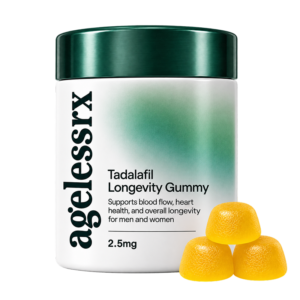
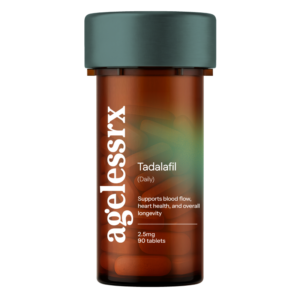
Tadalafil Daily: Tadalafil is available as a daily tablet or gummy. Take your prescribed dose at approximately the same time each day. The tablet should be taken with a glass of water, while the gummy can be chewed as directed. Both options can be taken with or without food and are taken daily without regard to sexual activity. For a closer look at the gummy format, see how the gummy works.
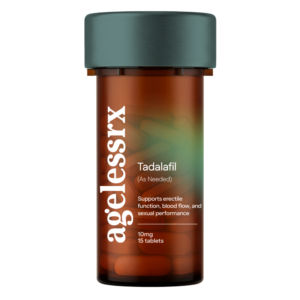
Tadalafil As Needed: You will take a single tablet (10 mg or 20 mg) with a glass of water a minimum of 1-2 hours before sexual activity. Tadalafil can be taken at any time of day or night, with or without food.
What Dosages of Tadalafil Are Available?
Tadalafil for daily use is available in 2.5mg or 5mg tablets. As needed use is available in 10mg or 20mg tablets.
Your prescribed dose depends on your individual tolerability, health history, current medications, and your clinician’s assessment.
AgelessRx offers both dosage options for daily and as needed plans. Please note that, while requests can be made for a specific dose, the doctor reviewing your request will have the final say.
How Does Tadalafil Compare to Other ED Medications?
Tadalafil sets itself apart from other ED medications in three distinct ways:
- It is the only ED medication available for daily use. With daily dosing, you can be intimate at any time without planning around a pill, unlike other brands such as Viagra.
- When taken as needed, a single dose can remain active up to 36 hours. Tadalafil is often referred to as “the weekend pill” because a single dose can remain active for up to 36 hours (whereas others, such as Viagra, remain active for only a few hours). Tadalafil provides the opportunity for spontaneity.
- It is earning clinical support for a variety of health and longevity benefits. A sample of the latest research is covered below.
The table below summarizes how Tadalafil compares to other common PDE5 inhibitors.
|
Tadalafil (Cialis) |
Sildenafil (Viagra) |
Vardenafil (Levitra) | |
|---|---|---|---|
|
Daily use available |
Yes |
No |
No |
|
Duration of action |
Up to 36 hours |
4-6 hours |
4-6 hours |
|
Available doses |
2.5 mg, 5 mg, 10 mg, 20 mg |
25 mg, 50 mg, 100 mg |
5 mg, 10 mg, 20 mg |
|
Longevity research |
Yes |
Limited |
Limited |
What Are the Longevity Benefits of Tadalafil?
- Anti-aging benefits: A clinical analysis cited PDE5 inhibitors, such as daily Tadalafil, as a worthwhile addition to any “anti-aging drug mixture because ED and BPH are most prevalent age-related conditions in aging men.” The analysis also notes that by “relaxing the tension [in senescent cells] may slow senescent-associated pathology… causing anti-vasoconstriction, anti-proliferative and anti-inflammatory effects.”
- Reducing health risks related to aging: The same clinical analysis cited above suggests that by fighting against cellular senescence, PDE5 inhibitors, such as Tadalafil, may also help to reduce health risks related to aging, such as heart hypertrophy, myocardial infarction, cancer, neurodegenerative diseases, cystic fibrosis, diabetes, obesity and metabolic syndrome.
- Anti-inflammatory properties: Per this clinical study in Scientific Reports, “chronic inflammation plays an important role in BPH/LUTS (lower urinary tract symptoms) and contributes to the clinical progression of BPH-related symptoms… Tadalafil, but not sildenafil or vardenafil, reduces pro-inflammatory factors.”
- Improved cognitive function: The same Scientific Reports study also notes: “Erectile dysfunction is commonly associated with depression, and treatment with PDE5 inhibitors improves cognitive functions and depression, in addition to erectile dysfunction. Therefore, treatment of BPH/LUTS-ED with Tadalafil could improve patients’ quality of life and their cognitive functions.”
Note: Tadalafil (generic Cialis) has not been approved by the FDA for these longevity uses, but these are a sample of the studies shown to have these benefits. Varying dosages were used.
What Are the Possible Side Effects of Tadalafil?
As with any drug product, there may be side effects. Generally, patients who experience side effects usually get them within 12 to 24 hours after taking Tadalafil. Side effects usually resolve on their own within 48 hours.
The most common Tadalafil side effects are:
- Headache
- Indigestion
- Back and muscle pain
- Flushing
- Stuffy nose
Some more serious side effects have been reported. While rare, stop taking Tadalafil and contact a clinician right away if an erection lasts longer than four hours. Seek immediate care if you experience sudden vision loss, a sudden decrease in hearing, or hearing loss.
Some drugs/medications may interact with Tadalafil. You should not take Tadalafil if you are taking nitrates (such as nitroglycerin tablets or patches), Cisapride, other ED medications (such as Viagra), Adcirca, or Riociguat.
For a more complete list of possible drug interactions, see Tadalafil drug interactions.
Can Tadalafil Support a Longer Life?
Beyond the longevity research above, some scientists are also looking at whether Tadalafil’s effects on blood flow and cellular aging could extend to lifespan itself. The PDE5 enzyme that Tadalafil inhibits helps break down cGMP, a molecule that tends to decline with age and is associated with increased inflammation. By helping keep cGMP levels more stable, Tadalafil is thought to help support healthy aging processes, and early research suggests it may help support a longer lifespan.
One epidemiological study found an association between Tadalafil use and a reduction in all-cause mortality of up to approximately 44%. This type of study can only show a correlation. It can not prove that Tadalafil directly causes people to live longer. More research is needed before drawing firm conclusions. For more on how this research is being interpreted by clinicians, see our NPR feature on Tadalafil. As always, talk with your health care provider about whether these potential benefits may be relevant to you.
Note: The above statements have not been reviewed by the Food and Drug Administration. This product is not intended to diagnose, treat, cure, or prevent any disease.