
HRT Risks & Side Effects Guide

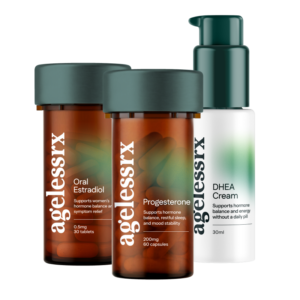
Talk about HRT long enough, and you’ll probably hear a long list of warnings. What often gets left out is context. HRT risks and side effects aren’t the same for everyone. They can change depending on the hormones you take, how you take them, your health history, and when you start. So rather than treating every HRT warning as universal, let’s look at what the research actually shows, which side effects are more common, and which risks may matter more for certain people.
Key takeaways:
- Common HRT side effects like breast tenderness, nausea, and spotting often improve within the first few months
- Transdermal estrogen may carry a lower blood clot risk than oral estrogen because it bypasses the liver
- Serious HRT risks are generally uncommon, but they vary based on age, health history, HRT type, and when treatment begins
What Is HRT and How Does It Work?
Hormone replacement therapy (HRT) helps replace hormones, primarily estrogen and progesterone, that naturally decline during perimenopause and menopause. Research on HRT for perimenopause can help clarify its potential benefits and limitations.
Those shifting hormone levels can be behind symptoms that may seem unrelated, from hot flashes and vaginal dryness to mood changes and disrupted sleep. Recognizing the symptoms of low estrogen can help you better understand how these hormonal changes may affect your body.
There are two main approaches to HRT. Estrogen-only therapy is typically prescribed for women who have had a hysterectomy. If you still have your uterus, estrogen is generally paired with a progestogen. That second hormone has an important job: it helps protect the uterine lining from the thickening that estrogen alone can cause, which can increase the risk of endometrial cancer over time.
HRT also isn’t one-size-fits-all when it comes to how you take it. Options include oral pills, transdermal patches, gels, sprays, and vaginal preparations such as rings or creams. Women’s Hormone Care includes multiple options based on your individual needs.
And the format matters for more than convenience. A pill and a patch may contain similar hormones, but they don’t travel through the body in exactly the same way. That can influence both the benefits and the risks of HRT, which is why the specific type and delivery method matter when evaluating safety.
What Are the Common Side Effects of HRT?
Not all HRT side effects come from the same hormone. Estrogen and progestogen can affect the body differently, so understanding which one may be behind a symptom can make it easier to figure out what needs adjusting.
Estrogen-Related Side Effects
When starting HRT, estrogen may cause:
- Breast tenderness or swelling
- Nausea, particularly with oral forms
- Headaches, bloating, or irregular spotting
The good news is that many of these side effects improve as the body adjusts to changing hormone levels. Breakthrough bleeding or spotting can also happen early on. While it often settles with time, persistent, heavy, or unexpected bleeding should always be discussed with your clinician.
Progestogen-Related Side Effects
Progestogen can come with a slightly different set of side effects, including:
- Low mood or a PMS-like feeling
- Fluid retention, acne, or other skin changes
- Changes in libido
The type of progestogen can make a difference, too. Synthetic progestogens, particularly medroxyprogesterone acetate, have been associated with more mood-related symptoms than micronized progesterone in some research. If mood changes or other symptoms appear after starting HRT, it may be worth discussing the type and dose of progestogen with your clinician.
Most early HRT side effects don’t automatically mean HRT isn’t right for you. Sometimes, they’re a sign that your dose, formulation, or delivery method needs adjusting. Rather than simply pushing through uncomfortable symptoms or stopping on your own, talk with your clinician. A small adjustment may make a meaningful difference.
How Does Delivery Method Affect HRT Side Effects?
With HRT, how you take estrogen can matter almost as much as the estrogen itself. Oral estrogen travels through the liver before entering the bloodstream, a process known as first-pass metabolism. That extra stop can affect triglycerides, clotting factors, and inflammatory markers such as C-reactive protein, which helps explain why oral and transdermal estrogen don’t carry exactly the same risk profile.
Transdermal estrogen, delivered through a patch, gel, or spray, takes a different route. It bypasses the liver on first pass and absorbs through the skin into the bloodstream. Because of that difference, transdermal estrogen has less effect on certain clotting factors and is generally associated with a lower risk of blood clots than oral estrogen. That distinction can be especially important when choosing HRT based on your individual health history and risk factors.
|
Factor |
Oral Estrogen |
Transdermal Estrogen |
|---|---|---|
|
Route of delivery |
Swallowed pill |
Patch, gel, or spray applied to skin |
|
Liver metabolism |
Passes through liver first (first-pass metabolism) |
Bypasses liver; absorbs directly into bloodstream |
|
Effect on clotting factors |
Can raise clotting factors and triglycerides |
More favorable coagulation profile for most women |
|
VTE (blood clot) risk |
Higher relative risk |
Lower relative risk |
|
GI side effects |
Nausea more likely, especially on empty stomach |
GI side effects largely avoided |
|
Effective dose needed |
Higher |
Lower |
|
Best suited for |
Women without cardiovascular or clotting risk factors |
Women with clotting history, cardiovascular concerns, or GI sensitivity |
Neither route is universally better. Oral forms are well-tolerated by many women and carry decades of clinical data. The right choice depends on your individual history, particularly if you have cardiovascular risk factors, clotting concerns, or GI sensitivities. That conversation belongs with your clinician.
What Are the Serious Risks Associated With HRT?
Breast cancer. Blood clots. Stroke. These are some of the HRT risks that tend to get the most attention. However, hearing that a risk exists doesn’t tell you how likely it is, or whether it applies equally to every woman using HRT. The actual risk can change considerably depending on your age, health history, the hormones you use, how you take them, and how long you use them.
A few distinctions are especially important:
- Breast cancer: Estrogen-only therapy has a different risk profile than combined estrogen-progestogen therapy. In the Women’s Health Initiative, estrogen alone did not increase breast cancer risk and was associated with a lower risk during longer-term follow-up among postmenopausal women who had undergone hysterectomy. Much of the risk depends on how long after menopause HRT is started, with risk rising more than 10 years after menopause, particularly with oral estrogen combined with a synthetic progestogen.
- Progestogen type: With combined HRT, breast cancer risk may also differ depending on the progestogen used, with observational research suggesting a lower risk with micronized progesterone than with some synthetic progestogens
- Endometrial cancer: Using systemic estrogen without a progestogen can increase endometrial cancer risk in women who still have a uterus, which is why the two hormones are generally paired
- Blood clots: Venous thromboembolism (VTE) risk is higher with oral estrogen than with transdermal estrogen, making the route of delivery particularly important for women with clotting risk factors
The takeaway isn’t that these risks should be ignored; it’s that “HRT is risky” is too broad to be useful. Understanding your individual risk means looking at the specific hormone, dose, delivery method, timing, and your own health history with a clinician.
Who Should Use Extra Caution With HRT?
HRT can be a safe and effective option for many women, but your health history matters. Certain conditions can change which type of HRT is appropriate, while others may mean systemic hormone therapy should be avoided altogether.
You may need additional evaluation before starting HRT if you have:
- A personal history of hormone-sensitive breast cancer or other estrogen-sensitive cancer
- A history of blood clots or venous thromboembolism (VTE)
- Cardiovascular disease or a history of stroke
- Active liver disease
- Unexplained vaginal bleeding, which should be evaluated before starting HRT
Having one of these risk factors doesn’t always lead to the same answer. For example, oral and transdermal estrogen have different effects on blood clot risk, so your clinician may consider the route of delivery alongside your individual history. Other cardiovascular factors, including blood pressure, also matter when weighing the potential benefits and risks.
This is where personalized care becomes especially important. A clinician can look at the whole picture, including your age, symptoms, medical and family history, medications, and individual risk factors, before deciding whether HRT is appropriate and, if so, which approach makes the most sense.
How Can You Manage and Adjust HRT Side Effects?
Experiencing side effects doesn’t always mean HRT isn’t right for you. Some early side effects improve as the body adjusts, while others may be a sign that your dose, hormone type, or delivery method needs a second look.
Depending on your symptoms, your clinician may recommend:
- Giving the body time to adjust: Breast tenderness, nausea, spotting, and other early side effects often improve within the first few months
- Changing how you take estrogen: If oral estrogen is causing digestive side effects or blood clot risk is a concern, your clinician may consider a transdermal patch, gel, or spray, which avoids first-pass liver metabolism
- Adjusting your progestogen: If mood changes or other progestogen-related side effects are bothersome, changing the dose or type of progestogen may help
- Using local vaginal estrogen: For vaginal dryness and other genitourinary symptoms, low-dose vaginal estrogen can provide targeted relief with minimal systemic absorption
Irregular spotting or bleeding can happen during the first few months of HRT, but it shouldn’t simply be ignored. Heavy, persistent, or unexpected bleeding should be discussed with your clinician so they can determine whether your HRT needs adjusting or something else needs to be evaluated. The same goes for side effects that feel severe or simply aren’t improving. Rather than adjusting your dose or stopping HRT on your own, your clinician can help determine the safest next step.
AgelessRx Women’s Hormone Care
If there’s one thing this guide makes clear, it’s that the details matter with HRT. The hormone you use, the dose, how you take it, when you start, and your health history can all shape your experience with treatment. That’s why good hormone care starts with understanding the individual, not simply choosing a prescription.
Through AgelessRx Women’s Hormone Care, you’ll work with a US-licensed clinician who can look at your symptoms, health history, and individual risk factors to determine whether hormone therapy is appropriate. From there, they can help guide decisions around the type of hormone, dose, and delivery method, while monitoring how you respond and making adjustments when needed. No annual membership or insurance is required.
Behind that care is our Scientific Advisory Board and Stanford PhD-led Research Team, who help inform our approach to women’s hormone health and other longevity tools. Prescriptions are filled through PCAB and NABP-accredited compounding pharmacies, and AgelessRx is LegitScript-certified.
Final Thoughts on HRT Side Effects and Risks
HRT risks and side effects deserve context, not fear. HRT has also been studied for its potential to lower the risk of several age-related conditions, including osteoporosis, heart disease, and Alzheimer’s disease. Breast tenderness during your first few weeks on HRT is a very different conversation from your long-term breast cancer or blood clot risk. And even those longer-term risks can look different depending on your age, health history, type of HRT, and how you take it. Knowing what actually applies to you, what may improve with an adjustment, and what deserves closer attention can make the conversation around HRT feel a lot less intimidating and a lot more useful.