
Hormone Replacement for Low Libido: What Causes Low Sex Drive in Women?

Losing interest in sex during perimenopause or menopause is so common that it often gets brushed off as just part of the process. But there’s real biology behind low libido, and understanding what’s driving the change can help clarify what may actually help. Estrogen and testosterone can affect sexual desire in different ways, but hormones aren’t always the whole story. Sleep, stress, medications, relationship factors, and other health changes can play a role, too. So, how do you know what’s affecting your sex drive? Here’s what to consider and where Hormone Therapy may fit in.
Key Takeaways:
- Estrogen, testosterone, and progesterone can affect sexual desire differently
- Low libido can have hormonal and non-hormonal causes
- Estrogen may improve sexual comfort, while testosterone can support desire
- Normal hormone levels don’t always explain changes in sex drive
- Hormone Therapy options depend on what’s driving low libido
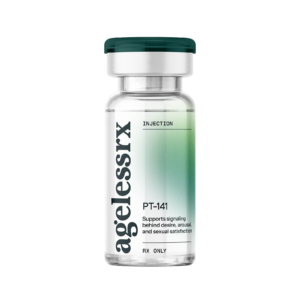
- PT-141 works on brain pathways involved in sexual desire
Why Does Sex Drive Change During Perimenopause and Menopause?
Libido can change during perimenopause and menopause as estrogen, progesterone, and testosterone levels shift, affecting both the physical and mental sides of sexual desire. But hormones don’t all influence libido in the same way, and low sex drive is rarely as simple as one hormone being “too low.”
Estrogen plays a particularly important role in the physical side of sex. It helps maintain vaginal tissue, natural lubrication, and blood flow to the genitals. As estrogen declines, vaginal dryness, discomfort, or pain during sex can make intimacy less appealing, even when the desire for sex is still there.
Testosterone may have a more direct connection to sexual desire. Although it gets less attention in women’s health conversations, testosterone acts on brain pathways involved in sexual interest and arousal. Women produce testosterone in the ovaries and adrenal glands, and levels generally decline with age. Researchers continue to study how these changes relate to libido and broader ovarian aging, including growing interest in whether it may be possible to delay menopause.
Progesterone’s relationship with libido is less direct. Levels can fluctuate considerably during perimenopause, and those changes may affect mood, sleep, and overall well-being, all of which can influence interest in sex.
These hormones don’t operate in isolation. Changes in estrogen, testosterone, or progesterone may all contribute to low libido, but so can sleep, stress, medications, relationship dynamics, and physical discomfort. For many women, there may not be one clear cause. Understanding what has changed, hormonally and otherwise, can help narrow down what may actually help.
How Does Estrogen Therapy Affect Libido?
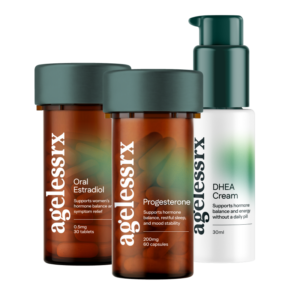
Estrogen therapy primarily supports the physical side of sexual health. As estrogen declines, vaginal dryness, tissue thinning, discomfort during sex, and changes in genital blood flow can make sex less comfortable. Estrogen therapy can help ease these symptoms, whether delivered systemically through patches, gels, or pills or locally through vaginal creams and rings.
When sex becomes less painful, desire can follow indirectly. After all, discomfort is its own reason to lose interest in sex. Many women experience improved sexual satisfaction with estrogen therapy, even though estrogen may not directly change desire itself. Clinician-guided women’s hormone care can help determine the right formulation and dosing.
If sex feels physically comfortable but the desire simply isn’t there, estrogen alone may not be enough. Other hormones and brain pathways involved in sexual desire may be part of the picture.
Does Testosterone Therapy Help Low Libido in Women?
Testosterone is often thought of as a “male hormone,” but women naturally produce it, too, and it plays an important role in female sexual health. In fact, testosterone may have a more direct influence on sexual desire than estrogen. Research on transdermal testosterone in postmenopausal women suggests it may improve sexual desire in some women. A simple way to think about the difference is this: estrogen can help make sex more comfortable, while testosterone may have more influence on wanting it in the first place.
There’s currently no FDA-approved testosterone product specifically for women in the US. When appropriate, clinicians may prescribe testosterone off label, including lower-dose formulations designed with female hormone levels in mind.
Long-term safety data are still limited, particularly when it comes to cardiovascular health and hormone-sensitive tissues. For that reason, testosterone therapy should be tailored to the individual, with appropriate dosing and ongoing monitoring to understand how treatment is working over time.
Why Is Sex Drive Still Low When Hormone Levels Look Normal?
Normal hormone levels don’t always mean normal sexual desire. Bloodwork can tell you a lot about estrogen, testosterone, and other hormones, but it cannot fully capture what is happening in the brain pathways involved in desire and arousal.
Hormone levels don’t tell the whole story about sexual desire. Dopamine and melanocortin signaling in the brain also help manage sexual motivation and interest. These pathways work differently from circulating hormones, which may help explain why someone can have estrogen and testosterone within normal ranges and still experience low libido.
This also helps explain why Hormone Therapy may not work for everyone. If low desire continues despite normal hormone levels or Hormone Therapy, it may be worth looking beyond hormones with your clinician. Treatments that work through different pathways, including PT-141, may be another option to discuss.
What Are the Safety Risks of HRT for Libido?
Hormone Replacement Therapy (HRT) comes with potential risks, but those risks can vary depending on the hormones used, how they are taken, and your individual health history. For example, oral and transdermal estrogen can have different effects on blood clot risk, while breast cancer risk can also vary depending on the type and duration of Hormone Therapy.
|
Formulation |
Delivery Route |
Clot / Stroke Risk |
Breast Cancer Association |
Notes |
|---|---|---|---|---|
|
Oral estrogen |
Oral (pill) |
Higher (first-pass liver metabolism increases clotting factors) |
No clear independent increase; risk is primarily associated with the addition of synthetic progestin |
Convenient but carries higher vascular risk for some women |
|
Transdermal estrogen |
Patch or gel |
Lower (bypasses liver first-pass) |
No clear independent increase; risk is primarily associated with the addition of synthetic progestin |
Preferred route for women with higher clot risk |
|
Combined estrogen + synthetic progestin |
Oral or patch |
Varies by estrogen route |
Modestly increased (WHI finding) |
Progestin type matters; risk profile differs from bioidentical progesterone |
|
Combined estrogen + bioidentical progesterone |
Oral or patch |
Varies by estrogen route |
Possibly lower than synthetic progestin (evidence still accumulating) |
Different risk profile from synthetic progestins; discuss with clinician |
Why HRT Risk Depends on the Individual
There is no one-size-fits-all risk profile for HRT. The same treatment that makes sense for one woman may not be the right fit for another, which is why your age, health history, hormone formulation, dose, and length of treatment all matter. The type of estrogen matters, too. Conjugated equine estrogen (derived from horses) has been more closely associated with adverse risk profiles in landmark studies, while bioidentical estradiol carries a different, generally more favorable risk picture, making the source and type of estrogen in a formulation a meaningful clinical variable.
Timing also plays a meaningful role in the risk-benefit picture. Research suggests that women who begin HRT around the time of menopause (sometimes called the “window of opportunity”) tend to have a more favorable risk and benefit profile than those who start a decade or more after menopause. Starting closer to menopause onset, when cardiovascular and tissue health is relatively preserved, is associated with better outcomes, while initiating therapy much later carries a different calculus. This is worth discussing with your clinician when weighing the decision.
Certain health conditions, including some hormone-sensitive cancers, unexplained vaginal bleeding, clotting disorders, and cardiovascular conditions, may make systemic Hormone Therapy inappropriate. This is where clinician guidance really matters: the goal isn’t simply to replace hormones, but to find an approach that makes sense for your symptoms, your health, and your individual risk factors.
What If Hormone Therapy Isn’t Enough for Low Libido?
For some women, Hormone Therapy may improve vaginal dryness, discomfort, or other menopause symptoms while low libido persists. In other cases, hormone levels may be within a normal range even though sexual desire has changed. That’s because physical comfort and sexual desire are related, but they aren’t the same thing.
Estrogen can improve vaginal tissue, lubrication, and comfort during sex. Desire, however, is also influenced by signaling in the brain that affects sexual interest and motivation. Addressing one doesn’t necessarily address the other.
How Does PT-141 Work for Low Libido?
We offer compounded PT-141 (Bremelanotide) as a clinician-guided option that acts on these brain pathways. Rather than changing hormone levels, PT-141 acts on melanocortin receptors in the brain involved in sexual desire and arousal. This differs from estrogen, which can improve vaginal tissue and comfort, and PDE5 inhibitors, which primarily affect blood flow.
PT-141 is available as a subcutaneous injection, but it is not necessarily a replacement for Hormone Therapy. Depending on what is contributing to low libido, a clinician can help determine whether a hormonal approach, a non-hormonal approach, or a combination may be appropriate.
The bigger takeaway is that low libido does not always have one simple cause, and finding the right approach starts with understanding what has actually changed. Estrogen may help with comfort, testosterone may play a role in desire, and brain pathways involved in sexual interest can matter even when hormone levels look normal. Looking at all of those pieces together can help you and your clinician find an approach that makes sense for you instead of relying on a lab result alone.
If low libido has started affecting your quality of life, your next step doesn’t have to be figuring out the cause on your own. Start by talking with a clinician about what has changed, when you first noticed it, and any other symptoms you’re experiencing. From there, you can look at the full picture together and decide what, if anything, makes sense to try next.
Note: The above statements have not been reviewed by the Food and Drug Administration. This product is not intended to diagnose, treat, cure, or prevent any disease.