
Benefits of the Early Bird Special…Your Glucose Levels Will Thank You

In a randomized crossover study out of Japan, researchers from the University of Kumamoto, the National Institutes of Biomedical Innovation, and the National Institute of Advanced Industrial Science and Technology looked at the impact of “mild early time-restricted eating” on glucose levels.
Can Eating Dinner Earlier Improve Blood Sugar?
The team hypothesized a positive outlook for late-lunchers and early bird specialists alike: moving that last big meal of the day up even just a few evening hours might have a significant positive impact on 24-hour blood glucose levels.
The researchers projected another fortunate byproduct of early eating, an improved postprandial lipid metabolism for dinners. In simple terms, the body would potentially utilize dinner calories more efficiently.
What the Study Found About Early Time-Restricted Eating
The study’s conclusion ultimately supported researchers’ theory regarding the influence of mealtime on blood glucose level fluctuation and substrate oxidation (the body’s reaction to an energy source and how fast/strong the response). More specifically, “significant differences were observed in mean 24-hour blood glucose levels on day 2 between the two groups.”
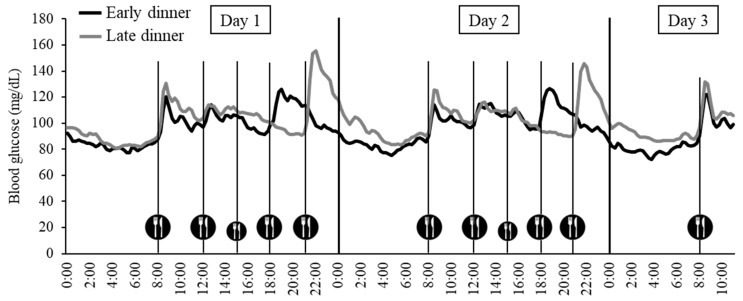
Beyond that, the early dinner group saw dramatic improvements to oxygen uptake and more immediate access to the proteins, fats, and carbs they’d previously consumed.
Countless studies aim to demonstrate the extreme nuances and malleability of the metabolic system and regarding blood health. Still, few speak as loudly as the randomized crossover trial mentioned above.
Why Meal Timing Matters for Metabolic Health
Just consider the big takeaway: by simply eating dinner a few hours earlier, your body will draw upon and burn calories more efficiently. That means calories in, energy out, and no caloric surplus to store as a muffin-top mid-section, under the arms, or on the hips – those seemingly impossible to tone areas where fat cells tend to loiter.
But stored fat is more than just a cosmetic effect of late-night dinner reservations and other metabolic misfires. The verdict has long since come in on the connection between high dietary fat intake, fat cell storage in the body, and some pretty severe and very life-threatening health effects like those related to heart disease and diabetes.
Having said all that, moving up mealtime by just three hours, as the study suggests, seems an easy compromise to make. Not to mention, it’s a reliable course of action in managing blood glucose, lipid metabolism, and the implications on overall health and longevity. Best of all, mealtime management is a tool that comes standard in each of our proverbial tool sheds and one we can all begin using effectively right away.
How to Support Healthier Blood Sugar Beyond Meal Timing
Eating earlier is one way to support healthier glucose patterns, but it doesn’t have to be the only tool in your metabolic health strategy. Metformin may help the body manage sugar more efficiently by reducing glucose released by the liver and supporting insulin sensitivity, making it another option for people looking to build a stronger metabolic foundation for healthy aging.
Want to see how your own glucose responds to meal timing? A Continuous Glucose Monitor can offer a closer look at your individual patterns.