
Naturally Support Growth Hormone Levels & When to Try Sermorelin

After 30, growth hormone starts a slow decline. Most people don’t notice until the effects have built up over years. Fatigue, slower muscle recovery, stubborn belly fat, and sleep that still leaves you tired are the clearest early signs. Sleep quality, training intensity, meal timing, and visceral fat all have direct, documented effects on growth hormone (GH) secretion. Even when those factors have been optimized, Sermorelin may be worth considering.
Key takeaways:
- Human growth hormone (HGH) drops up to 15% per decade after age 30, but sleep, exercise, and diet can slow that decline
- Your biggest natural GH pulse happens during deep sleep
- Resistance training and HIIT trigger more GH than cardio
- Our Applied Science Team includes Sermorelin in the XPRIZE Healthspan Finals protocol, reflecting research-level confidence in its relevance to age-related GH decline
What HGH Does in the Adult Body
In adulthood, HGH acts as a metabolic regulator. It signals the body to break down stored fat for fuel, preserve lean muscle, and maintain bone density over time.
HGH stimulates the liver to produce insulin-like growth factor-1 (IGF-1), a key driver of muscle health, tissue repair, and cell regeneration. When levels are adequate, exercise recovery tends to be faster and lean muscle quality better preserved. These are both measurable factors in long-term biological age.
Cognitive function is another area where HGH is relevant. Receptors for both HGH and IGF-1 are found throughout the brain, and research suggests these hormones may support memory, processing speed, and mental clarity.
Why Growth Hormone Declines with Age
After age 30, HGH falls up to 15% per decade, a process called somatopause. Over time, the hypothalamus produces less GHRH, giving the pituitary gland fewer signals to release GH. The result is a quieter GH-IGF-1 axis, with smaller pulses released less often, especially during deep sleep.
Think of the hypothalamus as a volume dial for the pituitary gland. With age, that dial turns down. The pituitary gland is still capable of responding, it is just receiving a quieter signal. Less GH gets produced, less often, and the downstream effects on fat metabolism, muscle repair, and sleep quality compound over years without any single obvious cause. That is what makes somatopause easy to miss until the effects have already built up.
The hypothalamic shift itself is biological and expected. Poor sleep, chronic stress, excess body fat, and a sedentary lifestyle all accelerate that decline independently.
Signs That Growth Hormone May Be Low
Signs worth discussing with a clinician include:
- Increased abdominal fat despite no major change in diet or activity
- Loss of lean muscle mass or difficulty building it back
- Slower recovery from exercise
- Disrupted or non-restorative sleep
- Low energy, particularly in the afternoon
- Persistent brain fog or mild memory lapses
The challenge is that these symptoms overlap with many conditions, from thyroid dysfunction to low testosterone. If several of these patterns feel familiar and your lifestyle is already reasonably in order, discussing GH-axis testing with a clinician is a solid starting point.
Optimizing Sleep for Natural GH Release
The largest GH pulse of the day happens within the first few hours of sleep. It occurs during slow-wave (deep) sleep, when the pituitary releases a concentrated burst of GH as part of its natural rhythm.
Several common habits disrupt that pulse. Alcohol consumed within a few hours of bedtime suppresses slow-wave sleep directly. A high-glycemic meal close to bedtime raises insulin levels, which blunts GH secretion. Irregular sleep schedules fragment the deep sleep stages where that pulse occurs. Blue light exposure in the evening delays melatonin onset, compressing the early deep-sleep window.
Practical steps that protect this window:
- Keep a consistent sleep and wake time, including weekends
- Avoid alcohol within 3 hours of bed
- Finish eating 2-3 hours before sleep when possible
- Dim screens or use blue light filtering in the 60-90 minutes before bed
- Keep the room cool and dark to support deeper sleep architecture
Exercise as a Growth Hormone Signal
High-intensity exercise is one of the most reliable triggers for GH secretion, which helps explain why its connection to longevity runs deeper than cardiovascular health alone. The mechanism is metabolic stress: as lactic acid builds up during intense effort, the body signals the pituitary to release GH.
Steady-state cardio produces a modest effect. Resistance training and HIIT produce a much larger one. The key variable is intensity, not duration.
Intermittent Fasting and Meal Timing
Fasting works on GH through a clear biological pathway. Lower insulin levels remove one of the main brakes on GH secretion. When food is consumed, especially carbohydrates, insulin rises and GH is suppressed. An extended break from food allows that suppression to lift.
The effect scales with fasting duration. Research suggests that extended fasting periods may substantially raise basal GH concentrations, though extended fasting windows are not practical for most people. Shorter periods, including a standard 16-hour overnight window, may still produce measurable increases.
Meal timing around two specific windows matters most: pre-workout and pre-sleep. Eating a large meal right before training raises insulin at the exact moment GH is meant to peak. Eating close to bedtime does the same to the nightly GH pulse.
Body Composition and Blood Sugar Control
Visceral fat actively suppresses GH secretion. It worsens insulin resistance, keeps baseline insulin chronically high, and raises cortisol output, a clear example of how biology affects weight loss. Both of these mechanisms blunt the pituitary’s GH pulses throughout the day.
The relationship runs in both directions. Lower GH makes it harder to burn fat, and excess fat further suppresses GH. Reducing visceral fat, even modestly, helps restore the hormonal signaling that allows natural GH release.
Refined carbohydrates and high-glycemic foods spike insulin. Replacing them with slower-digesting options like protein, fiber-rich vegetables, and whole grains keeps insulin steadier. This gives GH secretion more room to operate.
When Natural Approaches May Not Be Enough
Lifestyle habits move the needle. But they work by amplifying signals the pituitary gland is already producing. If those signals have dropped significantly, there is a ceiling to what sleep, exercise, and fasting can do.
For some individuals in their 40s and 50s, lifestyle changes restore meaningful GH support. For others, the decline is deep enough that even consistent effort produces limited results.
If sleep has been genuinely optimized, training has been consistent, and body composition has been managed for several months without noticeable improvement, that pattern is worth discussing with a clinician. Lab testing, including serum IGF-1, can help clarify where results fall relative to age-matched ranges. It gives any clinical conversation a concrete starting point.
What Is Sermorelin and How Does It Work
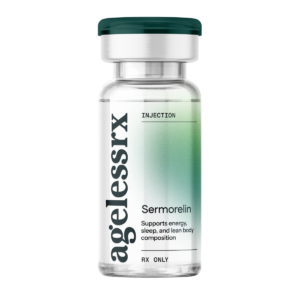
Sermorelin Injections are a prescription peptide and an analog of growth-hormone-releasing hormone (GHRH), the same signal the hypothalamus uses to tell the pituitary to produce GH. Instead of introducing synthetic growth hormone directly, Sermorelin binds to GHRH receptors in the pituitary. It prompts the gland to release its own HGH in the pulsatile, natural rhythm the body uses.
Who May Want to Consider Sermorelin
Sermorelin tends to make the most clinical sense for adults over 35 who have genuinely worked through lifestyle factors and still experience persistent fatigue, slow recovery, or body composition changes that have not responded to sleep, training, and diet optimization. Profiles where the clinical conversation most often comes up:
Sermorelin requires a prescription and a clinical evaluation covering symptoms, health history, and typically lab work. It is not appropriate for people with active malignancies, as GH signaling can promote cell growth in certain cancer contexts. Those with primary pituitary disease, where the gland itself cannot respond to GHRH stimulation, are also unlikely to benefit. Pregnancy and certain other conditions may be additional contraindications a clinician will screen for during evaluation.
Sermorelin is one tool among several. Whether it fits depends on individual biology and clinical context, not a checklist.
Sermorelin at AgelessRx
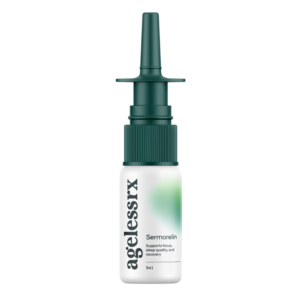
Sermorelin is part of our active research stack. Our in-house Research Team has included Sermorelin Nasal Spray as one of nine agents in our XPRIZE Healthspan Finals protocol, a 12-month double-blind placebo-controlled trial enrolling adults aged 50 to 90. That decision reflects research-level confidence in its relevance to age-related GH decline.
For those who have worked through the lifestyle foundations covered in this article and still notice something is missing, a clinical evaluation may be a reasonable next step.
Note: The above statements have not been reviewed by the Food and Drug Administration. This product is not intended to diagnose, treat, cure, or prevent any disease.