
PT-141 Peptide for Men: Desire vs. Performance

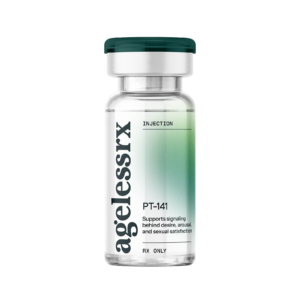
Low libido in men and erectile dysfunction get treated like two names for the same thing, but they’re actually two separate systems. One lives in your brain, whereas the other lives in your blood vessels. PT-141 targets the one most treatments skip entirely. If you’ve been trying to solve a desire problem with a performance solution, this may be worth reading.
Key takeaways:
- PT-141 targets desire in the brain via melanocortin receptors, not blood flow like PDE5 inhibitors
- Low libido and erectile dysfunction are separate problems that respond to different treatments
- Testosterone drops ~1% per year after 30, affecting readiness more than desire
- PT-141 is taken as needed (1mg to 2mg) up to eight times per month
- PT-141 is available as a subcutaneous injection
Why Desire and Performance Are Two Different Problems
Many men assume that low libido and erectile dysfunction are the same problem wearing different masks. They aren’t. Libido is a brain-driven process powered by dopamine signaling. Erections are a physical response that depends on blood flow to penile tissue. A man can have strong desire and still struggle to get or maintain an erection. He can also lose interest in sex entirely while his erectile function remains intact. PT-141 works at the brain level, making it the right tool for the first problem, not necessarily the second.
What is PT-141?
PT-141, known generically as Bremelanotide, is a synthetic peptide built from a natural hormone called alpha-melanocyte-stimulating hormone (alpha-MSH), which helps regulate arousal and appetite in the brain. It binds to melanocortin receptors in the brain, particularly MC4, and triggers dopamine release in the brain pathways tied to sexual motivation and arousal.
Where PDE5 inhibitors like Sildenafil and Tadalafil act on blood vessels in genital tissue, PT-141 works earlier in the process, acting directly in the brain where desire starts. That puts it in a different category from any treatment built around blood flow, which helps explain why the two are rarely interchangeable.
How the Male Brain Generates Desire
Sexual desire in men starts in the brain. Two brain regions, the hypothalamus and limbic system, process arousal signals through chemical messengers called neurotransmitters. Two matter most: dopamine drives motivation and anticipation for sex, while melanocortin receptors boost those signals further. When this pathway underperforms, desire fades regardless of testosterone levels or physical health. PT-141 (Bremelanotide) works by activating melanocortin receptors directly in the brain, bypassing the blood vessels entirely.
Why Male Desire Declines Over Time
Desire doesn’t vanish overnight. For most men, it fades gradually, and the reasons are more layered than a simple hormone check can capture.
Testosterone gets most of the blame, and it does play a role. Levels may drop roughly 1% per year after age 30 for some men. But testosterone explains physical readiness more than it explains desire itself. Many men with clinically normal testosterone still report low libido, which points to something else going on upstream.
That “something else” often involves dopamine. Sexual motivation is largely a dopamine-driven process, routed through the brain’s reward and motivation center (the mesolimbic system). Research on dopamine and sexual behavior suggests that stress, poor sleep, chronic inflammation, and aging all may blunt dopamine activity over time, quietly dialing down motivation before a man ever notices a pattern.
Other Contributors Worth Knowing
- High prolactin (a hormone that can rise due to stress, certain medications, or pituitary issues) can suppress sexual interest even when testosterone is normal, and is frequently overlooked in standard lab panels.
- Certain medications, including SSRIs and beta-blockers, are known to lower sexual desire by affecting the brain’s arousal signals.
- Relationship dynamics and psychological load matter too, since desire is not purely biochemical and context shapes how the brain registers opportunity.
The result is a situation where desire and performance become decoupled. A man may have adequate erectile function but feel little drive to initiate. Or he may want sex but find that his body doesn’t follow. These are different problems, and they respond to different interventions.
What the Clinical Research Shows for Men
PT-141 works by activating melanocortin receptors in the brain, particularly two receptors called MC3R and MC4R, which sit along the brain pathways that control sexual arousal. Clinical evaluation of PT-141 in men suggests meaningful improvements in sexual function, satisfaction, and arousal, including in cases where PDE5 inhibitors had previously failed. A separate study in Sildenafil non-responders found that a notable portion of men with erectile dysfunction who did not respond to Sildenafil may see improvement with PT-141. This points to its potential value as a brain-based option when blood flow treatments have not worked.
PT-141 vs. PDE5 Inhibitors
The comparison comes down to where in the sequence each treatment acts. PDE5 inhibitors relax the blood vessels and increase blood flow to erectile tissue after sexual arousal has already begun. PT-141 acts earlier, at the brain’s melanocortin receptors, supporting desire before any physical response begins. They are not competing versions of the same solution; they target different points in a chain.
How They Compare
|
PT-141 |
PDE5 inhibitors | |
|---|---|---|
|
Acts on |
Brain (melanocortin receptors) |
Blood vessels (vascular smooth muscle) |
|
Primary target |
Desire and arousal signaling |
Erectile blood flow |
|
Requires prior arousal |
No |
Generally yes |
|
Best suited for |
Low libido |
Erectile dysfunction |
Warning: PT-141 must not be combined with PDE5 inhibitors without clinician guidance. Combined use may increase the risk of priapism, a prolonged and painful erection that constitutes a medical emergency requiring immediate care.
Who May Benefit from PT-141
PT-141 tends to be most relevant for men who experience low or absent sexual desire that persists even when physical arousal isn’t an issue. This includes men with hypoactive sexual desire disorder (a medical term for persistently low sex drive), those whose libido has declined with age, and men who find that ED medications alone don’t restore the full sexual experience because the physical response is present but the drive simply isn’t there.
Men dealing with stress-related or psychological sexual dysfunction may also find PT-141 worth considering, since its mechanism works through the brain, not the vascular system.
Side Effects and Safety
PT-141 is generally well tolerated, but some people experience side effects. The most reported side effects include nausea, flushing, and headaches, which tend to be mild and short-lived. Some men may experience spontaneous erections or a temporary increase in blood pressure after taking PT-141. Men with cardiovascular concerns should speak with a clinician before starting treatment.
Who Should Be Cautious
- Men taking medications that affect blood pressure should approach PT-141 carefully, since the temporary spike can compound existing cardiovascular strain.
- Anyone with a history of hypersensitivity reactions to melanocortin-based compounds should discuss this with a US-licensed provider before use.
- PT-141 is not a daily maintenance medication. It works on an as-needed basis, and overuse can increase the likelihood of side effects without improving outcomes.
Sexual Health as a Longevity Signal
Research on sexual activity and health outcomes suggests that declines in sexual desire and function are associated with increased risk of cardiovascular disease and other serious health problems. These are the same systems that drive overall longevity outcomes. A man’s ability to experience desire and perform physically may reflect how well his hormone, blood vessel, and nervous systems are working together.
For men focused on longevity, this matters. Ignoring sexual health means ignoring a signal your body may be sending about something deeper.
A Different Approach to Low Sexual Desire
Researchers now understand the biology of desire more clearly, and that knowledge is changing how longevity-focused care approaches sexual health. If your drive has been low and the usual approaches haven’t worked, the mechanism outlined here may explain why. PT-141 works upstream, at the level of desire and arousal in the brain, which puts it in a different category from most treatments men are offered. Review PT-141 to see whether its unique mechanism may align with your needs.
Note: The above statements have not been reviewed by the Food and Drug Administration. This product is not intended to diagnose, treat, cure, or prevent any disease.