
Sermorelin:
How does it work?
Sermorelin is a fragment of growth-hormone-releasing hormone (GHRH). It binds the same pituitary receptor the body uses, prompting a pulsed release of growth hormone.1
Because release still runs through the pituitary, the body’s feedback keeps it pulsed, rather than a constant flood.4
What Sermorelin may support


How Sermorelin works
Think of the pituitary like a faucet and Sermorelin like the hand that turns it on. It doesn’t pour growth hormone into the body directly, but rather sends the signal that tells the pituitary to release its own.
By using the body’s normal feedback system, growth hormone rises and falls in pulses instead of staying constantly elevated for potential benefits in growth, repair, and recovery.
A single intranasal dose kept growth hormone elevated for up to four hours.7

Longevity benefits

What we still don’t know
Sermorelin and growth hormone therapy work differently


Science-backed
We’re leaders in longevity research
Our in-house Research Team does not just track the growth-hormone-axis literature, it designs and publishes our own peer-reviewed studies.
Sermorelin is a newer focus for us than some longer-running programs, so this page leans on the outside literature, and we update it as the evidence changes.
Choose the experts in Sermorelin
Sermorelin Injection
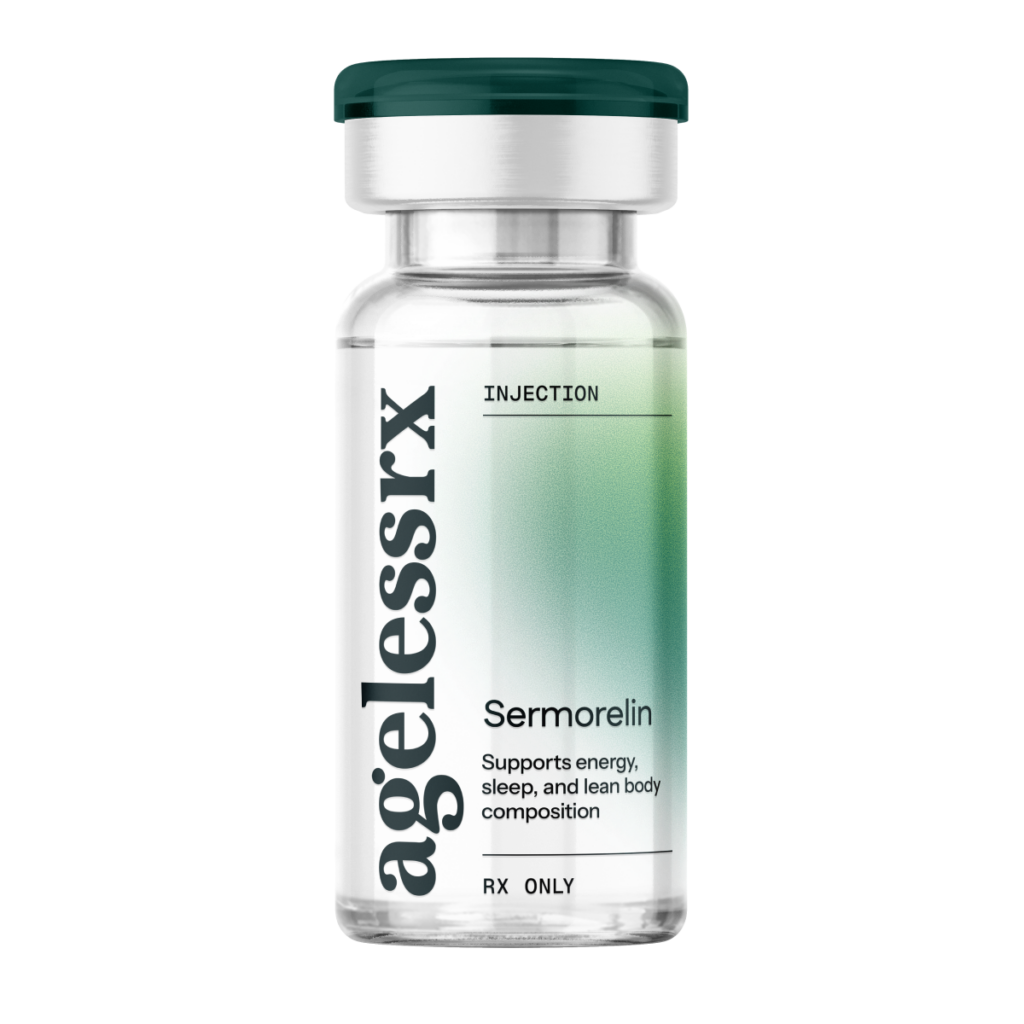
Supports energy, lean muscle mass, and strength by encouraging the body to replenish its own growth hormone gradually—without the risks of synthetic HGH.
Sermorelin Nasal Spray
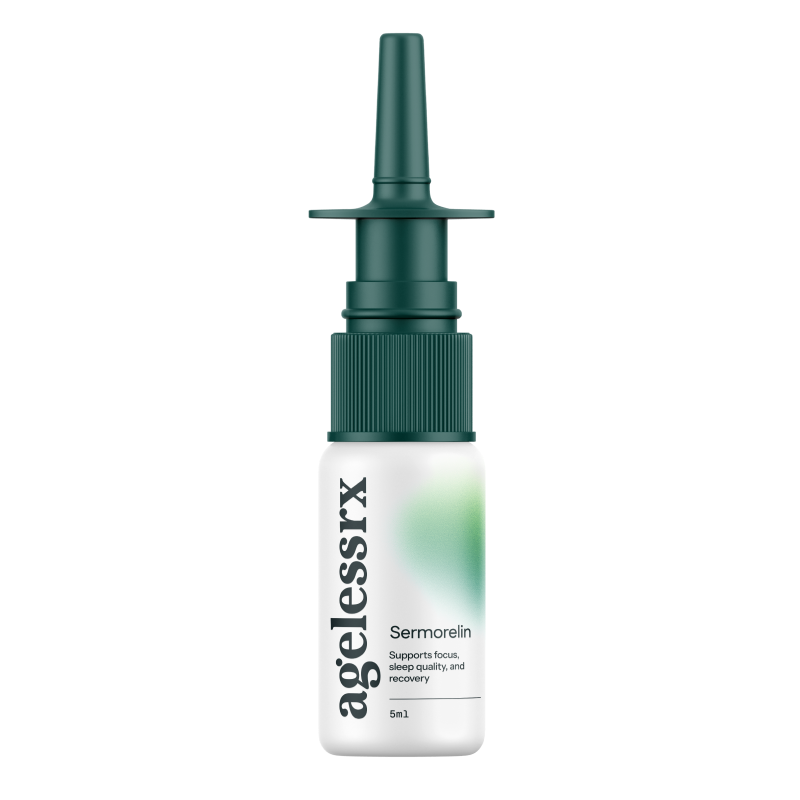
A targeted nasal spray that may support natural growth hormone signaling in the brain, helping promote deeper sleep, clearer thinking, and balanced recovery without injections.

Frequently asked questions
AgelessRx offers Sermorelin as an Injection and a Nasal Spray because each reaches the body differently. The injection is our most established route. The nasal spray is designed to reach the brain more directly. A clinician helps match the format to what a member is looking for.
The injection delivers Sermorelin systemically, prompting the pituitary through its normal release pathway. The nasal spray is built around research suggesting intranasal delivery may reach the brain more efficiently.
The field is still mapping exactly how much of each format reaches target tissue, and we’d rather be transparent about that than overstate it.6
There is no single at-home test that confirms pituitary growth hormone output is changing. Members and their care team track self-reported changes in energy, sleep, and recovery over several weeks, plus standard bloodwork a clinician may already be monitoring.
Sermorelin is best suited for adults already caring for themselves through diet, sleep, and exercise who want extra support as growth hormone signaling declines with age.
It is not a treatment for a diagnosed condition and is not appropriate during pregnancy or breastfeeding without clinician guidance. A clinician reviews each member’s health history first.
Dosing starts conservatively and is adjusted based on how a member responds, guided by ranges used in published human research. The goal is the lowest effective amount for each person’s format and goals.
Sermorelin prompts the pituitary to release growth hormone through its own pathway. Direct growth hormone therapy supplies the hormone itself, bypassing that pathway.
Researchers have proposed that Sermorelin’s route may support a more natural, pulsed release pattern, though this is an area of ongoing study, not a settled comparison.4