Skip to content

Best price ever on Microdosing Tirzepatide | $109/first month

Our Science

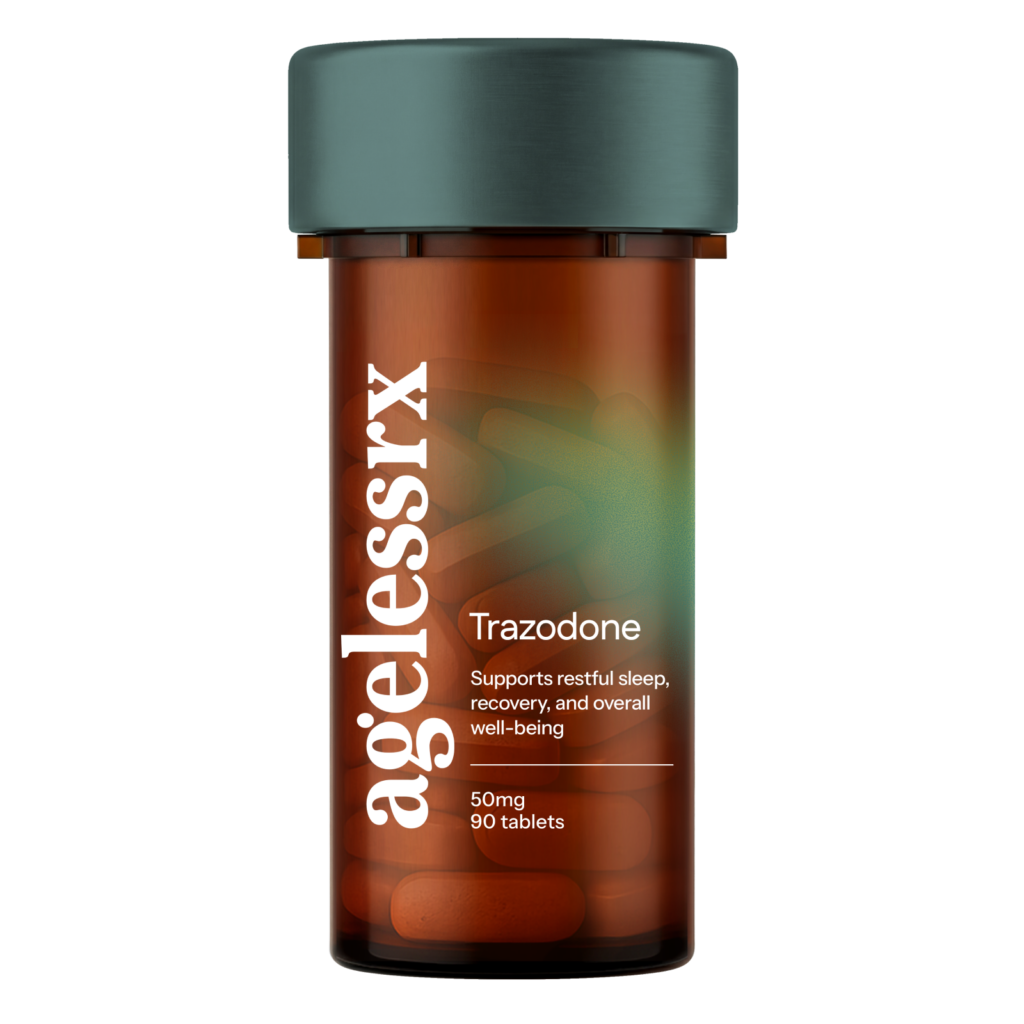
Trazodone

Working on the brain’s arousal signals, Trazodone may help the body fall asleep and reach the deep, restorative sleep that supports healthy aging.

Trazodone:
How does it work?

Trazodone was first designed as an antidepressant, but at low doses it works mainly on the brain’s arousal signals, easing the shift into sleep.4

That calming action is why some clinicians prescribe off-label for sleep, and why researchers increasingly study sleep itself as longevity medicine.

What Trazodone may support

At low doses, Trazodone blocks some of the serotonin and histamine signals that keep the brain alert at night, which may help the body fall asleep, stay asleep, and spend more time in deeper sleep.
May help the body fall asleep faster and spend less time awake during the night.1
May support more deep, non-REM sleep, the stage linked to physical recovery and restoration.3
Helps quiet some of the serotonin and histamine signaling involved in nighttime arousal.4
Available as a clinician-guided plan with ongoing support and dosage adjustments.

How Trazodone works

Think of the brain as having a nighttime “alert” setting. Trazodone may help turn down several of the signals that keep that system switched on, including serotonin, histamine, and adrenaline pathways tied to arousal.4
Explore Trazodone

Adults with the healthiest sleep patterns gained ~5 years of life expectancy.6
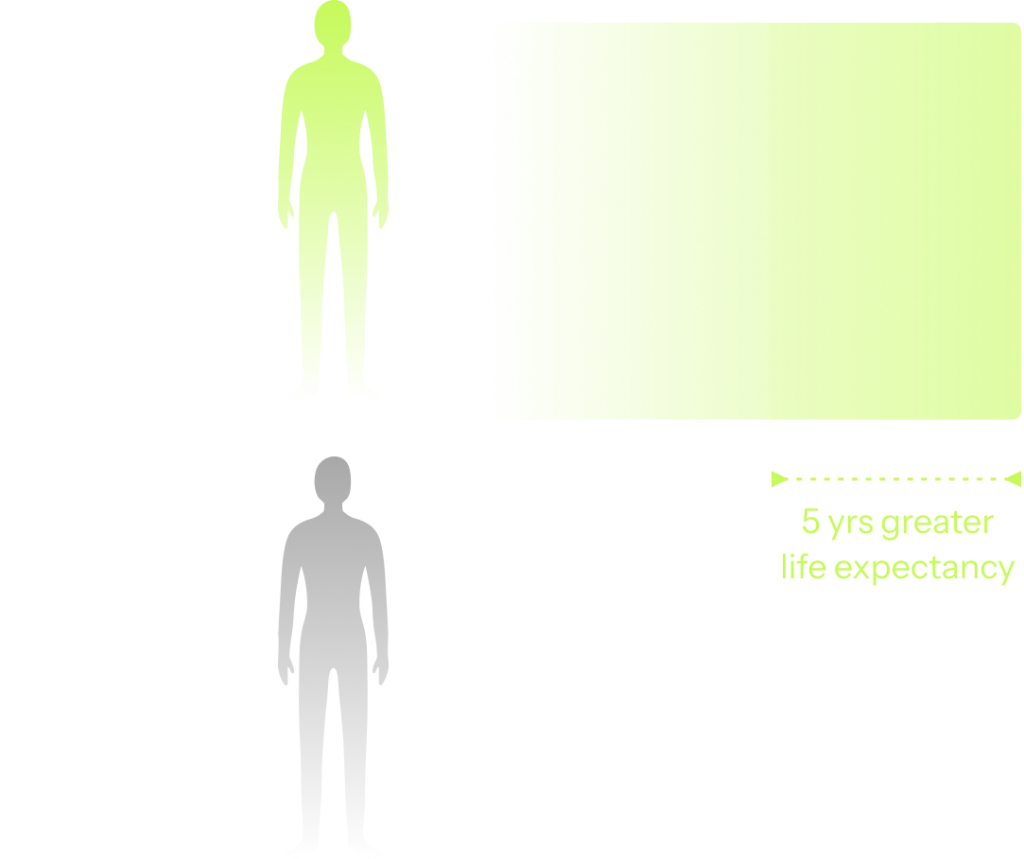
+5 yrs
Prescription products require an online evaluation with a licensed medical professional who will determine if a prescription is appropriate. Products are compounded by a licensed pharmacy. The FDA has not reviewed or approved compounded products for any use for safety, efficacy, or quality.

Trazodone benefits

What Trazodone may support for sleep and healthy aging, with the evidence behind each.

What we still don’t know

We believe in full transparency. Here’s what Trazodone research doesn’t yet answer.

We’re studying sleep as a longevity intervention

Our Stanford PhD-led Research Team is studying how sleep quality connects to healthy aging, including an active observational trial following Trazodone and other sleep interventions in real-world care.
Trazodone is part of our active Sleep for Longevity observational trial.
Our Research Team tracks the sleep-and-aging evidence and brings it into care.
Read our Research

Don’t know where to start?

Take our quick assessment to get personalized recommendations based on your goals and where you are in your longevity journey.

Frequently asked questions

01 Is Trazodone FDA-approved for sleep?

No. Trazodone is FDA-approved to treat major depressive disorder. Using it at low doses for sleep is off-label, meaning a provider prescribes it based on clinical evidence rather than a sleep-specific FDA indication.

02 How is Trazodone different from typical sleep medications?

Unlike controlled sleep hypnotics, Trazodone works mainly by calming the brain’s arousal signals, and reviews describe a lower dependence signal. A provider reviews whether it fits your situation.

03 Is Trazodone habit-forming?

Trazodone isn’t a controlled substance, and reviews report a lower risk of dependence than many sleep medications. Even so, you and your provider decide when and how to stop, tapering gradually if needed.

04 How will I know if Trazodone is working?

Most people track how quickly they fall asleep, how often they wake, and how rested they feel over a few weeks. Individual response varies, and a provider adjusts the plan with you.

05 What's the connection between sleep and longevity?

Large studies link consistent, high-quality sleep with lower disease risk and a longer health span. Trazodone is one tool some people use to protect that sleep, under provider guidance.

06 Who is Trazodone not for?

Trazodone isn’t right for everyone. It can interact with certain medications and health conditions, so a provider reviews your health history and current medications before prescribing.