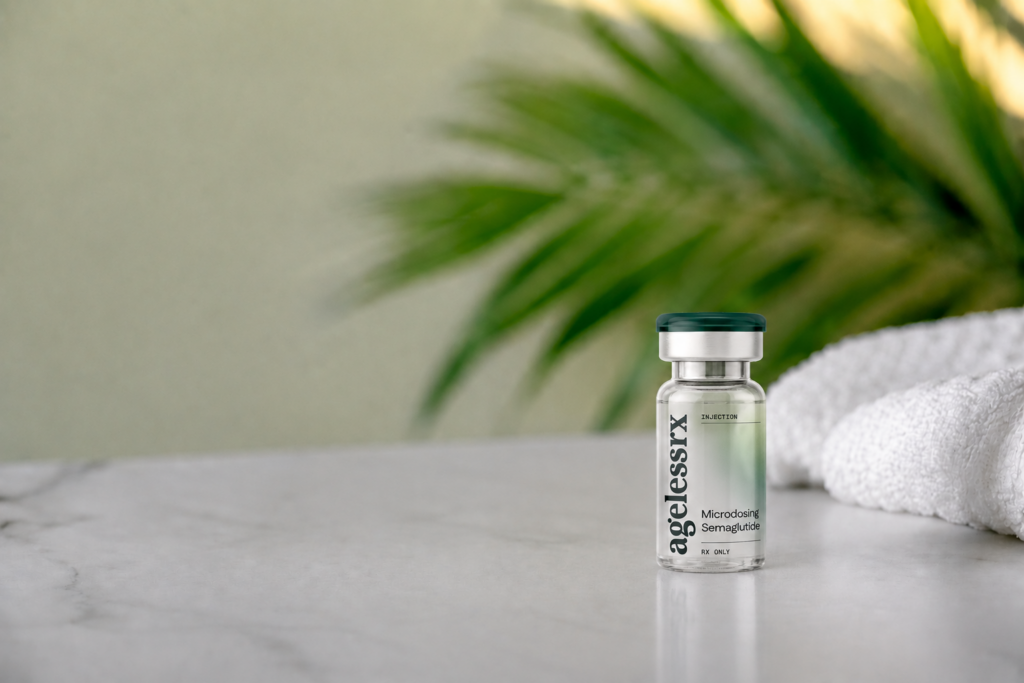
What Is Microdosing Semaglutide?

Microdosing Semaglutide is gaining traction as a new therapy that draws on the benefits of GLP-1 receptor agonists at low doses to enhance overall health, longevity, and well-being.
Traditionally used in the treatment of type 2 diabetes and obesity, Semaglutide is now being studied for its potential to reduce inflammation, improve mood, and support metabolic health, all without the pronounced side effects of higher doses.
But what exactly is Microdosing Semaglutide, and why are so many patients and clinicians excited about its potential? Let’s look into the science.
Key takeaways:
- Microdosing Semaglutide uses doses well below the standard 0.25 mg starting point to target longevity benefits
- At low doses, GLP-1 receptor activation in immune pathways may reduce inflammaging without major weight loss
- Microdosing suits people optimizing health and energy, not those seeking weight loss as a primary goal
The Basics of Semaglutide: How It Works
Semaglutide belongs to a class of medications known as GLP-1 receptor agonists. These medications mimic glucagon-like peptide-1 (GLP-1), a hormone naturally produced in the gut. GLP-1 plays a key role in managing several physiological processes, including:
- Appetite and satiety
GLP-1 slows gastric emptying and increases feelings of fullness, reducing calorie intake. - Insulin secretion
By enhancing insulin release in response to meals, GLP-1 improves glucose control. - Inflammation modulation
GLP-1 medications also reduce systemic inflammation, which is a key driver of many chronic diseases.
By activating GLP-1 receptors, Semaglutide helps restore balance in these processes, offering a wide range of potential health benefits.
Why Microdosing?
Unlike standard therapeutic doses used for diabetes or weight loss, microdosing involves administering far smaller amounts of Semaglutide. This approach is designed to:
- Minimize side effects
Higher doses can cause nausea, vomiting, or gastrointestinal discomfort. Microdosing reduces these risks while still delivering benefits. - Expand therapeutic use
By focusing on health optimization instead of disease treatment, microdosing opens up possibilities for a broader range of patients. - Support personalization
Microdosing allows individuals to find a dose that works best for their unique physiology and health goals.
Here is a quick look at how microdosing compares to a standard Semaglutide dose:
|
Microdosing |
Standard Dose | |
|---|---|---|
|
Weekly dose |
Well below 0.25 mg |
0.5 mg to 2.4 mg |
|
Primary goal |
Longevity, inflammation, metabolic health |
Weight loss, blood sugar control |
|
Weight loss effect |
Modest or none |
Noticeable weight reduction |
|
GI side effects |
Generally mild |
More common during titration |
|
Best suited for |
Adults seeking longevity and health benefits |
Adults with obesity or type 2 diabetes |
|
Clinician required |
Yes |
Yes |
Standard GLP-1 Titration Schedule
GLP-1 dosing for type 2 diabetes follows a stepped titration protocol. Patients typically start at 0.25 mg per week for the first four weeks, then increase to 0.5 mg weekly. From there, a clinician may raise the dose to 1 mg weekly and, in some cases, up to 2 mg weekly based on individual response and tolerance. Each step allows the body time to adjust and reduces the likelihood of GI side effects.
Microdosing takes a deliberate departure from this path. Instead of titrating toward a full therapeutic dose, the microdosing approach keeps the weekly amount well below the standard 0.25 mg starting point. At these lower levels, GLP-1 receptor activation is more targeted, which may explain the reduced GI burden and the shift in focus toward longevity and inflammation-related benefits instead of weight loss. Any change to your Semaglutide dose should be made in consultation with a qualified clinician.
GI side effects, such as nausea, bloating, and loose stools, are the most commonly reported issues at any dose level. A few practical strategies can help:
- Antacids and H2 blockers
Over-the-counter options like calcium carbonate antacids or famotidine can ease acid reflux and stomach discomfort, especially in the first days after a dose increase. - Ginger
Ginger has a well-known role in reducing nausea and may take the edge off post-injection queasiness. - Peppermint
Peppermint tea or diluted peppermint oil can help relax the smooth muscle of the GI tract, reducing bloating and cramping sensations. - Green tea
Some patients find that green tea, consumed in moderate amounts, helps settle the stomach between doses, though high caffeine intake can aggravate nausea, so keep portions small.
Eating smaller, lower-fat meals and staying well hydrated are also helpful habits during titration. If side effects persist beyond a few days or are severe, speak with your clinician before continuing any dose change.
How GLP-1s Work
GLP-1s work by mimicking natural GLP-1, a hormone the body releases from the gut after eating. It binds to GLP-1 receptors in the pancreas (to support insulin release), the stomach (to slow gastric emptying), and the hypothalamus in the brain (to signal fullness and reduce appetite). The result is a coordinated response: patients feel fuller sooner, stay full longer, and take in fewer calories over time. Because GLP-1 receptors are found across multiple organ systems, including immune cells and cardiovascular tissue, Semaglutide’s effects extend well beyond weight regulation.
This receptor distribution is part of what makes microdosing an interesting area of research. At sub-therapeutic doses, the appetite-suppressing signal is modest, but the receptor activation in inflammatory and metabolic pathways may still occur. Researchers are studying whether this low-level, consistent GLP-1 receptor stimulation could produce the longevity-adjacent benefits, such as reduced inflammation, improved insulin sensitivity, and neuroprotection, without requiring the full dose used for weight loss.
GLP-1 Medications: Semaglutide, Tirzepatide, and Microdosing
Not all GLP-1-based medications work the same way, and understanding the differences matters when thinking about the microdosing context. Semaglutide is a selective GLP-1 receptor agonist that binds to and activates GLP-1 receptors throughout the body. Tirzepatide takes a different approach: it is a dual agonist that activates both GLP-1 receptors and GIP (glucose-dependent insulinotropic polypeptide) receptors simultaneously. Because GIP receptors also play a role in insulin secretion and fat metabolism, this dual mechanism may explain why Tirzepatide tends to produce greater weight loss than Semaglutide at comparable doses in clinical trials.
Microdosing sits in a separate category from either standard weight-loss protocol. Where full-dose Semaglutide and Tirzepatide are prescribed for measurable weight reduction in people with obesity or metabolic disease, microdosing targets a different set of goals: reduced inflammation, improved metabolic markers, and longevity-related benefits at doses well below standard therapeutic ranges.
Microdosing GLP-1 and Inflammation: A Longevity Strategy
GLP-1 receptors extend beyond the pancreas and gut. They are also found on immune cells, including macrophages, T cells, and dendritic cells. Because GLP-1 receptors are distributed across immune tissue, even sub-therapeutic doses of Semaglutide may reach these pathways and help shape how the body mounts an inflammatory response.
Early research suggests that GLP-1 receptor agonists like Semaglutide can modulate inflammatory pathways, reducing markers such as C-reactive protein (CRP) and interleukin-6 (IL-6) linked to chronic low-grade inflammation. This pattern of persistent, low-level immune activation, known as inflammaging, builds up over time and raises the risk of cardiovascular disease, neurodegeneration, and metabolic dysfunction. Reducing inflammaging is one of the central goals of longevity-focused medicine.
At microdoses, appetite suppression is modest. Yet GLP-1 receptor activation in immune and metabolic pathways may still occur at lower dose levels. Some patients with autoimmune or inflammatory conditions report easing symptoms by months 3 to 4, though clinical trial data specific to microdosing for inflammation is limited.
Microdosing Semaglutide Benefits
While scientists are still investigating the efficacy and benefits of Microdosing Semaglutide, anecdotal reports and existing scientific studies suggest that Microdosing Semaglutide could zero in on the longevity benefits of Semaglutide and minimize side effects, at the cost of reduced weight loss benefits.
- Inflammation reduction
Chronic inflammation is a major contributor to diseases such as arthritis, cardiovascular conditions, and neurodegeneration. Semaglutide has been shown to modulate inflammatory pathways, reducing markers like C-reactive protein (CRP) and interleukin-6 (IL-6). Microdosing Semaglutide for inflammation could be particularly beneficial for patients with autoimmune diseases, chronic pain, or metabolic syndrome who don’t want to compound their conditions with potential side effects from higher doses. - Improved cognitive health
GLP-1 receptors are present in the brain, where they may influence mood, cognition, and neuroprotection. The EVOKE trial found oral Semaglutide did not slow disease progression in people with early-stage Alzheimer’s disease. However, large observational studies show GLP-1 users have a lower rate of new Alzheimer’s diagnoses compared to users of other diabetes medications, pointing to a possible preventive role. Research into whether microdosing may reduce Alzheimer’s and Parkinson’s risk is ongoing. - Metabolic and cardiovascular health
Semaglutide’s ability to improve insulin sensitivity and lower blood glucose levels can benefit those with prediabetes or metabolic syndrome. Semaglutide may also support cardiovascular health by improving lipid profiles and reducing atherosclerotic risk. - Longevity and anti-aging
By improving mitochondrial function, and reducing oxidative stress, Semaglutide may activate cellular pathways associated with longevity.
The New Evidence: Clinical and Anecdotal Reports
While large clinical trials on Microdosing Semaglutide are still underway, early findings have been promising:
- Improved quality of life
Patients report enhanced energy, reduced fatigue, and better overall well-being. - Symptom relief for autoimmune conditions
Anecdotal evidence suggests reductions in joint pain, inflammation, and other autoimmune symptoms. - Weight stabilization
Even at low doses, Semaglutide helps suppress appetite, leading to mild weight loss or stabilization.
Ongoing trials aim to quantify these benefits and set dosing protocols that maximize effectiveness while minimizing risks.
Who Should Consider Microdosing Semaglutide?
Microdosing is ideal for those who are looking to:
- Optimize health, mood, and energy without major weight loss
- Stifle chronic inflammation or symptoms of metabolic syndrome
- Reduce symptoms of autoimmune diseases like rheumatoid arthritis, fibromyalgia, or neurodegenerative disease
However, it’s not suitable for everyone. Individuals with a history of thyroid cancer, pancreatitis, or severe psychiatric conditions should avoid GLP-1 therapies.
What Does the Future Hold?
The science of Microdosing Semaglutide is still evolving, but its potential to revolutionize preventive health and wellness is undeniable. As more research comes to light, clinicians and patients alike will gain a clearer understanding of how to apply its benefits for diverse health goals.
Microdosing Semaglutide represents a promising step forward in personalized medicine. By offering a safe, flexible, and effective way to improve health and longevity, it empowers individuals to take control of their well-being.
If you’re curious about Microdosing Semaglutide and whether it’s right for you, consult your AgelessRx provider with a free medical intake today.
Note: The above statements have not been evaluated by the Food and Drug Administration. This product is not intended to diagnose, treat, cure, or prevent any disease.