
What Is PT-141? Low Libido Peptide Guide

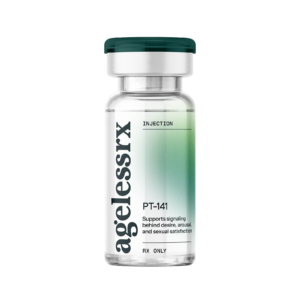
Sexual desire starts in the brain, not the body. That matters more than most people realize. It also explains why many sexual health treatments fall short when desire itself is the problem. PT-141, known generically as Bremelanotide, targets the brain’s melanocortin receptors instead of the vascular system. It works where desire begins. Knowing how that process works is the first step toward understanding what can help with low libido.
Key takeaways:
- PT-141 (Bremelanotide) targets sexual desire in the brain, not blood flow, unlike PDE5 inhibitors
- Triggers dopamine release in the hypothalamus, targeting low libido at its neurological source
- Effects onset in 45 to 60 minutes via injection, lasting several hours
What is PT-141?
PT-141, also known by its generic name Bremelanotide, is a synthetic peptide derived from Melanotan II. Melanotan II was created as an analog of alpha-melanocyte-stimulating hormone (α-MSH), a hormone the body makes naturally. Unlike most sexual health treatments, PT-141 does not work through the vascular system. Instead, it targets the central nervous system directly, activating melanocortin receptors in the brain to drive sexual desire at its source.
The peptide received FDA approval in 2019 under the brand name Vyleesi for treating hypoactive sexual desire disorder (HSDD) in premenopausal women. Research has since expanded interest in its use for both men and women dealing with low libido.
How It Differs From Other Options
Most sexual health treatments focus on blood flow. PT-141 takes a different approach, working in the brain where desire actually starts. This matters because low libido often has a neurological cause that blood flow treatments cannot reach.
- Sildenafil (Viagra) and similar medications increase blood flow to genital tissue but do nothing for desire itself
- PT-141 activates melanocortin receptors (MC3R and MC4R) in the hypothalamus, a region involved in governing mood, appetite, and sexual behavior
- PT-141 works through the brain, not the vascular system. Therefore, it may be effective even when desire remains low despite normal physical arousal
How PT-141 Works in the Brain
PT-141 crosses the blood-brain barrier, a filter that blocks most compounds from reaching the central nervous system. Once inside, it binds to MC4R receptors in the hypothalamus, triggering a dopamine release into circuits tied to reward, motivation, and goal-directed behavior. That dopamine signal is what creates desire as a felt experience, before any physical response occurs. This is why PT-141 may drive desire even when the vascular system is working normally but the neurochemical signal is weak or absent.
PT-141 vs. PDE5 Inhibitors
Most people know sexual health treatments like Sildenafil (Viagra) or Tadalafil. These PDE5 inhibitors increase blood flow to the genitals, which can help with the physical side of arousal. But they do not affect desire itself.
PT-141 works differently. Instead of acting on the vascular system, it acts on the central nervous system, binding to melanocortin receptors in the brain to influence sexual motivation directly. This makes it one of the few options that may help people whose low libido has a neurological or hormonal root, not a circulation-related one.
|
PDE5 inhibitors |
PT-141 | |
|---|---|---|
|
Mechanism |
Increases genital blood flow |
Acts on brain melanocortin receptors |
|
Target |
Physical arousal response |
Sexual desire and motivation |
|
Approved for |
Erectile dysfunction |
Hypoactive sexual desire disorder (women) |
|
Route |
Oral | Subcutaneous injection |
|
Works without desire |
Yes |
No |
|
May help low desire |
No |
Yes |
Who May Consider PT-141
PT-141 may be worth considering for adults with low sexual desire that has not responded to other treatments. It may work for both men and women, since it acts through neurological pathways and not hormonal or vascular ones.
PT-141 may be appropriate for adults in the following situations:
- Women with hypoactive sexual desire disorder (HSDD), characterized by persistently low libido causing personal distress.
- Men with sexual dysfunction who haven’t found adequate relief from PDE5 inhibitors like Sildenafil or Tadalafil
- Adults whose reduced desire appears rooted in neurological signaling rather than blood flow or hormone levels
PT-141 is not the right fit for every type of sexual dysfunction. If your concerns are mainly hormonal or cardiovascular, other treatments may be a better match.
PT-141 Research in Women
Most PT-141 research has focused on women. The FDA approved Bremelanotide (Vyleesi) for premenopausal women with hypoactive sexual desire disorder (HSDD), a condition marked by persistently low libido that causes personal distress. Interest is also growing among women exploring options like delaying menopause. In the clinical trials behind that approval, women using PT-141 reported meaningful improvements in desire and less distress compared to placebo. A 2022 clinical review found that Bremelanotide improved desire, arousal, and pleasure in women with HSDD when taken before sexual activity.
PT-141 Research in Men
Research on PT-141 in men has focused mainly on erectile dysfunction, especially in cases where PDE5 inhibitors like Sildenafil have not worked well. Men interested in a broader approach can look into men’s aging treatments. Because PT-141 works through the central nervous system and not the vascular system, it offers a different option for men who have not responded to conventional treatments.
The data points to meaningful improvements in erectile function with PT-141. A study found improvements in sexual function, satisfaction, and arousal in men, attributed to PT-141’s effects on dopamine signaling.
What the Data Suggests
Results across studies point to a few consistent findings:
- PT-141 works through central pathways involved in sexual arousal, offering a different mechanism from vascular-focused treatments like PDE5 inhibitors.
- Effects tend to onset within 60 minutes and can last several hours
- Sexual desire, including motivation beyond physical response, was also reported to improve, aligning with PT-141’s action on melanocortin receptors
How PT-141 is Administered
PT-141 is administered as a subcutaneous injection, targeting melanocortin receptors.
Onset timing and absorption may vary.
Dosing is individualized and should be guided by a US-licensed provider based on your health history and goals. AgelessRx offers PT-141 Injections reviewed through an online intake process by US-licensed clinicians. Visit the PT-141 Injection product page to learn more.
Side Effects and Safety Considerations
Most side effects from PT-141 are mild. The most common ones are:
- Nausea or facial flushing
- Headache and fatigue
- Temporary increase in blood pressure
Some people should not use PT-141. Do not use it if you have uncontrolled high blood pressure, serious heart problems (such as an ejection fraction below 50% or NYHA Class III or higher), active cancer or a cancer diagnosis in the past two years, or if you are pregnant or breastfeeding.
Final Thoughts on PT-141 and Low Libido
Sexual desire has a neurobiology, and it changes with age, stress, and hormonal shifts in ways that vascular treatments cannot address. PT-141 works at the level of motivation and drive, not physical response. As research into melanocortin receptor pathways continues, the role of brain signaling in sexual health is becoming clearer.
Explore PT-141 and other personalized, clinician-guided options that may support sexual desire. A conversation with a US-licensed provider is the best place to start.
Note: The above statements have not been evaluated by the Food and Drug Administration. This product is not intended to diagnose, treat, cure, or prevent any disease.