
Understanding Our SF-36 Quality of Life Study

Lab values are useful, but they don’t tell you whether someone can get through a workday without crashing or climb stairs without pain. That’s where quality of life research steps in. The SF-36 survey is one of the most widely used health-related quality of life tools in clinical research, measuring how a person feels across eight dimensions of physical and mental health. It shows how someone is actually functioning in everyday life, and it’s the tool our Research Team used to understand how our patients experience longevity treatments, beyond what lab values alone can show.
Key Takeaways
- The SF-36 is a validated 36-item health survey covering eight physical and mental health domains, backed by thousands of published studies
- The SF-36 is identified as one of the most suitable quality-of-life tools for longevity research
- The SF-36 can detect sub-optimal health states before clinical disease appears, making it well suited for prevention-focused longevity research
- Our Low Dose Naltrexone healthspan study found 69.2% of participants improved their overall SF-36 score during treatment
- The LDN study is the first published result from an ongoing QoL data collection program that also includes GLP-1s and Metformin
What Is the SF-36 Health Survey?
The SF-36 was developed by RAND as part of the Medical Outcomes Study in 1992. Scoring runs on a 0 to 100 scale: a score of 50 reflects the general population average, 100 represents the best possible health, and 0 represents the worst. The eight domain scores roll up into two composite summaries, the Physical Component Summary (PCS) and the Mental Component Summary (MCS). This gives researchers both granular and high-level views of how someone is functioning.
The survey takes roughly 10 to 15 minutes to complete, asks participants to report their own experiences, and serves general and aging populations rather than people with one specific diagnosis. That general applicability is exactly why it translates well to longevity research, where patients may have diverse health profiles and no single shared condition.
Why Quality of Life Data Matters in Longevity Research
Longevity research faces a fundamental time problem. A trial designed to measure lifespan directly would need to run for decades, making it impractical for most interventions. Biomarkers offer useful snapshots, but they don’t capture whether someone can climb stairs without pain or get through a workday without crashing.
Quality of life (QoL) data fills that gap. The SF-36 translates biological changes into something patient-centered: how well someone is actually functioning day to day. Since healthspan, the years spent in good health, is the core target of longevity medicine, researchers need a way to measure whether an intervention is actually moving that needle.
Our review makes a clear argument about what biomarkers alone cannot do. A shift in ApoB, an epigenetic clock score, or a change in muscle strength carries real value, but it means little if the person behind that data doesn’t feel or function any better in daily life. The paper calls for longevity studies to assess both biomarkers and QoL together, treating each as a necessary complement to the other. And while self-reported QoL data is subjective by nature, that subjectivity is the point: how a person perceives their own health is a valid measure of healthspan, as worthy of consideration as any improvement in insulin sensitivity or inflammatory markers.
What Our 2024 Review Found
Traditional longevity trial endpoints, including biomarkers, disease incidence, and lifespan data, miss a dimension that patients care about most: how a person feels and functions day to day. Quality of life data fills that gap.
Four factors drove that conclusion. First, the SF-36 covers both physical and mental health domains in a single instrument, giving researchers a broad picture of functioning. Second, it has decades of validation across general and aging populations, with thousands of published studies behind it. Third, it shows sensitivity to changes in health over time, meaning it can register improvement or decline as an intervention progresses. Fourth, its self-reported, 10-to-15-minute format is practical for decentralized data collection, reaching larger and more diverse cohorts without requiring clinic-based infrastructure.
The SF-36 can capture “pre-disease states of sub-optimal health.” In plain terms, it registers biological decline before any clinical diagnosis appears. For longevity medicine, where the goal is to act upstream of disease, that sensitivity matters. The tool is also well suited to normative aging cohorts, meaning healthy people who are aging without a specific diagnosis. That is exactly the population that gerotherapeutic candidates like Metformin, Low Dose Naltrexone, Rapamycin, and NAD+ are designed to help.
The paper also proposed including QoL data as an integral marker of aging within the Biomarkers of Aging Consortium guidelines, a high-profile framework that defines and classifies measurable biomarkers for longevity clinical trials. That proposal carries real weight: researchers had never previously put forward QoL assays as endpoints for validating gerotherapeutic interventions in longevity studies. The review makes the case that a person’s perception of their own health is as valid a measure of healthspan as any biomarker.
How We Use the SF-36 in Real-World Research
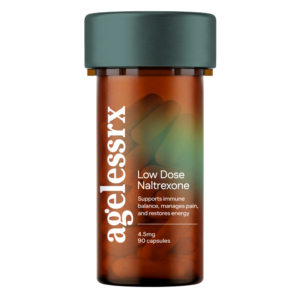
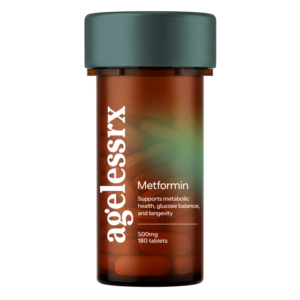
Our Research Team added the SF-36 to a patient outcomes study to measure how our prescribed longevity interventions affect real-world quality of life across our patient population. QoL data collection is currently active for GLP-1s, Metformin, and Low Dose Naltrexone, with participants completing the SF-36 before and after treatment to give researchers a validated, quantitative way to track changes across physical and mental health domains over time. The Low Dose Naltrexone healthspan study is the first published result from this ongoing program.
The Low Dose Naltrexone healthspan study is a clear example of the SF-36 at work. 69.2% of participants qualified as “responders,” meaning they showed meaningful improvement in their overall SF-36 score during treatment. The largest gains appeared in energy and fatigue, physical role limitations, and immune health.
What makes those results worth noting is that many participants started with average-to-good baseline SF-36 scores and still improved. By the end of follow-up, 76.6% of responders had reached SF-36 scores above 55, placing them in the average-to-above-average health range. On a practical level, 23.9% of participants were able to reduce their use of other medications, and 10.5% avoided planned medical procedures.
What the Eight Domains Actually Measure
The SF-36 groups health into eight distinct domains, each scored from 0 to 100. A higher score means better health in that area. The domains cover:
|
Domain |
What It Measures |
|---|---|
|
Physical Functioning |
Ability to perform daily tasks like walking, climbing stairs, and carrying groceries |
|
Role Limitations (Physical) |
How much physical problems cut into work or routine tasks |
|
Role Limitations (Emotional) |
How much emotional issues interfere with daily life |
|
Energy and Fatigue |
Overall vitality and sense of tiredness |
|
Emotional Wellbeing |
Feelings of anxiety, depression, or general happiness |
|
Social Functioning |
How health affects relationships and social activities |
|
Pain |
How much bodily pain affects normal activity |
|
General Health Perceptions |
Overall self-rated health, including outlook on future health |
What This Means for the Future of Longevity Medicine
The longevity field has a data problem. Many existing study designs are complex, expensive, and difficult to access. At the same time, waiting for disease, frailty, or death to occur is not a practical way to evaluate an intervention that is available today. Real-world data collection changes the equation: self-reported questionnaires, at-home blood kits, and wearables let researchers reach larger, more diverse cohorts at a fraction of the cost of traditional trials. If SF-36-based QoL data gains wider acceptance as a geroscience endpoint, the field can generate evidence faster, accelerating decisions about which interventions deserve broader adoption, saving billions in downstream medical costs, and bringing more effective longevity options to more people sooner.
There is a conceptual shift here too. “Feeling better,” when captured through a validated, standardized instrument, is a legitimate scientific endpoint. The SF-36 converts subjective experience into structured, quantifiable data, and that reframing carries real weight for how longevity interventions prove their value to clinicians and researchers alike.
The SF-36 is self-reported and subject to individual interpretation, and QoL-only endpoints in geroscience have not yet reached broad regulatory acceptance, so validation with objective biomarkers remains important. Even so, patient experience belongs in the evidence base. Our LDN healthspan study offered a direct look at how longevity interventions affect real quality of life: participants reported meaningful gains in energy and fatigue, physical role limitations, and immune health, suggesting that targeting the biology of aging may improve how people actually feel day to day.
Note: The above statements have not been evaluated by the Food and Drug Administration. This product is not intended to diagnose, treat, cure, or prevent any disease.