
AgelessRx + XPRIZE Healthspan Semi-Finals: Our 90-Day Trial Findings

AgelessRx has officially been named a top 10 team in the global XPRIZE Healthspan competition. Out of more than 600 teams worldwide, our in-house Research team was selected as one of the ten Milestone 2 Awardees in the XPRIZE Healthspan competition, with a $1M award to move our research into the next phase.
XPRIZE is a nonprofit that designs global incentivized competitions to drive breakthrough solutions for humanity’s hardest problems. The XPRIZE Healthspan competition is a $101 million, 7-year global effort to revolutionize how we approach human aging. The goal: develop and test therapeutics that target biological aging to restore muscle, cognitive, and immune function by a minimum of 10 years, with a goal of 20. AgelessRx is one of only 40 teams selected worldwide to advance to the Semi-Finals.
Reaching the Semi-Finals required more than a good idea. Teams had to design and complete a proof-of-concept randomized controlled trial (RCT) showing the ability to recruit human participants, run a rigorous clinical protocol, and generate meaningful preliminary data. For our team, that meant building a 90-day combinatorial longevity trial from the ground up.
The results across biological age, sleep quality, immune function, lean mass, and quality of life tell a compelling early story about what a personalized, multi-compound longevity protocol can do in just 90 days.
Key takeaways
- Both active treatment groups showed a clean safety profile across 39 blood markers, with no concerning changes to liver, kidney, immune, or organ function in either group
- PhenoAge, a composite biological age score derived from standard blood biomarkers, declined across all groups with greater reductions observed in the active treatment groups compared to the placebo group
- Active intervention groups reported clinically meaningful improvements in sleep quality compared to the placebo group
- Quality of life scores improved across active intervention participants, suggesting the protocol may support overall wellbeing beyond longevity markers alone
- Every participant who entered with reduced immune function returned to a normal range by Day 90. This occured in both active treatment groups
- Both active groups maintained lean muscle mass. The placebo group lost an average of 1.75 kg of lean mass over 90 days (a meaningful concern in older adults).
About the Study
Our XPRIZE Healthspan pilot study enrolled 26 participants aged 60 to 80, with 18 completing the final analysis. The mean participant age was 64.7 years (±5.1 years), and 77.8% of participants were female. To qualify, participants needed indicators of age-related functional decline, such as a BMI between 26 and 30, reduced SF-36 scores for physical function, energy, pain, or conditions like brain fog or prediabetes. The trial ran for 90 days and our in-house Research Team selected and oversaw all interventions.
Study Design and Treatment Groups
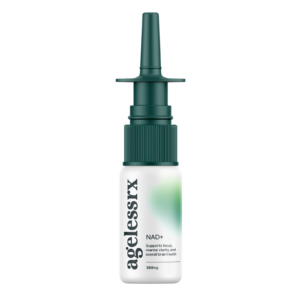
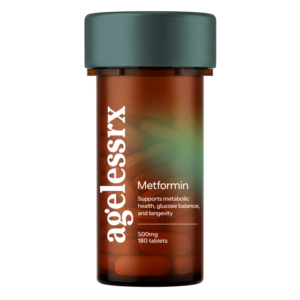
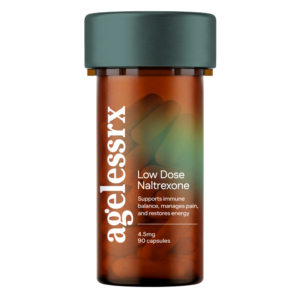
Participants were randomized into three groups. The placebo group (n=5) received Vitamin C and Vitamin E, standard exercise guidance (150 minutes per week), and a matched listening activity in place of guided meditation. The Multi-Therapy (MT) group (n=7) received Low Dose Naltrexone (LDN), Metformin, NAD+ Nasal Spray, and a B12 supplement, alongside structured exercise and guided meditation programs. The Comprehensive Therapy (CT) group (n=6) received all MT interventions plus low-dose Rapamycin (Sirolimus), a Glutathione (GSH) patch, and the Infinite Longevity Support supplement, following the same exercise and meditation protocols.
What the Trial Measured
Measurements included PhenoAge (a biological age estimate from 9 standard blood biomarkers), a full Quest Diagnostics blood panel, iollo at-home metabolic testing, and the iAge immune aging index. Participants also underwent DEXA scans and VO2 max testing via Fitnescity, tracked health metrics using Oura rings, and completed the Creyos cognitive battery at baseline and Day 90. Participants also completed standardized surveys, including the SF-36 Quality of Life Scale, the Immune Status Questionnaire, the Rapid Assessment of Physical Activity (RAPA), and the Sleep Quality Scale (SQS).
Key Findings
The table below summarizes results across all three study groups at Day 90.
|
Outcome |
Placebo/Control |
Multi-Therapy (MT) |
Comprehensive Therapy (CT) |
|---|---|---|---|
|
PhenoAge (biological age) |
Declined (smaller reduction than active groups) |
Average -1.84 years (largest average reduction) |
5 of 6 participants improved (most consistent individual response) |
|
Sleep quality (Sleep Quality Scale) |
2 of 5 improved |
6 of 7 improved |
5 of 6 improved |
|
SF-36 quality of life domains |
3 of 8 improved; 2 declined |
All 8 of 8 improved |
6 of 8 improved |
|
Energy & fatigue score change |
+10.2 points |
+22 points |
+28 points |
|
Lean mass change |
-1.75 kg average loss |
+0.11 kg average gain |
Preserved (near zero mean change) |
|
Immune normalization (at-risk participants) |
Negligible mean change (+0.27) |
Mean change (+0.86) |
Mean change (+0.81) |
Safety Profile
Blood safety was tracked across 39 biomarkers using reference change value (RCV) methodology. RCV is a statistical threshold that flags when a lab value shifts more than expected by chance, making it a sensitive tool for catching early signals of concern. By that standard, no aggregate change in the Multi-Therapy group exceeded a clinical reference value across any of the 39 markers. The Comprehensive Therapy group showed some changes, but these were limited to cholesterol-related markers (the lipid panel) and two minor red blood cell indices. No changes were observed in liver, kidney, immune, or other organ-system markers in either active group.
This matters because stacking multiple compounds is often questioned on safety grounds. The pilot study data suggests this particular combination, used under clinical supervision, can be well tolerated in adults aged 60 to 80 at risk for functional decline. Seven of 26 participants (27%) experienced at least one adverse event, and there were 3 participant withdrawals. One serious adverse event was reported: a myocardial infarction in a Multi-Therapy participant, assessed as possibly associated with physical activity.
Biological Age Improved
PhenoAge declined across all three groups, with both active groups outperforming placebo. The Multi-Therapy group recorded the largest average reduction at -1.84 years. The Comprehensive Therapy group produced the most consistent response: 5 of 6 participants improved. Metabolic testing via iollo also showed favorable shifts in longevity markers and oxidative stress in both active groups.
Sleep and Quality of Life Improved
Both active groups showed clinically meaningful improvements in sleep quality relative to placebo. On the Sleep Quality Scale, the Multi-Therapy group recorded a mean score change of -14.4 and the Comprehensive Therapy group recorded -14.9, compared to -9.0 in the placebo group (the placebo effect was largely outlier-driven). At the individual level, 6 of 7 Multi-Therapy participants improved and 5 of 6 Comprehensive Therapy participants improved, versus only 2 of 5 in the placebo group.
SF-36 Quality of Life scores told a similar story. The Multi-Therapy group improved across all 8 health domains. Energy and Fatigue increased by 22 points, while the Mental Health Summary Score increased by 11.4 points. The Comprehensive Therapy group improved in 6 of 8 health domains. Energy and Fatigue increased by 28 points, while the Mental Health Summary Score increased by 10.5 points. The placebo group improved in 3 domains, declined in 2, and saw the Mental Health Summary drop by 3 points.
Immune Function Normalized
Every participant who entered the study with reduced immune function returned to a normal range by Day 90 in both active treatment groups. Immune function is one of the three primary XPRIZE Healthspan outcome domains, alongside muscle and cognitive function. The protocol appeared to consistently normalize immune function among the participants who needed it most. No similar pattern appeared in the placebo group.
Lean Mass Was Preserved
The placebo group lost an average of 1.75 kg of lean mass over 90 days, a clinically meaningful concern in adults aged 60 to 80. Both active groups preserved lean mass. The Multi-Therapy group showed a small average gain of +0.11 kg. The Comprehensive Therapy group recorded a minimal change of -0.03 kg, effectively maintaining baseline. This matters because sarcopenia, the age-related loss of skeletal muscle, is one of the most consequential drivers of functional decline in older adults and a core target domain within the XPRIZE Healthspan competition scoring.
Cognitive Function and Aerobic Fitness
Creyos cognitive battery scores showed small, inconsistent changes over the 90-day period. VO2 max results were similarly mixed across all three groups, with most participants remaining stable or showing individual-level variation. The absence of a clear differential effect on VO2 max is likely attributable to the lack of a structured aerobic exercise program in the pilot design. That gap was a direct driver of the decision to add a structured progressive resistance training program to the Finals trial. The absence of a clear signal in cognitive testing is more likely attributable to the short 90-day window. This timeframe is unlikely to be sufficient for the cumulative neurological adaptations these interventions may produce. Both outcomes are expected to show a clearer signal under the one-year Finals protocol given the longer study duration.
What Participants Experienced
Participants reported improvements in energy, sleep quality, and cognitive sharpness over the 90-day period, alongside measurable changes in biomarkers including fasting glucose and inflammatory markers. Results varied across individuals, as expected given each person’s baseline health profile.
An optional anonymous exit survey (March-April 2026) captured responses from 6 of 18 completers. Overall satisfaction averaged 4.7 out of 5. Personal benefits and motivation for positive behavior change both scored 5 out of 5 (100% strongly agreeing), as did likelihood to recommend AgelessRx to family or friends.
Beyond the quantitative results, participants described meaningful health improvements, including weight loss, better sleep, reduced inflammation, and renewed motivation to continue their longevity health journey. One participant noted lasting changes to diet, exercise, and meditation habits they hope to sustain, while another described a deeper awareness of areas for further growth and exploration.
What These Findings Mean for Longevity Science
This is a pilot study. Eighteen participants is not enough to draw definitive conclusions, but the directional signal is meaningful: a combination of already-accessible gerotherapeutics reduced biological age, improved sleep, normalized immune function, and preserved lean mass in a population experiencing early age-related functional decline, in just 90 days. The safety profile supports stacking multiple longevity agents under clinical supervision, and the XPRIZE platform provides independent scientific rigor through pre-registered protocols and reproducible methods.
What’s Next: The Finals Phase
The Finals phase scales the pilot into a 1-year RCT with 186 participants (aged 50-90). Key additions include a consolidated intervention arm, low-dose Tirzepatide and Sermorelin, a structured progressive resistance training program, and personalized health coaching.
Several compounds studied in our pilot, including NAD+ Nasal Spray, Low Dose Naltrexone, and Metformin, are available to eligible patients following a clinician evaluation. The pilot data reflects outcomes within a specific study cohort and does not predict results for any individual patient. Clinicians never guarantee prescriptions.
Note: The above statements have not been evaluated by the Food and Drug Administration. This product is not intended to diagnose, treat, cure, or prevent any disease.