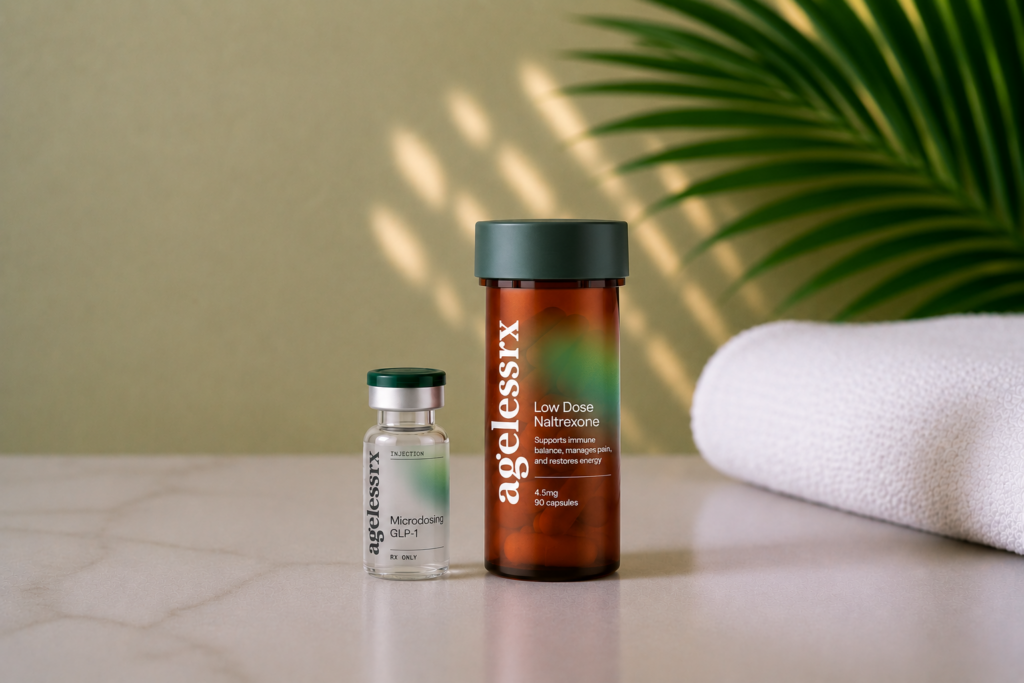
Combining LDN with Microdosing GLP-1

Interest in healthspan optimization is growing, and researchers are looking closely at compounds that may act on the root causes of biological aging rather than manage symptoms after the fact. Two candidates drawing attention in the longevity space, Low Dose Naltrexone (LDN) and Microdosing GLP-1, are being studied for their potential to reduce inflammation, support metabolic health, and work at the cellular level in ways relevant to healthy aging.
Each therapy may offer distinct benefits within a personalized longevity protocol, and combining them could add value for individuals who have not seen complete results with LDN alone.
Key takeaways:
- Combining LDN with Microdosing GLP-1s may offer metabolic synergy, supporting insulin sensitivity and mitochondrial repair on separate pathways
- Both therapies may reduce neuroinflammation, potentially lowering risk of cognitive decline
- Adding Microdosing GLP-1 may help when LDN alone does not resolve insulin resistance or chronic inflammation
LDN: How It Works
LDN works primarily through its immunomodulatory and anti-inflammatory effects:
Mechanism of Action (MOA):
- Blocks toll-like receptor 4 (TLR4), reducing pro-inflammatory cytokine release (for example, IL-6)
- Increases endorphin levels, promoting immune balance and cellular repair
- Enhances mitochondrial function by reducing oxidative stress
Many patients respond well to LDN, but some may need extra support for complex metabolic and inflammatory concerns.
Comparing LDN and Microdosing GLP-1
|
Feature |
Low Dose Naltrexone (LDN) |
Microdosing GLP-1 |
|---|---|---|
|
Primary mechanism |
Blocks TLR4; raises endorphin levels to support immune balance |
Activates GLP-1 receptors throughout the gut and brain |
|
Inflammation target |
Reduces pro-inflammatory cytokines (for example, IL-6) via TLR4 blockade |
Lowers broader systemic inflammatory markers and oxidative stress |
|
Metabolic effect |
Supports mitochondrial function and cellular repair |
May improve insulin sensitivity and support appetite regulation |
|
Neuroprotection |
Reduces neuroinflammation; may support cognitive health |
May lower neuroinflammation and oxidative stress in the brain |
|
Immune support |
Rebalances the immune response |
Reduces the burden of chronic inflammation on the immune system |
|
Typical use case |
Inflammatory, autoimmune, fatigue, and mood-related concerns |
Metabolic imbalance or persistent inflammation not fully resolved by LDN alone |
What Is Microdosing GLP-1?
Microdosing GLP-1 refers to using sub-therapeutic doses of a GLP-1 receptor agonist (such as Semaglutide) well below those used for weight loss or diabetes management. Rather than targeting appetite suppression or significant caloric reduction, microdosing is being studied for its potential effects on inflammation, metabolic health, and cellular aging pathways.
GLP-1 receptors are found throughout the gut, brain, and immune system, meaning low-dose activation of these receptors may produce effects across multiple biological systems simultaneously. Preliminary research suggests microdosing may modulate inflammatory markers, support mitochondrial function, and improve oxidative stress pathways relevant to biological aging, all with a lower side effect burden compared to standard GLP-1 doses.
Why Combine LDN and Microdosing GLP-1?
Combining these therapies may amplify their individual benefits by targeting complementary pathways:
- Enhanced inflammation modulation: LDN suppresses cytokines like IL-6, while GLP-1s may reduce broader inflammatory markers and oxidative stress.
- Metabolic synergy: GLP-1 receptor agonists may improve insulin sensitivity and appetite regulation, complementing LDN’s ability to improve mitochondrial function and cellular repair.
- Immune optimization: LDN balances the immune response, while GLP-1s may support systemic health, reducing the burden of chronic inflammation on the immune system.
- Neuroprotection: Both LDN and GLP-1 may reduce neuroinflammation and oxidative stress, potentially mitigating risks of cognitive decline and neurodegenerative diseases.
Who May Consider This Combination
Combining LDN with Microdosing GLP-1 is not a one-size-fits-all approach. It may be worth exploring with a clinician if one or more of the following apply:
- Persistent metabolic concerns: Individuals dealing with insulin resistance, elevated inflammatory markers, or metabolic imbalance that has not responded to LDN alone.
- Chronic inflammation: Those whose systemic inflammation remains elevated despite immunomodulatory support.
- Neuroprotective goals: Individuals with a family history of cognitive decline or early signs of neuroinflammation who want to target multiple pathways at once.
- LDN contraindications: Patients on certain opioid medications (such as tramadol) who cannot use LDN but may still be candidates for Microdosing GLP-1.
- Longevity stack building: Health-optimizers seeking a multi-pathway approach to healthspan that goes beyond single-agent protocols.
Any combination protocol should be reviewed and overseen by a licensed clinician who can assess individual health history, current medications, and goals before recommending a course of action.
Signs LDN Alone May Not Be Enough
Some patients may experience suboptimal results with LDN alone, due to:
- Persistent metabolic imbalance (like insulin resistance)
- Chronic inflammatory states resistant to LDN’s immunomodulatory effects
- Coexisting conditions such as mild cognitive impairment or mood disorders
- Certain medications (like tramadol or other opiates) that rule out LDN therapy, but not Microdosing GLP-1
In these cases, adding Microdosing GLP-1 may improve outcomes by targeting both metabolic issues and systemic inflammation.
Safety and Medical Oversight
Both LDN and Microdosing GLP-1 are prescription therapies that require clinician oversight. Neither should be self-administered or sourced outside of a licensed medical provider relationship.
- Prescription requirements: LDN requires a prescription and is dispensed through a compounding pharmacy at doses typically ranging from 1.5 mg to 4.5 mg. Microdosing GLP-1 is also compounded and requires a prescription following a clinician consultation.
- Monitoring: A clinician may track inflammatory markers, metabolic panels, or other relevant biomarkers over time to assess response and adjust protocols accordingly.
- Treatment interactions: LDN is contraindicated with full opioid agonists. Patients should disclose all current medications to their provider before starting either therapy.
- Compounded formulations: Both therapies are available through compounding pharmacies. These formulations are tested for potency and stability, though they are not FDA-approved products. All compounded medications at AgelessRx are sourced from PCAB and NABP-accredited pharmacies.
These two therapies work on different pathways, which is exactly what makes combining them interesting from a longevity standpoint. Patients interested in exploring this combination can consult an AgelessRx provider to determine whether it fits their individual health profile.
Note: The above statements have not been evaluated by the Food and Drug Administration. This product is not intended to diagnose, treat, cure, or prevent any disease.