
LDN and NAD+ for Long COVID Fatigue: AgelessRx Trial Findings

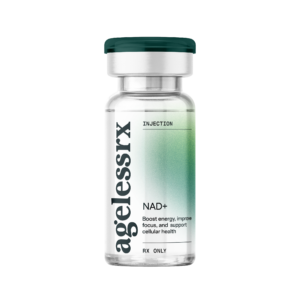
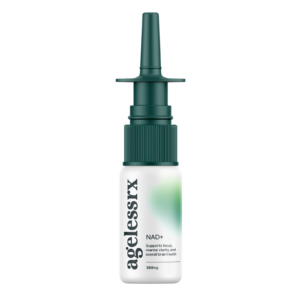
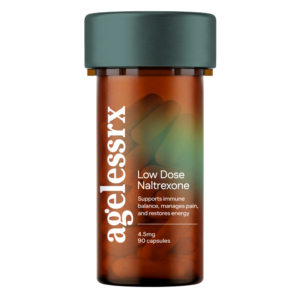
Long COVID fatigue is a type of post-viral fatigue that can feel different from ordinary tiredness. It can persist for months after infection and may not improve with rest alone. And if you have been living with it, you already know that single treatments have mostly come up short. That is exactly the problem our Stanford PhD-led Research Team decided to take on, combining Low Dose Naltrexone (LDN) and NAD+ to test whether a two-pathway approach could do what individual treatments alone have not managed.
Key Takeaways
- LDN and NAD+ were tested together in a single-arm observational pilot study of 36 adults with persistent Long COVID fatigue
- 52% of participants experienced a 20% or greater improvement in quality of life (QoL) as measured by the SF-36 self-assessment, with meaningful gains in pain, emotional wellbeing, daily role limitations, and energy levels
- Based on prior mechanistic research, NAD+ is thought to support cellular energy production and LDN is proposed to reduce chronic neuroinflammation, though the study measured only patient-reported outcomes and did not directly assess these biological pathways
- Progress was tracked using two widely used patient questionnaires: one measuring overall quality of life, the other measuring fatigue severity
- Side effects were generally mild and short-lived, with most resolving on their own within the first few weeks
The Study: Design and Methodology
Here is how the study worked. Our Research Team enrolled 36 adults who were still battling fatigue, brain fog, and reduced energy months after a confirmed COVID-19 infection. Every participant received the same two-treatment protocol: Low Dose Naltrexone (4.5 mg daily) and NAD+ delivered via a transdermal patch once a week. There was no placebo group. Everyone got both treatments, and we tracked how they felt over 12 weeks.
Who Was Included
Participants were adults between 18 and 65 (average age 44) who had tested positive for COVID-19 and were still dealing with moderate to severe fatigue long after their infection. On average, they had been symptomatic for more than seven months and had already tried other treatments without meaningful relief. In other words, these were not new or mild cases. About 70% of participants were female.
What Was Measured
We used two well-known patient questionnaires to track progress. The first measured overall quality of life, covering energy, pain, emotional wellbeing, and ability to carry out daily activities. The second measured fatigue severity on its own. Participants completed both at the start of the study and again at weeks 2, 4, 8, and 12 so we could watch how things changed over time. Our Research Team also tracked side effects throughout the full 12 weeks.
Long COVID: 65 Million People, No Approved Treatments
An estimated 65 million people worldwide are living with Long COVID. Studies suggest up to 70% of individuals experience long-term medical conditions after a COVID infection, and as of mid-2026, not a single treatment has received FDA approval. Long COVID is an inflammatory-driven condition connected to more than 200 documented persistent symptoms, with fatigue driven by chronic inflammation, impaired NAD+ metabolism, and disrupted cellular energy production. Targeting any one of those pathways alone has produced limited results, which is exactly why combination approaches have drawn growing interest.
The Biological Overlap: Long COVID and Aging Hallmarks
Long COVID and accelerated biological aging have more overlap than people realize. The same cellular disruptions that drive age-related decline show up repeatedly in post-COVID research: mitochondrial dysfunction, chronic low-grade inflammation (sometimes called “inflammaging”), NAD+ depletion, and dysregulated immune signaling. Long COVID is not ordinary illness lingering past its welcome. At the cellular level, it looks a lot like aging at high speed.
Both NAD+ depletion and chronic neuroinflammation are hallmarks of aging and of Long COVID, which is precisely what made this combination worth studying in a clinical setting.
Why LDN and NAD+
Here is a simple way to think about LDN. At a low dose, it briefly taps the brakes on certain receptors in your body. Your body responds by flooding the system with more of its own natural pain-relieving and anti-inflammatory compounds. The result? Less runaway inflammation in the brain (which matters a lot for Long COVID) because overactive immune cells in the brain appear to be a key driver of that persistent fatigue and fog. LDN may help calm that inflammatory signal down.
NAD+ tackles a different piece of the puzzle. Think of NAD+ as your cells’ power supply. Without it, your mitochondria (the tiny engines inside every cell) cannot do their jobs. They cannot repair DNA, produce energy, or keep inflammation in check. The problem is that SARS-CoV-2 burns through NAD+ reserves, essentially cutting the power to your cells at the worst possible time. Replenishing NAD+ is like flipping the breaker back on. Your cells get the fuel they need to repair, recover, and function again.
Why Combine Them?
Think of it this way: Low Dose Naltrexone may quiet the inflammatory signal driving the symptom burden, while NAD+ may help restore the cellular fuel and repair capacity depleted by chronic inflammation. That complementary logic is exactly what our Research Team set out to test in a clinical setting.
Results
Twelve weeks. That is all it took for meaningful change to show up in the data. Across the 31 participants in the efficacy dataset, Chalder Fatigue Scale scores fell from a mean of 25.9 at baseline to 17.4 at week 12 (p < 0.0001), a shift from clinical ME/CFS-level fatigue to near community-healthy levels. SF-36 quality of life scores rose from 36.5 to 52.1 over the same period (p < 0.0001), with measurable improvements appearing as early as week 2. In plain terms: people who started the study barely able to get through the day were, three months later, scoring close to what a healthy person would score on the same tests.
What We Measured
We tracked two validated outcomes throughout the study: the SF-36 quality of life survey and the Chalder Fatigue Scale.
|
Outcome |
Baseline |
Week 12 |
p-value |
|---|---|---|---|
|
SF-36 total score |
36.5 |
52.1 |
<0.0001 |
|
Chalder Fatigue Scale |
25.9 |
17.4 |
<0.0001 |
|
SF-36 energy/fatigue subscale |
14.7 |
35.9 |
<0.0001 |
|
SF-36 role limitations (physical) |
9.2 |
39.1 |
<0.0001 |
The most pronounced gains came in two areas that make Long COVID functionally disabling. Role limitations due to physical health (a measure of whether participants could manage normal everyday tasks successfully) jumped from 9.2 to 39.1. The energy and fatigue subscale rose from 14.7 to 35.9.
The 52% responder rate carries real weight. This group had been symptomatic for over seven months on average and had already tried other treatments without relief. One in two participants crossed the threshold for a clinically meaningful improvement. In a condition with zero approved treatments, that is worth taking seriously.
What These Results Mean
LDN and NAD+ were selected because they each target a different proposed driver of Long COVID fatigue. Prior research suggests LDN may quiet the runaway neuroinflammation keeping the body stuck in distress mode, and NAD+ is thought to restore the cellular fuel that chronic illness depletes. What the study measured was patient-reported outcomes, and those outcomes showed something neither compound has reliably achieved alone: moving people out of ME/CFS-level impairment and into near-healthy fatigue territory in just three months. For a condition with zero approved treatments, the signal here is hard to ignore.
Limitations and Next Steps
Every trial has boundaries worth naming. Our cohort was small, and the absence of a placebo arm means we cannot rule out expectation effects in self-reported fatigue scores. Symptom duration varied across participants, which may have influenced response rates in ways a larger, stratified study could tease apart.
What comes next is a randomized, placebo-controlled trial with a wider enrollment window and longer follow-up period. We are also tracking whether benefits persist after participants stop the protocol, and whether baseline NAD+ levels predict who responds most. Female participants experienced the most pronounced benefits across multiple domains in this trial. Future work will look at which patient subpopulations benefit most, with the goal of applying this approach within a personalized medicine framework, where efficacy may depend on an individual’s underlying biological hallmarks and symptom profile.
The signal is real. Now we need the scale to confirm it.
For more on this specific protocol, see our pieces on the pivotal link between the biology of aging and Long COVID.
Note: The above statements have not been evaluated by the Food and Drug Administration. This product is not intended to diagnose, treat, cure, or prevent any disease.