
Do Peptides Help with Energy?

Certain peptides may support energy, but how they do it depends on the compound and the pathway it targets. Some act on cellular energy production, some support hormone output, and others may help by tackling what is quietly draining your energy in the first place.
That’s what makes the peptide and energy conversation more interesting than a simple “energy boost.” The goal isn’t necessarily to feel more stimulated, but to understand what may be slowing things down. In this blog, we’ll break down how different peptides may influence energy, what the human research actually shows, and where the science still has some catching up to do.
Key takeaways:
- Peptides may support energy by targeting different biological pathways
- Different compounds may support mitochondrial function, hormones, inflammation, or recovery
- Peptides are not stimulants or quick energy boosters
- Human evidence varies widely depending on the compound
What Are Peptides and How Do They Relate to Energy?
Chances are, you’ve heard more about peptides lately, whether on the news, in your social media feed, or in conversations about longevity and healthy aging. But with so many different compounds being grouped under the same “peptide” umbrella, it can be hard to understand what peptides actually are, let alone what they have to do with energy.
At their simplest, peptides are short chains of amino acids, the same building blocks that make up proteins. Many peptides also act like messengers in the body, sending specific signals that tell cells, glands, and tissues how to respond.
The energy connection comes down to where those messages are going. Some peptides influence hormones like human growth hormone, which plays a role in cellular repair and metabolism. Others interact with pathways tied to mitochondrial function, or how cells turn nutrients into usable energy. At the center of that process is ATP, which you can think of as your cells’ usable energy currency. A few peptides have also been studied for their effects on inflammation and tissue recovery, both of which can quietly drain energy when something is out of balance.
This is one reason researchers are interested in peptides for energy and fatigue. Feeling tired can sometimes be the downstream result of something happening upstream, whether that is declining hormone output with age, less efficient mitochondrial function, or slower recovery. Instead of simply providing a temporary boost, peptides may offer ways to influence some of those underlying systems.
The important caveat is that just because the research is developed for one peptide doesn’t mean it’s equally developed for another. The world of peptides is still new and evolving, and some compounds have much stronger human evidence than others. That’s why it helps to look at each peptide individually: what it’s supposed to do, what has actually been studied, and how confident we can reasonably be in the evidence so far.
Peptide Comparison: Energy Evidence at a Glance
Here is a quick look at how some of the most talked-about peptides compare across mechanism, evidence quality, and access status.
|
Peptide / Compound |
Proposed Energy Mechanism |
Strength of Human Evidence |
Regulatory / Compounding Status |
Best-Fit Use Case |
|---|---|---|---|---|
|
NAD+ |
Supports mitochondrial ATP production via electron transport chain |
Moderate clinical evidence |
Compoundable; available through licensed clinicians |
Age-related energy decline, cellular fatigue |
|
Sermorelin |
Stimulates growth hormone release; supports lean muscle and metabolism |
Limited clinical evidence |
Compoundable; available through licensed clinicians |
Fatigue tied to declining HGH with age |
|
BPC-157 |
May support tissue repair and reduce inflammation that drains energy |
Preclinical only |
Under FDA review; regulatory status evolving |
Recovery-related fatigue, gut-brain signaling |
|
TB-500 |
May reduce inflammation; synthetic fragment of Thymosin Beta-4 |
Preclinical only |
Under FDA review; regulatory status evolving |
Musculoskeletal recovery; not equivalent to full TB4 research |
|
B12/MIC Injections |
Supports cellular energy metabolism; injectable delivery bypasses gut absorption |
Moderate clinical evidence (B12 component) |
Compoundable; available through licensed clinicians |
Fatigue from B12 insufficiency; GLP-1 support |
Does NAD+ Help with Fatigue?
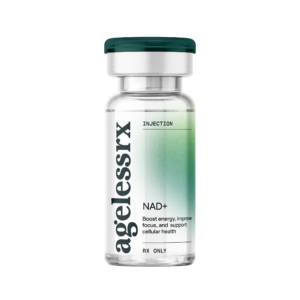
NAD+ plays a central role in how your cells make and use energy. Think of it as one of the helpers mitochondria need to turn nutrients into ATP, the usable energy that powers your cells. NAD+ also supports DNA repair through PARP-1 and activates sirtuins, enzymes involved in cellular health and longevity. Because NAD+ levels decline with age, researchers are interested in whether restoring those levels could help support energy as we get older.
Human research offers cautious support. A double-blind trial found that NMN supplementation improved walking distance and quality of life in middle-aged adults. A separate review of ten clinical studies found NAD+-boosting interventions were generally well tolerated.
So, does NAD+ help with fatigue? The research is promising, particularly around cellular energy and age-related decline.
What Role Does Sermorelin Play in Energy and Fatigue?
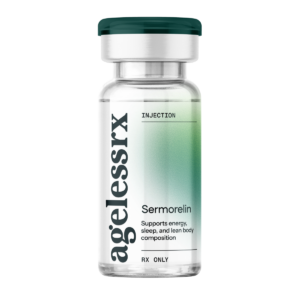
Sermorelin takes a different approach to energy. Instead of supplying human growth hormone (HGH) directly, Sermorelin acts like a signal to the pituitary gland, encouraging the body to release its own HGH in natural pulses. HGH then promotes IGF-1 production, which is involved in lean muscle, metabolism, recovery, and sleep, all factors that can influence how energized someone feels day to day.
This becomes particularly interesting as we age because growth hormone output naturally declines over time. Changes that get brushed off as “just getting older,” including slower recovery and changes in body composition, can sometimes have measurable biology behind them.
The human evidence is limited but worth watching. A single-blind study of 19 adults ages 55 to 71 using a modified version of Sermorelin for four months reported increased lean mass, insulin sensitivity, and general well-being in men, but not in women. The study measured well-being, not energy itself, and sleep quality was unchanged.
The takeaway is not that Sermorelin is an energy booster. Its potential connection to energy is further upstream, through growth hormone signaling and the systems that signaling influences.
Is BPC-157 Relevant to Fatigue and Recovery?
BPC-157 has a much more indirect connection to energy. It’s a synthetic peptide based on a protective protein found in gastric juice and is primarily being studied for areas like tissue repair, gut health, and inflammation instead of energy production itself.
In other words, the theory is not that BPC-157 gives you more fuel. It’s that better recovery could leave fewer of the body’s resources tied up elsewhere. However, most BPC-157 research is preclinical, including animal studies showing effects on tissue repair and inflammatory markers. Human research is scarce, and there are currently no controlled human trials showing that BPC-157 improves fatigue or energy.
That makes the distinction between biologically plausible and proven in humans especially important. BPC-157 has an interesting research rationale, but any energy benefit in humans remains unconfirmed.
Can TB-500 Reduce the Physical Drag After Exertion?
TB-500 may have an indirect connection to energy, with most of the interest focused on recovery instead of energy production itself. It’s a synthetic peptide matching amino acids 17 to 23 of the larger Thymosin Beta-4 (TB4) protein.
Think of TB-500 less as adding more energy to the body and more as a way of asking whether better recovery could reduce the physical drag that comes after exertion. You know that feeling when you wake up the day after a hard workout and everything feels a little harder than usual? The theory is that by supporting tissue repair and recovery, TB-500 could potentially reduce some of that post-exertion drag. That does not mean it gives you more energy directly. TB-500 is not proposed to increase mitochondrial function or ATP production.
This is another area where the research is still early. Human evidence for TB-500 remains extremely limited, and there are no controlled human trials showing that it improves fatigue or energy. For now, its potential connection to energy is best understood through recovery, not as a direct energy intervention.
When Does B12/MIC Make Sense for Low Energy?
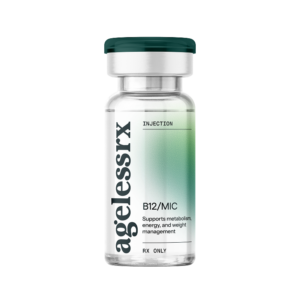
B12/MIC is not a peptide, but it does belong in this conversation. B12 deficiency is a well-known cause of fatigue, making B12 worth considering alongside newer approaches to energy support.
Why Absorption Matters
The catch is that taking B12 doesn’t always mean the body is absorbing enough of it. Oral B12 relies partly on intrinsic factor, a protein needed for absorption in the digestive system. Age, certain digestive conditions, restrictive diets, and medications like Metformin can all contribute to B12 deficiency or absorption challenges. B12 Injections skip the digestive tract entirely, which can make them a more direct option for people who have trouble absorbing B12 orally.
What the Evidence Shows
The evidence here is clearer than it is for many newer peptides. Correcting a B12 deficiency can improve fatigue, but that does not mean more B12 automatically equals more energy. If your B12 levels are already sufficient, the evidence for an additional energy boost is much weaker.
B12/MIC Injections also include methionine, inositol, and choline, nutrients involved in processes such as fat metabolism and liver function. Inositol, in particular, has shown benefits across some metabolic outcomes in clinical research.
So, does B12/MIC help with fatigue? The strongest evidence is for correcting B12 deficiency. If low B12 is driving fatigue, correcting it can help; once levels are normal, extra B12 is unlikely to add more energy.
What Online Claims About Peptides and Energy Are Not Supported?
There’s plenty of excitement around peptides and energy, but some claims go further than the research currently supports.
- Peptides are not proven to provide an immediate energy boost: Peptides are not designed to work like your morning cup of coffee. Compounds like NAD+ and Sermorelin work further upstream through pathways involved in mitochondrial function, hormone signaling, and cellular health. Any potential changes in energy would be expected to come through those underlying systems, not an immediate stimulant-like effect.
- Not every peptide marketed for energy has human evidence behind it: Peptides can influence very different biological pathways, and the evidence varies considerably from one compound to another. Some options have human research behind their potential role in energy or related pathways, while others are supported mainly by preclinical research. That is why each compound should be judged on its own evidence instead of treating “peptides for energy” as one category.
The important distinction is that peptides are being studied for the biological systems that may influence energy, not as a quick fix for feeling tired.
How Do You Know If a Peptide Protocol Is Right for Your Energy Goals?
Before asking which peptide could help with your energy, there’s a more useful question to ask: why are you tired in the first place?
Fatigue can have many different drivers. Low B12, hormonal changes, age-related changes in cellular energy, poor sleep, stress, and overtraining can all leave you feeling drained, but they don’t call for the same approach. A peptide or longevity protocol that makes sense for one cause of low energy may make little sense for another.
This is where working with a clinician becomes important. Before starting a protocol, a few questions are worth asking:
- Have common causes of fatigue been considered? Bloodwork and your health history may help identify factors such as B12 deficiency, thyroid function, or hormonal changes.
- Does the protocol actually match what may be driving your fatigue? Someone dealing with a B12 deficiency has a very different starting point from someone looking into age-related changes in mitochondrial or hormonal function.
- What evidence supports the compound being considered? Human evidence varies considerably across NAD+, Sermorelin, BPC-157, TB-500, and other compounds discussed in the longevity space.
- Where is the product coming from? For compounded products, traceable sourcing and appropriate quality testing matter. A clinician-guided protocol also gives you someone who can review your response and adjust the approach when appropriate.
The goal is not to find the peptide with the biggest promise around energy. It is to understand what may be contributing to fatigue and choose an approach that actually makes sense for your biology.
How AgelessRx Approaches Peptides and Energy
You can’t choose a peptide the same way you choose which fruit looks good at the supermarket. The right option depends on your biology, your goals, and what the research actually supports.
At AgelessRx, we start by asking what may be driving low energy. Is it related to hormones, mitochondrial function, recovery, or a nutritional deficiency? Our Applied Science Team, led by a Stanford PhD, weighs the evidence behind each compound, while US-licensed clinicians help determine which approach makes sense for each patient.
We also pay attention to real-world outcomes. Among 1,412 surveyed NAD+ Injection customers who completed a second check-in, 85% reported feeling more energized and 77% reported improved physical endurance. These are self-reported outcomes, and individual results vary.
That feedback complements our formal research. AgelessRx has produced peer-reviewed research on gerotherapeutic stacks and conducts clinical trials studying biological aging. We’re also one of 10 finalists, selected from more than 600 teams across 58 countries, in the $101 million XPRIZE Healthspan competition.
Every AgelessRx protocol is clinician-guided, from reviewing your health history to monitoring your response over time. Compounded products are sourced through PCAB or NABP-accredited pharmacies with quality standards covering identity, potency, sterility, and endotoxin testing.
Peptide research is still developing. Our goal isn’t to chase whichever compound is getting the most attention, but to understand your biology, follow the evidence, and find an approach that makes sense for you.
Note: The above statements have not been reviewed by the Food and Drug Administration. These products are not intended to diagnose, treat, cure, or prevent any disease.