
What Is Sermorelin?

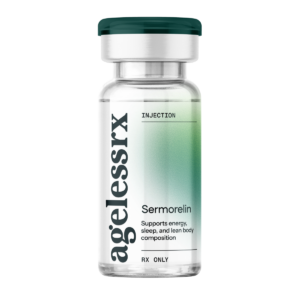
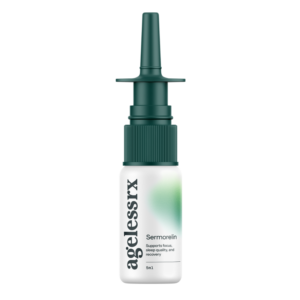
Sermorelin is a peptide that stimulates the pituitary gland to release more of the body’s own growth hormone. Unlike direct HGH therapy, it works with the body’s natural growth hormone system instead of supplying the hormone itself.
The pituitary still knows how to release growth hormone as we age. The problem is that the signal telling it to do so gets quieter. Sermorelin essentially turns that signal back up, which is what makes it an interesting option for researchers and clinicians studying age-related changes in growth hormone.
Key Takeaways:
- Sermorelin is a peptide that stimulates the pituitary to release growth hormone naturally
- It works with the body’s existing growth hormone system instead of supplying HGH directly
- Sermorelin is available as an injection or nasal spray, with injection having the strongest human evidence
- Sermorelin requires a prescription and clinician supervision
- Research is promising, but evidence for long-term longevity benefits remains limited
What Is Sermorelin?
Sermorelin is a synthetic peptide that mimics growth-hormone-releasing hormone (GHRH), a natural signal the brain uses to tell the pituitary gland to release growth hormone. Once administered, Sermorelin binds to receptors on the pituitary and prompts the release of human growth hormone (HGH) in pulses that follow the body’s natural rhythm.
After age 30, HGH levels can decline by up to 15% per decade. That matters because growth hormone helps stimulate insulin-like growth factor-1 (IGF-1), which plays a role in processes such as tissue repair and muscle maintenance.
This is where Sermorelin takes a different approach. Instead of supplying HGH directly, it works further upstream by prompting the pituitary to support GH naturally. Think of it less like replacing growth hormone and more like turning up a signal that has gradually become quieter with age.
What Does Sermorelin Do?
Sermorelin essentially gives the pituitary a nudge to release more growth hormone. That growth hormone then signals the liver to produce IGF-1. Together, this GH/IGF-1 pathway is involved in several processes that can change with age, including body composition, sleep, metabolism, and tissue repair.
That’s why researchers have studied Sermorelin and GHRH signaling across several areas:
- Lean muscle and body composition: Studies in older adults have found improvements in lean body mass and changes in body fat, though results vary.
- Sleep quality: GHRH has been studied for its role in slow-wave sleep, the deeper, more restorative stage of sleep.
- Energy and well-being: Some participants in clinical research have reported improvements in energy and overall well-being.
- Cognitive function: Researchers have studied GHRH-based therapies for their potential effects on memory and cognitive function in older adults.
- Exercise and recovery: Small studies have looked at potential changes in strength, body composition, and physical performance.
The important word here is potential. These outcomes are not guaranteed, and the human research is still relatively limited. Sermorelin is better viewed as a promising area of ongoing research than a proven treatment for these outcomes.
Is Sermorelin FDA Approved?
No, there’s no FDA-approved Sermorelin product currently available in the US. However, Sermorelin does have an FDA approval history.
Sermorelin was previously sold as Geref, an FDA-approved injectable formulation. Its manufacturer, EMD Serono, voluntarily discontinued the product in 2008. In 2013, the FDA confirmed that Geref was not withdrawn for reasons related to safety or effectiveness.
What Does Compounded Sermorelin Mean?
An FDA-approved treatment is manufactured as a standardized product that has gone through the FDA approval process. A compounded medication is prepared by a pharmacy for an individual patient based on a clinician’s prescription.
In other words, “compounded” doesn’t mean “FDA-approved.” Compounded Sermorelin itself has not been reviewed or approved by the FDA.
Can Sermorelin Be Compounded?
Yes. Sermorelin can be compounded for an individual patient when prescribed by a licensed clinician and prepared by an appropriate compounding pharmacy. This provides a clinical pathway for accessing Sermorelin even though there is no commercially available FDA-approved product today.
Because compounded medications are prepared outside the traditional commercial manufacturing process, the pharmacy matters. Quality standards should include lot-specific testing for identity, potency, sterility, and endotoxin levels. See how we hold peptides to that bar in the AgelessRx Peptide Standard.
Is Sermorelin Legal?
Yes, compounded Sermorelin can be legally prescribed in the United States through an appropriate clinical and compounding pathway. A US-licensed clinician can determine whether it is appropriate for an individual patient, and a 503A compounding pharmacy can prepare it based on a patient-specific prescription.
Does Sermorelin Work in Humans?
Yes, Sermorelin and related GHRH therapies have been studied in humans, with early research showing promising results. However, the studies are relatively small, so there’s still a lot researchers don’t know.
A four-month trial in 19 adults ages 55 to 71 using a modified Sermorelin analog found changes in muscle mass and metabolism, including insulin sensitivity. Other human research has found that GHRH administration may promote slow-wave sleep, the deeper stage of sleep associated with physical restoration. A six-month study in 89 older adults also reported improvements on cognitive assessments involving memory, problem-solving, and focus.
Taken together, these studies suggest that stimulating the body’s own growth hormone pathway may have measurable effects in humans. However, the trials are small, and large studies are still lacking.
That makes the evidence encouraging, but not conclusive. Researchers have seen enough signal to continue studying Sermorelin and related therapies, including their potential role alongside interventions such as NAD+. For now, the research supports continued scientific interest instead of certainty about specific outcomes.
Sermorelin Injection vs. Nasal Spray
Sermorelin is most commonly administered by injection or nasal spray, but the evidence behind the two routes isn’t equal. Injection is the more clinically established option and has the strongest human research behind it.
With a subcutaneous injection, Sermorelin is absorbed through tissue and enters the bloodstream. Most published human studies involving Sermorelin or closely related GHRH therapies have used injectable delivery, making it the better-studied route.
A nasal spray offers a needle-free alternative. Although nasal Sermorelin has lower bioavailability, meaning less of the peptide reaches circulation, research suggests it can still stimulate a growth hormone response when given at sufficient doses. Intranasal Sermorelin is also being studied because some peptides administered through the nose may interact with pathways that provide more direct access to the brain. Research into whether this translates into meaningful cognitive benefits is still preliminary.
Oral Sermorelin is a different story. Because Sermorelin is a peptide, digestive enzymes can break it down before enough reaches circulation. Human evidence for oral Sermorelin is much weaker than for injectable or nasal delivery.
For people looking for a needle-free option, Sermorelin Nasal Spray may offer an alternative. However, Sermorelin Injections remain the route with the most proven human evidence.
|
Format |
Bioavailability |
Evidence base |
Notes |
|---|---|---|---|
|
Subcutaneous injection |
High |
Strongest in humans |
Most studied route |
|
Nasal spray |
Developing |
May support nose-to-brain delivery | |
|
Oral tablet |
Very low |
Weakest |
GI degradation limits absorption |
What Are the Side Effects of Sermorelin?
Sermorelin is generally well tolerated in available studies, with most reported side effects being mild. The most common Sermorelin side effects include:
- Injection site reactions: Redness, pain, swelling, or irritation can occur where Sermorelin is injected.
- Flushing: Some people experience temporary warmth or redness of the face or neck.
- Headache: Headaches have been reported and are generally mild.
- Nausea: Some people may experience temporary stomach discomfort or nausea.
Many of these side effects are temporary and may improve as the body adjusts.
Part of Sermorelin’s safety profile comes back to how it works. Instead of supplying growth hormone directly, Sermorelin prompts the pituitary to release it while keeping the body’s natural feedback system involved. Think of that feedback system as a built-in brake. As growth hormone and IGF-1 levels rise, the body can signal the pituitary to slow down production.
Does Sermorelin Increase Cancer Risk?
There’s currently no evidence showing that Sermorelin causes cancer. However, growth hormone and IGF-1 are involved in cell growth, so researchers have questioned whether persistently raised levels could potentially influence the growth of an existing tumor.
Long-term safety data is still limited, so there are questions researchers can’t answer yet. Sermorelin works through the pituitary and preserves the body’s natural feedback mechanisms, while clinician supervision and monitoring of GH and IGF-1 levels can help keep treatment within a physiological range.
Where Does the Evidence Actually Stand?
The evidence is still developing. Human studies have produced encouraging findings, but the research is still too limited to make strong claims about long-term health or longevity benefits.
Here’s what the evidence tells us so far:
- What we know: Sermorelin appears to be generally well tolerated in available studies. Research on Sermorelin and related GHRH therapies has also found measurable effects on growth hormone signaling, sleep, and body composition.
- What looks promising: Early research has looked into potential benefits for cognitive function, metabolism, and other age-related changes. These findings are interesting, but many come from small or relatively short studies.
- What we still do not know: There is no clear consensus on optimal dosing across different age groups, long-term safety data is limited, and rigorous comparisons with other growth hormone secretagogues are lacking.
Sermorelin has more human research behind it than many newer peptides, but it isn’t a proven longevity treatment. The science gives researchers good reasons to keep studying it, while leaving plenty of questions still to answer.
For people considering Sermorelin today, clinician supervision remains an important part of responsible use.
How Does AgelessRx Approach Sermorelin?
Sermorelin has promising science behind it, but there’s still more to learn about its long-term role in healthy aging. That is exactly why AgelessRx believes continuous education matters.
Growth hormone signaling naturally declines with age, and the GH/IGF-1 pathway is thought to be connected to areas such as body composition, sleep, and tissue repair. Sermorelin takes an interesting approach to that biology. Instead of supplying growth hormone directly, it prompts the pituitary to release more of the body’s own growth hormone while keeping natural feedback mechanisms involved.
At AgelessRx, that scientific rationale has translated into research. Sermorelin Nasal Spray is one of nine agents included in the AgelessRx XPRIZE Finals Protocol, a 12-month, double-blind, placebo-controlled trial enrolling 235 adults ages 50 to 90. The goal is to help generate the larger, more rigorous human data that longevity medicine still needs.
For those interested in looking into Sermorelin, AgelessRx offers a subcutaneous injection and a nasal spray. Sermorelin isn’t a proven longevity treatment, and individual results can vary. But its biological rationale, existing human research, and unanswered questions make it an important area of continued study. For anyone considering Sermorelin, a clinician review is the right place to start.
Note: The above statements have not been evaluated by the Food and Drug Administration. This product is not intended to diagnose, treat, cure, or prevent any disease.