
Can Rapamycin Improve Gum Health?

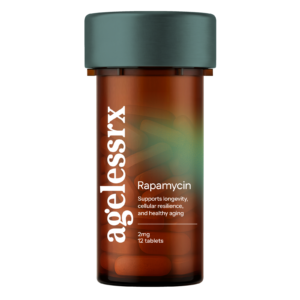
If you’re thinking about Rapamycin for longevity, you’re probably focused on things like inflammation, metabolic health, and cellular aging. We will take a wild guess that oral health probably isn’t on your radar. But a mouse study showed Rapamycin reversing bone loss and gum tissue aging. Therefore, our Applied Science team conducted observational research to examine whether the findings also translate to humans.
Key takeaways:
- Periodontal disease is associated with cardiovascular disease, type 2 diabetes, and cognitive decline, making oral health a longevity marker
- Chronic mTORC1 overactivation suppresses autophagy in gum tissue, speeding up inflammation and connective tissue breakdown with age
- A study found Rapamycin reversed alveolar bone loss and reduced gum inflammation in aged mice
- Longevity doses of Rapamycin (weekly, 1 mg to 6 mg) have a different safety profile than transplant doses; mouth sores are the most reported oral side effect
- We have conducted observational research on Rapamycin and oral health in aging adults, contributing to the early human evidence base
Periodontal Disease as a Longevity Signal
Periodontal disease is a chronic inflammatory condition affecting the gums and the structures that support your teeth. It begins as gingivitis, the early and still-reversible stage where bacterial buildup triggers inflammation, causing gums to redden, swell, and bleed. Left unaddressed, it can progress to periodontitis, a deeper infection that travels below the gumline and attacks the connective tissue and bone holding teeth in place. That distinction matters: gingivitis is a warning sign, but periodontitis is structural damage, and the bone loss it causes does not grow back on its own. Aging is one of the strongest risk factors: as immune function declines and systemic inflammation rises, the mouth becomes more vulnerable to bacterial overgrowth and structural breakdown.
The effects go well beyond the mouth. Research has associated periodontal disease with cardiovascular disease, type 2 diabetes, cognitive decline, and all-cause mortality. It connects to two hallmarks of aging: chronic inflammation and cellular senescence. Gum disease may be less a standalone dental problem and more a local sign of systemic aging biology, making it a meaningful marker for anyone focused on maximizing longevity.
How mTOR Signaling Contributes to Gum Disease
When mTOR complex 1 (mTORC1) is chronically overactive, it suppresses autophagy, the cellular cleanup process that clears damaged proteins and dysfunctional organelles. In gum tissue, that suppression slows collagen repair, impairs immune resolution, and lets inflammatory signaling accumulate. With age, that dysregulation deepens, making periodontal tissue more vulnerable to the chronic, low-grade inflammation that drives periodontitis. That is the biological rationale for studying Rapamycin and mTOR inhibition in this context.
What the Mouse Study Found
A study found that short-term Rapamycin treatment rejuvenated oral health in aged mice, reducing alveolar bone loss, decreasing local gum inflammation, and shifting gingival tissue toward a younger cellular profile. The results suggested Rapamycin may do more than slow periodontal decline. It may begin to reverse it (at least in a preclinical model).
What Early Human Data Suggests
Mouse studies are encouraging, but human data is harder to come by. One of the most relevant early findings comes from a survey of off-label Rapamycin users. It found self-reported improvements in periodontal health. Participants also reported no clear connection between how they used Rapamycin and how often they developed mouth sores. These are encouraging early signals. The limitation is that surveys rely on memory and self-assessment. Without dental records or clinical measurements, it is hard to know whether reported improvements reflect real tissue changes.
What to Know About Safety
Rapamycin’s reputation for immune suppression raises a fair question about oral health. The doses used for longevity are far lower than those used for transplantation. Longevity-focused use generally involves weekly doses of 1 mg to 6 mg, as outlined in longevity dosing research, designed to inhibit mTORC1 intermittently rather than sustain continuous immunosuppression. That distinction produces a meaningfully different safety profile.
|
Transplant Use |
Longevity Use | |
|---|---|---|
|
Typical dose |
Generally 2 mg to 5 mg or higher (may vary by protocol) |
1 mg to 6 mg |
|
Dosing frequency |
Daily |
Weekly |
|
Primary goal |
Immune suppression to prevent organ rejection |
mTORC1 inhibition to support healthspan |
|
Common oral side effect |
Higher stomatitis risk at prolonged high doses |
Mild, transient mouth sores (aphthous ulcers); not universal |
|
Infection risk |
Higher due to systemic immunosuppression |
Not shown to increase oral infection risk in healthy adults |
The most commonly reported oral side effect at longevity doses is mouth sores (aphthous ulcers). These tend to be mild, short-lived, and not universal. Current evidence does not show that low-dose Rapamycin increases oral infection risk in otherwise healthy adults.
Why Oral Health Research Matters for Longevity
Oral health tends to get separated from longevity conversations, but the biology argues against that. Gum tissue sits at the intersection of immune function, connective tissue repair, and chronic inflammation. All three processes deteriorate predictably with age, and mTOR dysregulation actively worsens each of them. As periodontal tissue breaks down, the same inflammatory signaling does not stay local: it enters systemic circulation and has been linked to cardiovascular disease, insulin resistance, and accelerated cognitive decline. That makes gum tissue a particularly useful readout of what aging is doing at the tissue level throughout the body, not just in the mouth.
For anyone tracking longevity biomarkers, turn your eyes to your oral health. A change in pocket depth or bone height on a dental x-ray is a concrete, measurable event that reflects real tissue aging, which is why our team is studying it in the context of Rapamycin use. For anyone actively optimizing their longevity protocols, oral health is worth treating as a biomarker, not an afterthought.
Final Thoughts on Rapamycin’s Role in Oral and Periodontal Aging
The science connecting mTOR inhibition to periodontal aging is still early, but the direction is coherent. Rapamycin’s effects on autophagy, inflammation, and cellular senescence operate in gum tissue just as they do in other organ systems, and the preclinical results from aged mice point to a real mechanism worth studying in humans. The question is whether longevity-dose Rapamycin produces a detectable signal in periodontal tissue over the months and years of real-world use.
Our Applied Science team has conducted observational research with Rapamycin users to begin answering that question. That evidence base is still being built, but the approach reflects a broader principle in longevity research: tissue-level outcomes matter, and the mouth offers a practical, accessible site for tracking them.
The mouth may turn out to be one of the more practical windows into how mTOR-targeted interventions affect aging at the tissue level, with implications that extend well beyond dental health.
Note: The above statements have not been reviewed by the Food and Drug Administration. This product is not intended to diagnose, treat, cure, or prevent any disease.