
Microdosing GLP-1 for Longevity: What Our Trial Is Studying

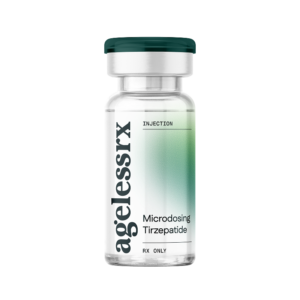
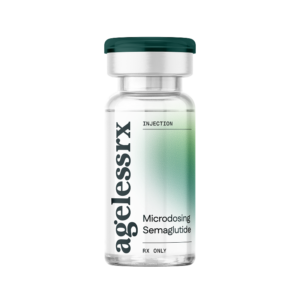
You’re not alone if your interest in GLP-1s is less about weight and more about how you age. Researchers are now studying whether Semaglutide doses well below the standard range can shift the biomarkers that show how fast the body is aging.
Key takeaways:
- Microdosing Semaglutide means taking 0.1 mg to 0.5 mg weekly, well below the maximum 2.4 mg weight-loss dose
- GLP-1 receptor activation may reduce inflammation, improve mitochondrial function, and support neuroprotection
- Lower doses produce subtler effects with fewer side effects like nausea, fatigue, and muscle loss
- Best suited for lean, metabolically borderline, or longevity-focused adults not seeking weight loss
- Our trial has concluded enrollment and is awaiting data analysis. It looks at whether Microdosing Semaglutide can improve health, longevity, and quality of life measures
What Is Microdosing GLP-1?
Microdosing a GLP-1 means taking a GLP-1 receptor agonist like Semaglutide or Tirzepatide at doses below the standard weight-loss range. For Semaglutide, that’s typically 0.1 mg to 0.5 mg weekly, compared to the FDA-approved maximum of 2.4 mg. The goal isn’t aggressive appetite suppression. Instead, microdosing targets subtler benefits: improved insulin sensitivity, reduced inflammation, and potential longevity-related effects, with fewer side effects.
Our GLP-1 Microdosing Trial
Most telehealth companies prescribe GLP-1s. Our Applied Science team is studying them. The trial has concluded enrollment and is now awaiting final subjects to complete the protocol before data analysis begins. Our team designed it to answer a question the weight loss conversation rarely asks: could Microdosing GLP-1s make the health and longevity benefits of Semaglutide more accessible, and can small doses improve pain, brain fog, and symptoms of chronic inflammation?
Our trial is randomized and placebo-controlled. Participants are randomly assigned to one of three arms: sublingual Semaglutide, subcutaneous Semaglutide injection, or sublingual placebo. This design helps to distinguish a genuine biological signal from a placebo effect. Most observational microdosing studies cannot do this. The trial tracks biomarkers associated with biological aging risk factors, including complete blood count (CBC), inflammatory markers (such as hs-CRP), and metabolic panels (including HbA1c, lipid panel, CMP, and insulin). It also tracks BMI and additional patient-reported outcomes covering pain, mood, immune health, cognitive health (including brain fog), and quality of life.
Standard Semaglutide dosing escalates toward 2.4 mg weekly. However, our trial holds doses intentionally low. It tests whether the longevity-relevant biological effects can be reached without the side effect profile that higher doses carry. The underlying hypothesis connects directly to one of longevity science’s central questions: can we intervene on aging biology before disease develops?
How GLP-1 Receptor Activation Affects Aging Biology
The body contains GLP-1 receptors. When activated, they trigger responses that go well beyond blood sugar control. Researchers have found effects on inflammation, cellular stress, and metabolic function, all of which directly tie to how we age.
A few of the most studied mechanisms:
- Reduced systemic inflammation: GLP-1 receptor agonists have been shown to lower inflammatory markers like CRP and IL-6, both connected to faster aging
- Improved mitochondrial function, which supports cellular energy and may slow age-related tissue decline
- Reduced oxidative stress at the cellular level, a factor in DNA damage and the buildup of senescent cells
- Neuroprotective effects seen in preclinical and early clinical research, with GLP-1 signaling linked to less neuroinflammation and better brain metabolic activity
Researchers have proposed these mechanisms to explain GLP-1’s potential effects on biological aging. However, our trial is not designed to directly test each pathway. The trial’s biomarkers, including hs-CRP, CBC, CMP, lipid panel, HbA1c, and insulin, allow it to track biomarkers associated with biological aging risk factors, such as inflammation and metabolic health. By using low Semaglutide doses in participants who are not overweight, the trial can look at these aging-related risk factors on their own, separate from weight loss effects.
What Preliminary Research Suggests
At standard weight-loss doses, GLP-1 receptor agonists like Semaglutide produce results that go well beyond the scale. Preliminary research points to effects on inflammation, cellular aging, and metabolic health. These findings have drawn the attention of longevity researchers asking whether GLP-1s are the first longevity drugs.
Some of the most compelling early signals include lower C-reactive protein, a key marker of chronic inflammation, and improved insulin sensitivity independent of weight loss. Researchers also see potential effects on senescent cell burden. A study found GLP-1 receptor activation may reduce neuroinflammation, a driver of cognitive decline linked to aging.
Who Might Consider a GLP-1 Microdosing Protocol
Microdosing GLP-1 protocols tend to attract people who fall outside the typical Ozempic® or Wegovy® patient profile. Unlike someone with obesity-related conditions chasing rapid weight loss, these are often health-conscious adults who want metabolic benefits without losing weight.
Good candidates often include:
- People who are metabolically borderline, showing early signs of insulin resistance or high fasting glucose, but who don’t yet qualify for standard GLP-1 prescribing thresholds
- Lean individuals who want the inflammation-reducing and neuroprotective effects of GLP-1 receptor agonism without risking muscle mass or dropping below a healthy weight
- Longevity-focused adults who see GLP-1 signaling as one part of a broader healthspan protocol, not a weight loss intervention
- People who had intolerable side effects at standard doses and want to know if a lower starting point works better for them
What these groups share is a preference for precision over speed. A Microdosing Semaglutide approach isn’t about hitting the maximum dose as fast as possible. It’s about finding the lowest effective dose that produces real biological benefit with minimal disruption.
Risks and Limitations of Microdosing GLP-1
Researchers often see Microdosing GLP-1 agonists as lower risk than standard dosing. But that doesn’t mean it’s without limits. The lower dose may reduce the effect for people who need real weight loss. Long-term data on subtherapeutic dosing for longevity is still thin, and individual response varies. Some people see little appetite change at low doses, while others experience GI sensitivity even at a fraction of standard amounts.
There’s also the question of consistency. Compounded Semaglutide formulations used for microdosing vary in concentration and quality across suppliers. This is why clinical oversight matters as much as the dosing protocol itself. The standard of care seen in rigorous research settings, such as the EVOKE Alzheimer’s trial with oral Semaglutide, shows the difference that proper oversight and quality controls make to actual biological outcomes. A microdosing protocol is only as sound as the compounding standards and clinical framework behind it.
Finally, microdosing is not a fix for underlying metabolic dysfunction. It works best as one part of a broader health strategy, not a standalone solution.
Final Thoughts on GLP-1 Microdosing as a Longevity Tool
There’s a meaningful difference between using GLP-1 agonists for weight loss and using them to support healthy aging. At microdose levels, the focus moves to metabolic flexibility, reduced inflammation, and neuroprotection, without the side effect profile that leads many people to stop standard-dose protocols. The research is still building, and the questions our ongoing work asks represent an important next step in longevity science: moving from observing that these molecules affect aging biology to understanding exactly how, at what doses, and for whom. As the field matures, the precision available to clinicians and patients will only grow. For now, the most valuable thing is that serious, rigorous questions are finally being asked.
Note: The above statements have not been reviewed by the Food and Drug Administration. This product is not intended to diagnose, treat, cure, or prevent any disease.