Morning Longevity Stack: A Science-Backed Routine

Longevity researchers pay close attention to morning timing for a reason. The hour after you wake up involves a cortisol surge, a deepened fasted state, and a circadian reset that anchors hormones for the rest of the day. Get the sequencing right, and your stack works harder. Get it wrong, and you’re leaving a lot on the table.
Key takeaways:
- Greater daytime light exposure is connected to a 17-34% lower risk of early death. Getting outside in the morning to expose yourself to natural light is a practical way to act on that signal
- A 14-16 hour fast raises AMPK activity, the same pathway targeted by Metformin and Rapamycin
- Injectable NAD+ often absorbs within hours of dosing. This makes the morning window the practical choice for timing cellular energy support to the start of the day
- Metformin taken in the fasted morning state amplifies AMPK activity, layering its effect on top of the overnight fasting signal
- Clinician guidance helps calibrate which morning interventions pair best with the fasted state versus with food, since the same dose can produce different effects depending on timing
Why Morning Timing Matters for Longevity Biology
The hour after waking is one of the most metabolically active periods of the day. Cortisol rises sharply in what researchers call the cortisol awakening response (CAR), a natural surge that primes immunity, cognition, and cellular metabolism.
Circadian rhythm and metabolic health are connected. Your body runs on a roughly 24-hour internal clock that governs everything from hormone release to cellular repair. Morning light resets that clock each day. Disrupting it consistently through irregular wake times or artificial light at night adds up over years in ways that may speed up biological aging.
During fasting, AMPK activity is heightened and autophagy processes are underway. Many longevity-relevant interventions interact directly with this state. This is why timing shapes the outcome just as much as the intervention itself.
The First 30 Minutes: Light, Wakefulness, and Circadian Anchoring
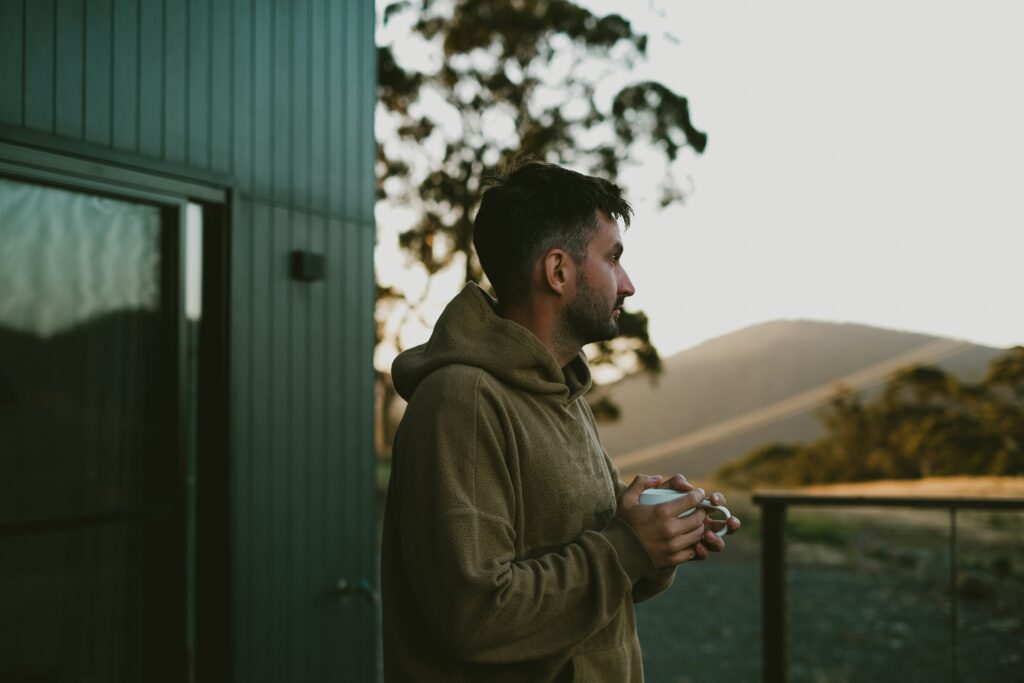
The simplest intervention in any longevity morning costs nothing. Getting outside within the first hour of waking exposes the suprachiasmatic nucleus (SCN), the brain’s master clock, to natural light. That signal synchronizes hormonal and metabolic rhythms for the rest of the day. This includes cortisol timing, insulin sensitivity, and the melatonin release that governs sleep quality that night.
Research has found an association between greater daylight exposure and a 17% to 34% lower risk of early death compared with exposure to dimmer environments. It’s simple: ten minutes outside, no sunglasses, before checking your phone.
The Fasting Window: What Happens Before Breakfast
During a fasting window, cells face a relative energy deficit. The AMP:ATP ratio (a signal that tells cells energy is running low) rises, activating AMPK, an enzyme that works like a cellular fuel gauge. When AMPK switches on, it slows energy-expensive processes including mTOR signaling and ramps up cellular recycling through autophagy. These are the same pathways targeted by longevity interventions like Rapamycin and Metformin.
Extending a fast to 14-16 hours keeps AMPK activity running higher for longer and deepens the autophagy window. Pushing breakfast to 10 or 11 a.m. lets the biology run its course before food moves cells back into growth and storage mode.
NAD+ Injections: Fueling Cellular Energy Early in the Day
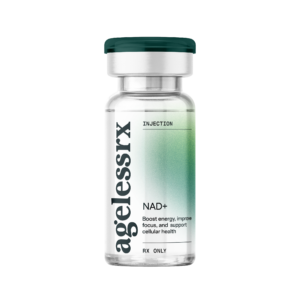
NAD+ sits at the center of mitochondrial energy production. One’s NAD+ levels decline with age by at least 50% over the course of adult aging. That decline shows up as slower recovery, reduced mental clarity, and flagging cellular repair capacity.
Oral precursors like NMN and NR are broken down in the gut, then rebuilt into NAD+ within individual tissues, making the process less reliable. Injectable NAD+ is delivered subcutaneously, bypassing gut conversion entirely and absorbing through tissue into the bloodstream. Effects typically arrive within the first few hours. This makes the morning window the practical choice: the benefit lands when your day is starting, not ending.
Metformin and the AMPK Advantage: Timing With the Fasted State
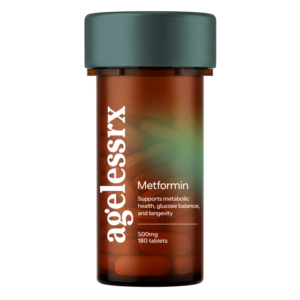
Metformin works partly by slowing a key step in the cell’s energy-making chain (called Complex I), which shifts the AMP:ATP ratio and activates AMPK. In the fasted morning state, AMPK is already running high. Metformin amplifies that signal, pushing cells toward autophagy, away from mTOR-driven growth, and toward improved insulin sensitivity.
Meal timing relative to Metformin dose matters more than most people realize. One study found that taking Metformin 30 to 60 minutes before a glucose load was more effective at reducing blood sugar and boosting GLP-1 release than taking it at the start of that load. It is worth noting that participants had type 2 diabetes and glucose was delivered intraduodenally rather than through standard oral intake, so the direct translation to longevity protocols isn’t one-to-one. Clinicians often guide this decision based on individual metabolic context, including fasting glucose trends and digestive tolerance. Check with your care team about meal timing.
Morning Movement: Exercise Timing and Longevity Signals
Morning exercise advances the circadian clock in a way few other inputs can match. Consistent movement at a fixed time each morning reinforces the same biological cues as early light exposure. This helps lock in hormone and metabolic rhythms for the rest of the day.
Exercise is also one of the strongest AMPK activators available, no prescription required. In the fasted or semi-fasted state, that signal layers on top of already-heightened overnight AMPK, pushing fat oxidation higher and extending the autophagy window before breakfast interrupts it. Research found that fat oxidation over 24 hours increased only when exercise was performed before breakfast, not when the same workout was done at a different point in the day.
A 2026 study of nearly 15,000 adults found morning exercisers were 31% less likely to have coronary artery disease and 18% less likely to have high blood pressure compared with people who exercised later in the day, independent of total exercise volume. Morning movement wins on both circadian support and cardiometabolic outcomes for most people, and adherence matters more than any marginal timing difference.
Rapamycin: Dosing Is Individualized
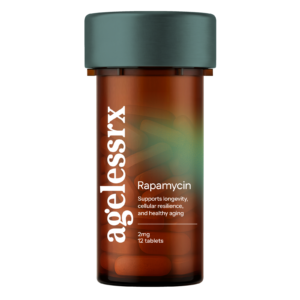
There is no single Rapamycin protocol that fits everyone. The biological rationale for intermittent use, rather than daily dosing, is that a temporary block on mTOR (a protein that drives cell growth and division) followed by a recovery period may capture autophagy and cellular repair benefits without the chronic immune suppression seen at transplant-level doses. But how that approach is structured, how often, at what dose, and when relative to fasting or food, varies considerably depending on the individual.
Some clinicians pair dosing with a fasted or low-protein morning, since both fasting and Rapamycin act on mTOR and the overlap may be additive. Others adjust frequency and timing based on blood level response. The evidence for any single precise protocol at longevity doses is still limited. Clinicians factor individual context into their guidance rather than applying a fixed template.
All longevity use of Rapamycin is off-label and requires clinician oversight. Frequency, dose, timing, and monitoring are all decisions that belong in a clinical conversation shaped by your own data.
Supplements vs. Prescription Therapy: What the Evidence Actually Shows
The question comes up often: do you actually need prescription therapy, or can a well-chosen supplement stack cover the same ground?
|
Prescription Therapies |
Longevity Supplements | |
|---|---|---|
|
Examples |
Metformin, Rapamycin, NAD+ Injections |
NMN, NR, Quercetin, Berberine |
|
Primary Mechanism |
Direct AMPK activation, mTOR inhibition, mitochondrial electron transport |
NAD+ precursor support, pathway activation shown in lab markers |
|
Evidence Depth |
Decades of human safety data, large population studies |
Early human trials showing target engagement; long-term outcome data limited |
|
Delivery Route |
Injectable, oral prescription (bypasses or tightly controls absorption) |
Oral supplements (gut conversion required; bioavailability variable) |
|
Clinician Oversight |
Required: individual dosing, monitoring, and timing calibration needed |
Not required, though biomarker tracking improves outcomes |
|
Role in a Stack |
Higher-certainty interventions with outcome-level research |
Complementary additions targeting different nodes of aging biology |
The evidence base is not equivalent. Prescription agents like Metformin have decades of human safety data, large population studies, and an active clinical trial designed to test longevity outcomes in non-diabetic adults. That depth simply does not exist for most supplements marketed toward longevity.
Supplements like NMN, quercetin, and berberine show genuine target engagement in early trials, activating relevant pathways. But pathway activation in a small human study is not the same as proven long-term health outcomes in a large, controlled population. The gap between “this raised NAD+ levels” and “this meaningfully extended healthspan” remains wide.
Prescription therapies carry their own caveats: off-label use requires clinician oversight, individual tolerance varies, and not every intervention fits every person. What they offer is a different category of certainty, grounded in regulatory review, data on how the drug moves through the body, and research tracking real health outcomes rather than lab markers alone.
Supplements and prescription therapies are not competing categories. They often act on different nodes of the hallmarks of aging biology. The more useful question is which interventions have the evidence to earn their role in your stack, and which are speculative additions waiting on better data.
Individual Variation and Why No Morning Stack Is Universal
The way your body processes drugs varies in part based on your genes. Layer in differences in baseline metabolic health, existing prescriptions, sex hormones, gut microbiome, and sleep patterns, and two people following the same morning stack can have genuinely different biological responses.
Biomarkers help close that gap. Fasting glucose, ApoB, hsCRP, and periodic assessment of metabolic function give clinicians something measurable to work with. Without that data, adjustments are guesswork.
Some of this is self-directed. Light exposure, movement timing, and fasting windows require no prescription and no monitoring. But the moment prescriptions enter the picture, the clinical layer matters. Two people taking the same Rapamycin dose can end up with different blood levels. Metformin tolerance varies by gut microbiome. NAD+ Injection frequency should scale with how someone actually responds, not a fixed protocol copied from someone else’s stack.
How AgelessRx Approaches the Longevity Morning Stack
Our approach starts with the clinician layer. Our Stanford PhD-led Applied Science Team reviews every protocol, and US-licensed medical providers guide prescribing decisions based on individual health history instead of a generic stack template.
The research foundation goes beyond referencing third-party studies. Our in-house Research Team completed the PEARL trial, which tracked real-world outcomes from a longevity protocol in a monitored cohort. The team was also named a Finalist in the $101 million XPRIZE Healthspan competition, selected from more than 600 teams across 58 countries. Current research is exploring whether multi-agent stacks may outperform single-agent approaches, a question the existing longevity literature has only begun to address.
If you are interested in any treatments covered in this blog, including NAD+ Injections, Metformin, and Rapamycin, the next step is to speak with a clinician about which option may be appropriate for you.
Note: The above statements have not been evaluated by the Food and Drug Administration. This product is not intended to diagnose, treat, cure, or prevent any disease.