
Does NAD+ Decline With Age? What a New Blood Study Really Shows

If you follow longevity science, you’ve seen this pattern before. A new study drops, a headline flattens it into one bold claim, and the claim doesn’t quite match what the researchers found. Coffee causes cancer, then it doesn’t. Eggs are bad for you, then they’re fine again. It happens constantly, and it’s rarely a reason to panic. It’s a reason to look closer.
This month, NAD+ is having its turn. A new study is being widely misread, and the real story is more useful than the panic version.
The study measured NAD+ levels in whole blood and found that they remain stable with age. Some coverage has stretched that into “NAD+ decline is a myth” or “NAD+ support doesn’t matter.” That’s not what the data says. Blood is not the same thing as the organs that actually use NAD+ to produce energy, repair DNA, and keep cells resilient over time.
Here’s the way we think about it: blood is the highway. Your organs are the houses. NAD+ in your bloodstream is traffic moving from point A to point B. What matters for how you feel, think, and age is what’s happening inside the houses along that road, your neurons, muscle cells, liver, and heart. Counting cars on the highway tells you very little about whether the families inside those houses have what they need.
Key points
- A new Nature Metabolism study found that whole-blood NAD+ stays stable with age and across several lifestyle interventions.
- This makes whole-blood NAD+ a poor biomarker, but it does not mean NAD+ is unimportant for aging.
- NAD+ has been shown to decline with age inside specific organs, including the brain, muscle, liver, and skin.
- Blood and muscle NAD+ levels are barely correlated, meaning a blood test tells you little about what’s happening in tissues that actively use NAD+.
- Delivery method matters: NAD+ injections bypass digestion and can support tissues more directly than oral precursors.
- The best NAD+ strategy is clinician-guided and based on your goals, symptoms, and health history, not a single blood number.
What did the new NAD+ study actually find?
The new Nature study found that whole-blood NAD+ levels stay stable with age and don’t change much with lifestyle interventions like exercise.
Researchers measured NAD+ in whole blood across 300 people from seven human cohorts. Whole-blood NAD+ did not decline with age, did not respond meaningfully to exercise, and did not differ between elite athletes and sedentary controls. This is a technically strong paper, and these findings are believable. The problem is the leap some headlines took when interpreting the results.
Does this study mean NAD+ doesn’t matter for aging?
This study shows that whole-blood NAD+ may be a poor biomarker for assessing who needs NAD+ and what’s happening to it in the body, not that NAD+ is unimportant for aging.
Those are two different claims, and collapsing them into one is where the media coverage went wrong. There’s actually an affirmative way to read this result: blood NAD+ staying stable is exactly what you’d expect from a molecule this fundamental to survival. The body defends blood NAD+ homeostasis fiercely because blood is a transit system, not a storage tank. Stability on the highway tells you the highway is functioning. It doesn’t tell you whether the houses are well-supplied.
Why doesn’t blood NAD+ reflect what’s happening in your tissues?
Blood NAD+ doesn’t reflect tissue-level NAD+ because blood is dominated by red blood cells, which use NAD+ very differently than the organs that depend on it most.
Red blood cells lack DNA, mitochondria, and much of the cellular machinery that actively uses NAD+, which means they likely process it very differently, if at all, compared with metabolically active tissue. The processes that matter clinically, mitochondrial energy production, DNA repair enzymes, healthy gene expression, and the cellular response to stress, happen inside organs, not inside the bloodstream.
NAD+ depletion doesn’t show up as a low number on a blood panel. It shows up as mitochondrial dysfunction, oxidative stress, inflammation, and declining metabolic capacity in the specific tissues doing the work.
Does NAD+ still decline with age inside the body?
NAD+ has been shown to decline with age inside specific organs, even though whole-blood NAD+ stays stable.
In several human studies, NAD+ has shown measurable age-related decline within organs, including the skin, brain, liver, and muscle, with low levels associated with age-related conditions like Alzheimer’s and type 2 diabetes.
A 2019 study found that higher NAD+ levels in muscle tracked with better mitochondrial health, muscle function, and activity patterns. Blood and muscle NAD+ levels in that study were barely correlated, meaning blood levels tell you little about what’s happening in tissues that actively use NAD+. In clinical studies, boosting NAD+ has also been linked to improvements in energy, inflammation, cognitive function, and even menopausal symptoms.
Which is more effective, NAD+ injections or oral NAD+ precursors?
NAD+ Injections are different because they bypass digestion and deliver NAD+ directly into circulation, while oral precursors have to survive a longer, less predictable path to reach the organs that need NAD+.
Oral precursors like NR and NMN are broken down during digestion, need to be absorbed into the bloodstream, processed by the liver, and delivered to tissues before they’re converted back into NAD+ inside cells. That multi-step process makes response to oral precursors inconsistent from person to person.
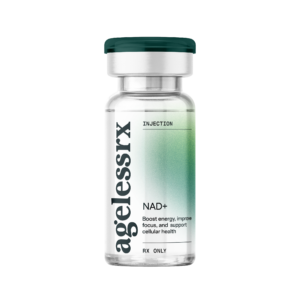
Prescription NAD+ Injections take a more direct route, helping deliver NAD+ to tissues like muscle and brain without relying on that chain. This doesn’t mean injections are best for everyone; it means delivery method is a real clinical variable if the goal is providing targeted tissue-level support.
What does this study mean for people already taking NAD+?
You don’t need to change anything based on this headline alone, because the study doesn’t undermine NAD+ support, it invalidates blood testing as a way to evaluate it.
This study doesn’t show that NAD+ is ineffective, that NAD+ stops mattering with age, or that NAD+ support has no clinical value. It shows that whole-blood NAD+ levels may remain stable regardless of what’s happening in tissues that actively use NAD+. Practically, that means:
- Don’t chase a blood NAD+ number. It may not be a reliable target for judging tissue-level NAD+ status.
- Judge NAD+ by function, not by a lab value. Energy, clarity, recovery, and broader markers of metabolic and inflammatory health are more meaningful signals.
- The best approach is guided, not guessed. Quality sourcing, appropriate dosing, and clinical oversight are as critical as the molecule itself
- Whether NAD+ is right for you depends on your symptoms, goals, and health history. Energy and recovery, skin health, cognitive function, and overall cellular health and longevity may call for different strategies.
How does AgelessRx approach NAD+ research differently?
NAD+ has gathered a lot of traction within the longevity world, but a lot of what’s written about NAD+ comes from academics who study the biology but never see a patient, or companies that sell a product without much interest in the real science behind it.
Our Stanford PhD-led Research Team studies NAD+ through rigorously designed clinical trials based on our unique NAD+ protocols, with insights and claims grounded in tens of thousands of real-world patient data points. That approach is part of what made AgelessRx one of 40 global semifinalists in the XPRIZE Healthspan competition. This study is a good example of the gap we’re built to fill: the headline version says “NAD+ doesn’t matter.” The honest version says “blood NAD+ isn’t the right measurement, and here’s what actually is.”
What’s the bottom line on blood NAD+ and aging?
Whole-blood NAD+ appears stable with age, but that doesn’t mean NAD+ is unimportant for healthspan and longevity; it means blood isn’t where the important changes show up.
If you’re evaluating whether NAD+ support fits your goals, the best place to start is with a clinician-guided conversation grounded in your goals, your history, and an understanding of how NAD+ may be impacted inside the organs that matter most in your health context.
Beyond supplementation, one of the most important clinical questions that most people overlook is why NAD+ might be depleted in the first place.
NAD+ depletion is a downstream signal, not the whole diagnosis. When NAD+ support is being considered, it’s important to evaluate whether the driver is mitochondrial dysfunction, inflammation, poor lifestyle habits, or something else. NAD+ supplementation can be a powerful tool, but the most effective approach treats it as one part of addressing the upstream driver, not the whole answer. That’s where a clinician-guided longevity strategy really shines.
This article is educational and should not replace medical advice. If you’re curious whether NAD+ support fits your goals, you can discuss your symptoms, health history, and goals with one of our longevity clinicians.
Frequently Asked Questions
Does the new NAD+ study mean NAD+ decline isn’t real?
No. It means whole-blood NAD+ doesn’t appear to decline with age, not that NAD+ decline isn’t real anywhere in the body. Tissue-level NAD+, in the brain, muscle, liver, and skin, has shown measurable age-related decline in several clinical studies.
Should I stop getting my NAD+ levels checked with a blood test?
A whole-blood NAD+ test has limited value for understanding what’s happening inside your organs. A broader picture, including symptoms, goals, and markers of metabolic and inflammatory health, tends to be more informative.
Are prescription NAD+ supplements worth considering after this study?
Yes, if they fit your goals. This study speaks only to what shows up in a blood draw, not to whether NAD+ delivered directly into circulation reaches and supports tissue. Delivery method and clinical goals are separate questions from what this study addresses.
Why don’t blood and muscle NAD+ levels match up?
Blood is a transport system dominated by red blood cells, which lack much of the machinery that actively uses NAD+. Muscle and other metabolically active tissues use NAD+ directly, which may be why research has found blood and muscle NAD+ levels are barely correlated.
How do I know if NAD+ support is right for me?
That depends on your goals, symptoms, metabolic health, health history, and broader longevity strategy. These are best discussed with a clinician who can look at the full picture, not a single blood value.
Note: The above statements have not been evaluated by the Food and Drug Administration. This product is not intended to diagnose, treat, cure, or prevent any disease.