Metabolic health
May help the body make better use of the fuel you give it. MOTS-c is being studied for its potential to support insulin sensitivity and how cells use glucose for energy.1
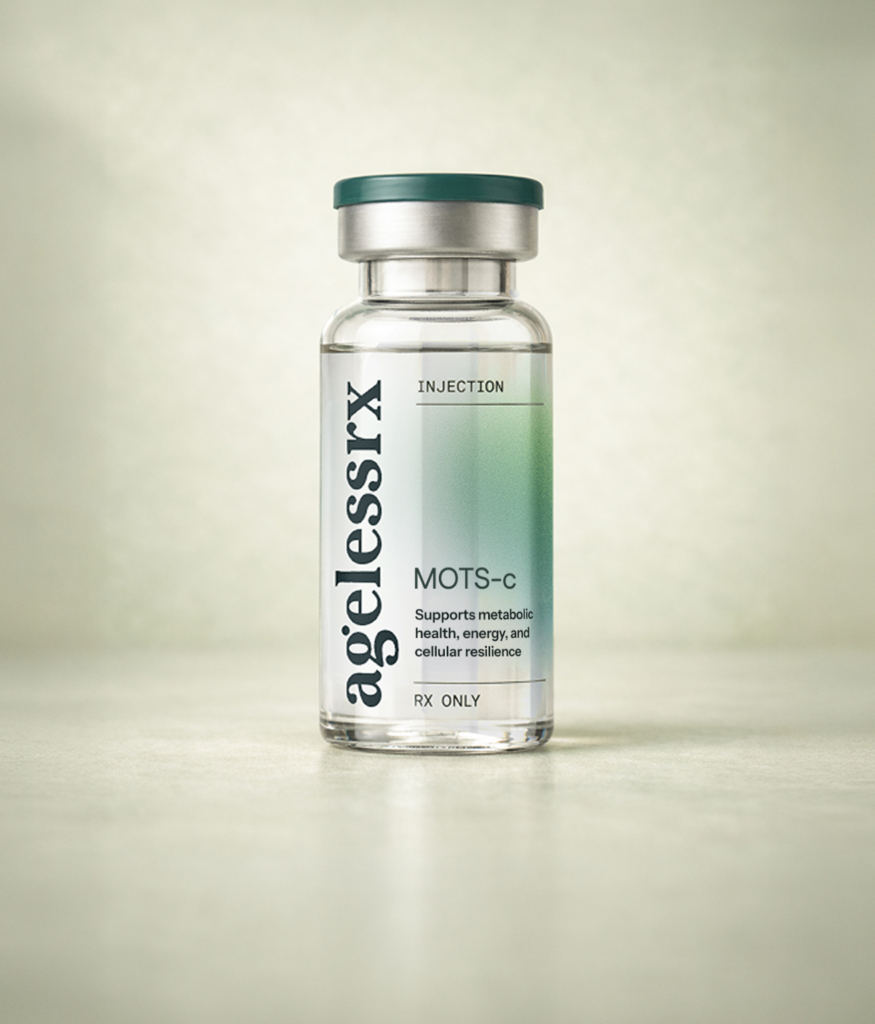


When energy and metabolism don’t respond like they used to, this peptide is being studied for its potential to support metabolic health, physical performance, and longevity.
MOTS-c is a naturally occurring peptide encoded by mitochondrial DNA. Researchers are studying it for its potential role in glucose metabolism, insulin sensitivity, fat oxidation, mitochondrial function, and healthy aging.1 3 What makes MOTS-c unusual is that it may be able to move from the mitochondria into the cell nucleus under metabolic stress, where it appears to influence genes involved in energy use and stress response.2
MOTS-c is studied for its interaction with AMPK, one of the cell’s major energy-sensing pathways. AMPK helps regulate how cells take up glucose, use fat for energy, and respond when energy demand changes.1 Most of this evidence is still preclinical, which is why we’re careful not to turn the mechanism into a guaranteed human outcome.
MOTS-c is being studied for potential support across insulin sensitivity, glucose uptake, fat oxidation, mitochondrial function, energy, and exercise capacity.1 3 Some people may notice changes in energy or metabolic responsiveness, while others may notice little or no meaningful change. Direct human trial data for injected MOTS-c remain limited, so results vary and benefits aren’t guaranteed.
MOTS-c Injection is self-injected according to your provider-guided titration schedule. If prescribed, a US-licensed provider will provide your personalized dosage and treatment instructions.
MOTS-c has no well-established drug interactions, however, caution is advised with use of the following:
Please inform your AgelessRx prescriber of all medications you are taking, including supplements and over-the counter medications.
Side effects
The most common side effects of MOTS-c include:
MOTS-c is generally well-tolerated, with minimal side effects that often go away on their own within a week or two. For injection site irritation, it is recommended to rotate injection sites, or apply a cold compress after injection.
Do not use MOTS-c if you are pregnant, breastfeeding, or planning to become pregnant or breastfeed. If you become pregnant during treatment, discontinue immediately and consult your OB.
Note: The above statements have not been evaluated by the Food and Drug Administration. This product is not intended to diagnose, treat, cure, or prevent any disease.
Disclaimer
Peptides offered through AgelessRx are compounded medications that have not been approved or authorized by the FDA. They are compounded under an interim HHS enforcement discretion policy that may be revised or rescinded at any time, and they may not be available in all states. Evidence on their safety and effectiveness in humans is limited, and they are not appropriate for everyone. Treatment is available only if prescribed by a licensed clinician following an individual evaluation.
Prescription products require an online evaluation with a licensed medical professional who will determine if a prescription is appropriate. Products are compounded by a licensed pharmacy. The FDA has not reviewed or approved compounded products for any use for safety, efficacy, or quality.
A vial can say MOTS-c and still leave the biggest safety questions unanswered. Who made it? What was tested? Is the dose right for you? Who’s responsible if something goes wrong?
That’s the difference between access to a peptide and actual, clinician-guided peptide care.
| AgelessRx MOTS-c | Gray market |
|---|---|
| Sourced by a licensed U.S. compounding pharmacy | Often sold as “research use only” |
| Tested + documented for quality | Quality varies (unclear) |
| Licensed clinician review | No clinical review required |
| Clinician guided dosing guidance | None |
| Ongoing provider guidance + support | None |




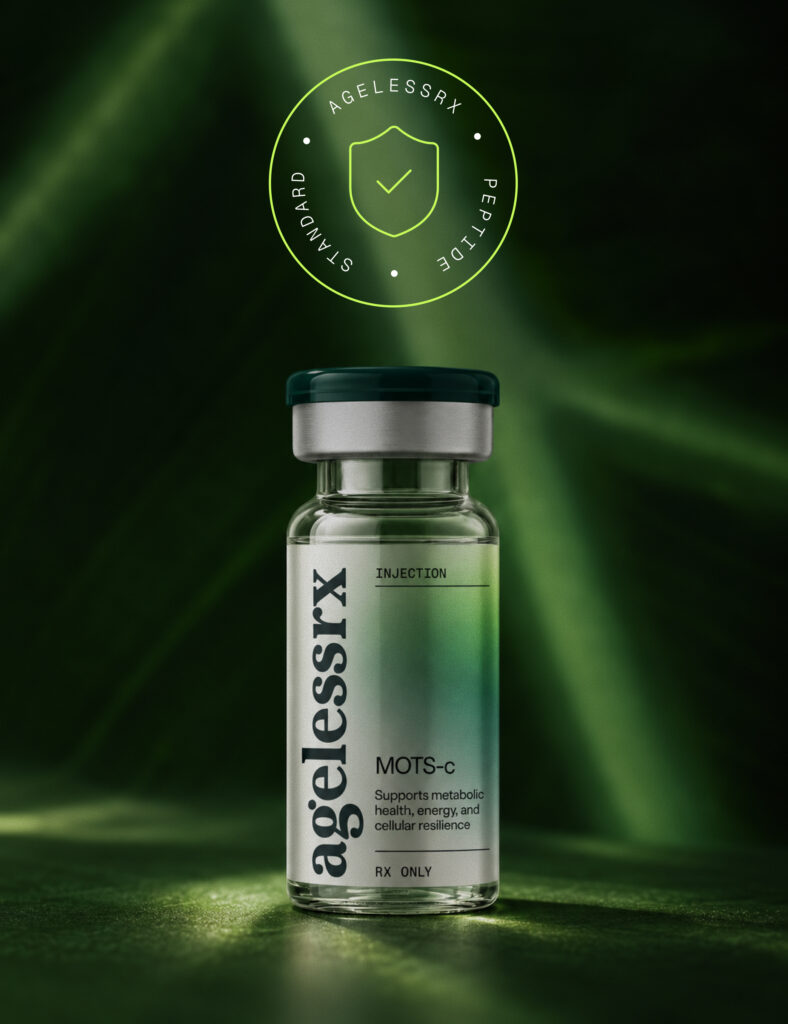

Think of MOTS-c as a signal that helps cells adjust how they use fuel when energy demand changes.
Research suggests it may influence AMPK, one of the body’s main energy sensors, helping cells take in glucose and use fat for fuel. This may support energy, metabolic health, and exercise capacity.1 3
How MOTS-c works


Evidence and research
MOTS-c is unusual because your mitochondria naturally make it.1 And unlike most mitochondrial signals, research suggests MOTS-c can move into the cell nucleus when the body is under metabolic stress.2
That mitochondria-to-nucleus communication is what has researchers studying MOTS-c across metabolism, exercise, and aging. Most of that research is still preclinical, but it opens an interesting question: could a signal our bodies already use to respond to changing energy demands become useful as that system changes with age?

Injectable MOTS-c is promising, but not proven. Most of what researchers know about its effects on glucose metabolism, fat oxidation, AMPK, mitochondrial activity, and antioxidant signaling comes from cell and animal studies.1 6
Human research exists, but it mostly looks at the MOTS-c our bodies naturally produce. Studies have found relationships between circulating MOTS-c, exercise, age, and metabolic health, but those are not specific to injectables in humans.8 3
We’d rather tell you exactly where the science stands than turn an interesting signal into a promise it hasn’t earned.






Disclaimer
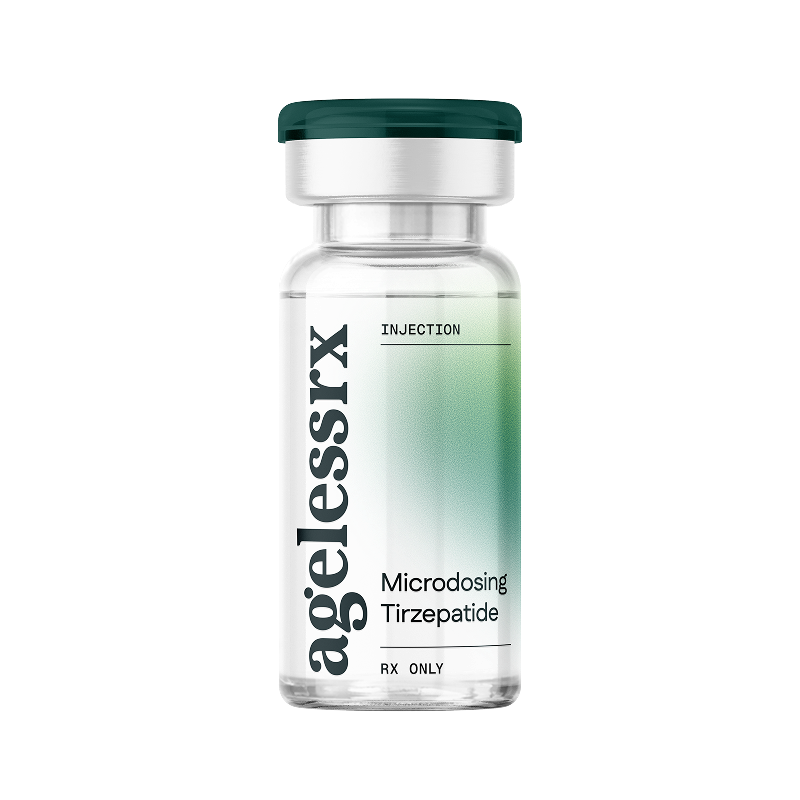
A low-dose GLP-1 approach designed to work in sync with the body, which may help minimize side effects, quiet cravings, and support moderate weight loss.
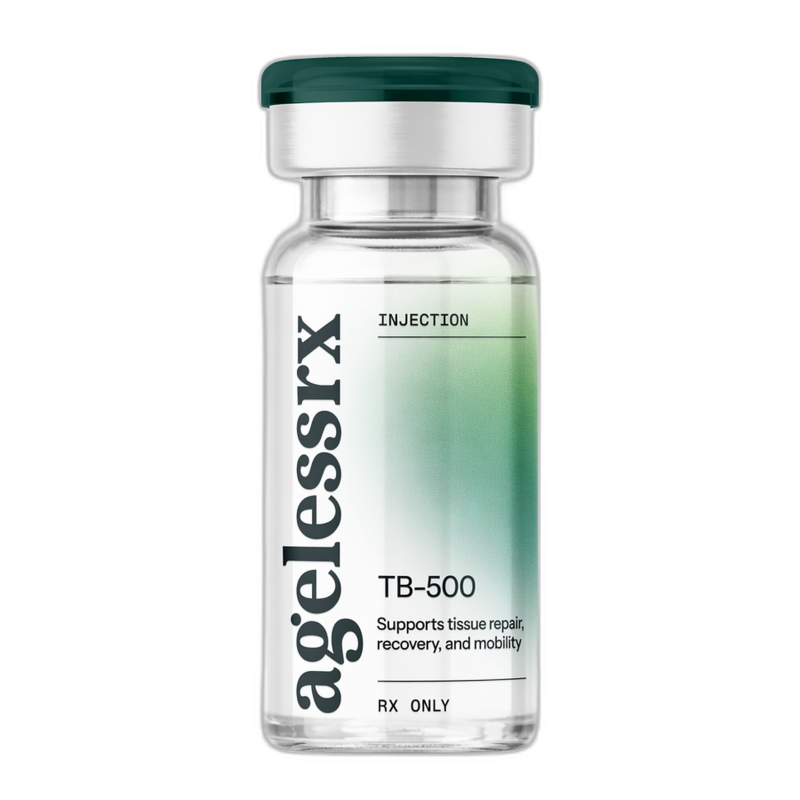
When your body takes longer to bounce back from workouts or physical stress, TB-500 is being studied for the cellular processes that help repair happen throughout the body.
When soreness sticks around longer or recovery isn’t what it used to be, BPC-157 is being studied for the repair signals that help the body respond and rebuild.
Supports energy, lean muscle mass, and strength by encouraging the body to replenish its own growth hormone gradually—without the risks of synthetic HGH.
A targeted nasal spray that may support natural growth hormone signaling in the brain, helping promote deeper sleep, clearer thinking, and balanced recovery without injections.
Support steady weight loss, restore energy, and promote healthy metabolism with a targeted blend of vitamin B12 and lipotropic nutrients tailored to enhance the body’s natural fat-burning systems.
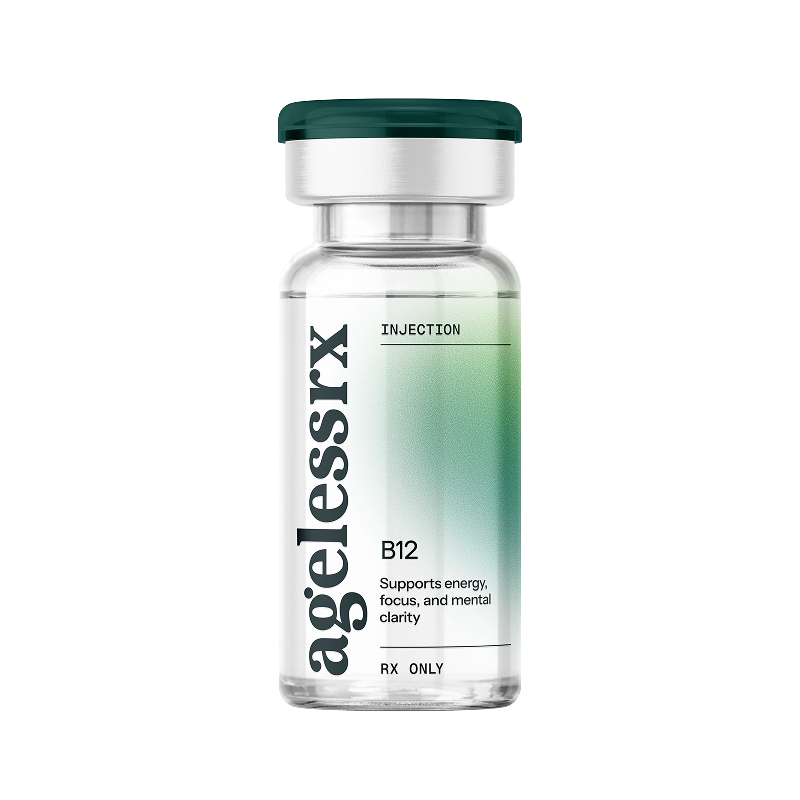
Boost energy, improve focus, and fight fatigue with one of the most efficient ways to restore B12 levels that naturally decline with age, delivering more reliable results than supplements.
No. MOTS-c is not FDA-approved, which means it has not gone through the FDA’s premarket review process for safety and effectiveness. It can still be prescribed as part of individualized care, which makes product quality and clinical oversight especially important.
If you’re interested in exploring peptides, look for verified sourcing and quality documentation, licensed clinician review, individualized dosing, and ongoing support. Every peptide we offer is backed by ongoing clinician oversight, personalized care, and quality testing.
MOTS-c has generated interest because of research into mitochondrial signaling, metabolism, exercise, and healthy aging, but direct human safety data for injected MOTS-c are still limited.
We don’t pretend the science is further along than it is, which is one reason we created the AgelessRx Peptide Standard, backed by our Stanford PhD-led Research Team. A licensed clinician reviews your health history, medications, metabolic health, and individual risk factors before deciding whether MOTS-c may be appropriate for you.
Most people interested in MOTS-c are looking for support around energy, metabolism, exercise performance, and healthy aging. Researchers are studying its potential role in insulin sensitivity, glucose uptake, fat oxidation, mitochondrial function, and exercise capacity. What makes MOTS-c especially interesting is that it’s a metabolic signal mitochondria naturally produce.
Potentially, but the evidence is still early. MOTS-c is studied across pathways involved in how cells take in glucose, use fat for fuel, and respond when energy demand changes. Animal research has also explored exercise capacity and metabolic function, but we don’t yet have strong human clinical evidence showing that injected MOTS-c reliably increases energy.3
MOTS-c is not an approved weight-loss medication. Researchers are studying its role in glucose metabolism, insulin sensitivity, fat oxidation, and energy use, which may be relevant to broader metabolic health and body composition.1 Most of that evidence is still preclinical, so we would not position MOTS-c as a proven weight-loss treatment.
This is one of the biggest reasons researchers are interested in MOTS-c. Preclinical studies suggest it may influence AMPK-linked pathways involved in glucose uptake and insulin sensitivity.1 Human studies have also found associations between naturally circulating MOTS-c and metabolic health, but direct human research on injected MOTS-c remains limited.8
MOTS-c is also being studied for pathways involved in glucose uptake and insulin sensitivity, both of which play an important role in blood-sugar regulation. We don’t yet have enough human evidence to say injected MOTS-c lowers blood sugar. This is also why your clinician reviews glucose-lowering medications and your metabolic history before prescribing.
Preclinical research has explored MOTS-c for exercise capacity and the body’s metabolic response to physical activity. Human studies have also found changes in naturally circulating MOTS-c with exercise.3 That makes physical performance an interesting area of research, but injected MOTS-c has not been proven to improve endurance or athletic performance in humans.
Some researchers use the term because preclinical studies suggest MOTS-c may activate some of the same metabolic pathways involved in the body’s response to exercise, including AMPK.1 3 It does not mean MOTS-c replaces exercise, and it has not been proven to reproduce all of exercise’s effects in humans.
Researchers have studied MOTS-c in pathways involved in oxidative stress and inflammatory signaling, including Nrf2 and NF-κB.6 Most of this work is preclinical, so it’s more accurate to say MOTS-c is being studied for its role in inflammatory balance than to call it an anti-inflammatory treatment.
Researchers have explored MOTS-c in cardiovascular and cardiac-tissue models, but the evidence remains early and largely preclinical.7 MOTS-c should not be considered a treatment for cardiovascular disease.
“Research use only” products are sold as research materials, not medications intended for human use, which can leave uncertainty about safety, sourcing, quality, dosing, or what to do if something changes. If you’re going to explore MOTS-c, choose care that gives you verified sourcing and quality documentation, licensed clinician review, individualized dosing, and ongoing support from someone accountable for your care.