
AgelessRx PEARL Trial: Rapamycin & LDN Bone Density Findings

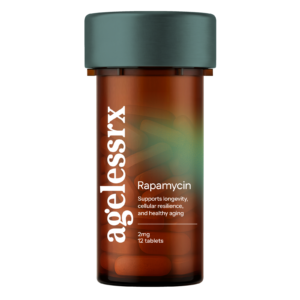
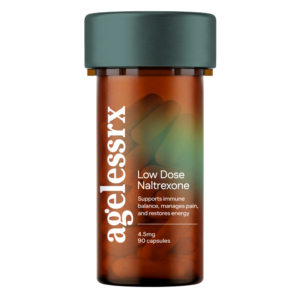
If you’re managing low bone density and feel like your options are limited, this blog deserves your attention. In the PEARL trial, a 52-year-old woman with osteopenia took Rapamycin alongside Low Dose Naltrexone (LDN) for two years. Her follow-up DEXA scan showed a 15.9% increase in bone mineral density in her lumbar spine. That number made our Research Team look twice. Below, we break down what the data showed, what likely drove those results, and where the gaps in the evidence still are.
Key takeaways:
- Rapamycin may slow bone resorption by suppressing mTOR; LDN may support osteoblast activity via OGFR blockade
- A PEARL case report observed a 15.9% BMD increase over two years
- The lumbar spine has a higher proportion of trabecular bone than the femoral neck, making it more metabolically active and more responsive to these interventions
- Both compounds are used off-label for bone density and require clinician oversight, baseline labs, and ongoing monitoring
- Our PEARL program is part of a broader effort to generate original longevity evidence. It is the kind that shapes how clinicians think about geroprotective therapies beyond standard-of-care
What Is Osteopenia and How Does It Differ From Osteoporosis
Osteopenia and osteoporosis both mean low bone mineral density (BMD), but they sit at different points on the same scale. Osteopenia is the earlier stage where bone density has dropped below the normal range for a healthy adult but hasn’t yet crossed into osteoporosis. Clinicians measure this with a T-score from a DEXA scan. A T-score between -1.0 and -2.5 means osteopenia. A score at or below -2.5 means osteoporosis.
The difference matters in practice. Osteoporosis carries a much higher fracture risk, but osteopenia is not harmless. Left unmanaged, it often gets worse. Many people don’t know they have either condition until a fracture happens.
Who Is Most at Risk?
Several factors increase the risk of low BMD:
- Postmenopausal women face faster bone loss as estrogen drops, since estrogen helps slow the bone resorption process
- Adults over 60 see gradual BMD decline as a normal part of aging
- People with low body weight, vitamin D deficiency, or a history of long-term corticosteroid use are at higher risk at any age
- A family history of osteoporosis or prior low-trauma fractures are also strong predictors of bone density concerns
Why Standard Care Often Falls Short
Standard osteoporosis care has a real ceiling. It usually relies on bisphosphonates like alendronate or denosumab, which work by slowing bone resorption. They can preserve existing bone mass reasonably well, but they do little to build new bone. For patients who are postmenopausal, on long-term corticosteroids, or managing several age-related conditions at once, that gap is worth understanding.
Side effects are also a notable concern. Long-term bisphosphonate use carries a small but real risk of atypical femoral fractures and osteonecrosis of the jaw. That risk leads some patients and clinicians to look for alternatives before starting years of treatment.
The PEARL Trial: What It Was Studying
The PEARL trial was a 12-month, double-blind, placebo-controlled study that generated original clinical evidence on geroprotective therapies in healthy aging adults. Our Stanford PhD-led Research Team tracked a range of longevity biomarkers, including bone mineral density via DEXA scan. A case report published in January 2025 focused on one participant whose results stood out: a 52-year-old woman combining Rapamycin with Low Dose Naltrexone who showed a 15.9% increase in lumbar spine bone mineral density over approximately two years, an unexpected finding that prompted further skeletal health analysis.
How Rapamycin Acts on Bone Remodeling
Bone is living tissue, and that matters more than it sounds. Cells called osteoclasts break it down; cells called osteoblasts rebuild it. The balance between those two processes is governed by mTOR, a signaling pathway that Rapamycin directly inhibits. Research suggests mTOR suppression can reduce osteoclast activity, which may help slow bone resorption. Some studies also indicate Rapamycin may support osteoblast differentiation under certain conditions, though that relationship is still being studied. What makes this especially compelling is that most standard bone treatments focus only on slowing bone breakdown. If Rapamycin can also encourage bone-building cells, it may tackle the problem from both sides.
How LDN May Influence Bone Formation
LDN’s potential effect on bone comes down to two straightforward ideas: removing a brake and cooling down inflammation.
The first pathway involves your bone-building cells, called osteoblasts. Under normal conditions, a naturally occurring signal in the body acts like a dimmer switch on those cells, slowing their activity. LDN temporarily blocks that signal, which may allow osteoblasts to work more freely. Studies on this mechanism have shown increases in bone mass when this pathway is engaged. The receptor involved is called the opioid growth factor receptor (OGFR), for those who want the technical detail.
The second pathway is inflammation. Chronic low-grade inflammation (the kind that quietly accumulates with age) is a well-recognized driver of bone loss. LDN has documented effects on pro-inflammatory signaling, and reducing that background noise may help the body maintain a healthier bone remodeling balance over time.
Neither pathway has been confirmed in a large human randomized controlled trial focused on bone density. Both are plausible and worth pursuing. Our proposal to the National Aging Institute reflects the effort to build exactly that evidence base.
The Patient’s Intervention Timeline
The woman at the center of this case report had been living with osteopenia for years before enrolling in PEARL. After her diagnosis, she spent two full years doing everything right (HRT, calcium, vitamin D, weight-bearing exercise) and her follow-up DEXA showed virtually no change. Her bones simply were not responding to standard care.
When she joined the PEARL trial, she began weekly compounded Rapamycin. Over the following two years, her regimen gradually expanded. She added vitamin K2 to support calcium metabolism, then switched to commercial Rapamycin as her protocol evolved. Low Dose Naltrexone came next, starting at a low nightly dose and titrating up slowly. Oral Progesterone was the final addition, introduced a few months before her last DEXA scan in April 2024.
That layered, stepwise approach gave the research team a rare window into how her skeletal health changed as each compound was introduced. The April 2024 results were not what anyone expected.
What the DEXA Results Showed
When the April 2024 DEXA results came in, roughly two years after PEARL enrollment, the numbers were striking. Lumbar spine bone mineral density had increased by 15.9%, with her T-score moving from -1.0 to +0.3. To put that in plain terms: she went from osteopenic to above-normal bone density at the lumbar spine. Femoral neck BMD improved by 3.9%, a smaller gain that falls outside DEXA measurement error but is less clinically notable on its own.
How a 15.9% BMD Increase Compares to Current Standards
A 15.9% increase in bone mineral density over roughly two years is worth pausing on. The most commonly prescribed bone medications, like alendronate (Fosamax), typically deliver lumbar spine BMD gains of around 9.6% at the therapeutic dose over three years in postmenopausal women with osteoporosis. Denosumab, considered one of the stronger options available, produced a 9.2% increase in lumbar spine BMD over the same period. The number from this case report sits above both, which is what makes it worth paying attention to.
|
Treatment |
Primary Mechanism |
Lumbar Spine BMD Gain |
Timeframe |
Evidence Level |
|---|---|---|---|---|
|
Rapamycin + Low Dose Naltrexone (PEARL) |
mTOR inhibition, OGFR blockade, anti-inflammatory |
15.9% |
~2 years |
Single case report |
|
Alendronate (Bisphosphonate) |
Slows osteoclast-driven bone resorption |
9.6% |
3 years |
RCT evidence |
|
Denosumab |
Inhibits RANKL to reduce bone resorption |
9.2% |
3 years |
RCT evidence |
|
Lifestyle alone (HRT, calcium, vitamin D, exercise) |
Hormonal support, bone substrate, mechanical loading |
Minimal to none |
2 years |
Observational (this patient’s prior history) |
The PEARL case report’s outcome sits well above those benchmarks. But single case reports carry real methodological limits worth naming clearly. While the broader PEARL trial was double-blind and placebo-controlled, this observation concerns one participant’s individual response. A single case cannot prove causation or rule out contributions from natural variation, other lifestyle changes, or the additional compounds the patient added during the study period. Bone density also fluctuates with seasonal activity, diet, and hormonal changes. Any of those could account for part of the measured improvement.
Safety Considerations for Rapamycin and Low Dose Naltrexone
Both compounds have a manageable side effect profile at these doses. Rapamycin may cause mild, transient stomatitis, nausea, and GI discomfort in some users. The PEARL trial confirmed it is generally well-tolerated at intermittent longevity doses. LDN may produce vivid dreams, mild insomnia, and headaches during an initial adjustment period. These effects typically resolve within days to a few weeks.
Neither is FDA-approved for bone density improvement. Rapamycin holds FDA approval for organ transplant rejection. Low Dose Naltrexone is used entirely off-label. Both require clinician oversight, baseline labs, and ongoing monitoring.
PEARL Research and What Comes Next
The PEARL trial exists because we believe in generating original longevity evidence, not merely applying what others have studied. A single case report is a starting point. What makes this one compelling is the magnitude of the BMD change and what it suggests: that geroprotective therapies may interact with skeletal aging through pathways traditional osteopenia care was never designed to target. If findings like this hold up in larger studies, they may change how clinicians approach bone health in aging adults. The PEARL data raises a question that deserves a larger answer, and our Research Team intends to follow it.
Note: The above statements have not been reviewed by the Food and Drug Administration. This product is not intended to diagnose, treat, cure, or prevent any disease.