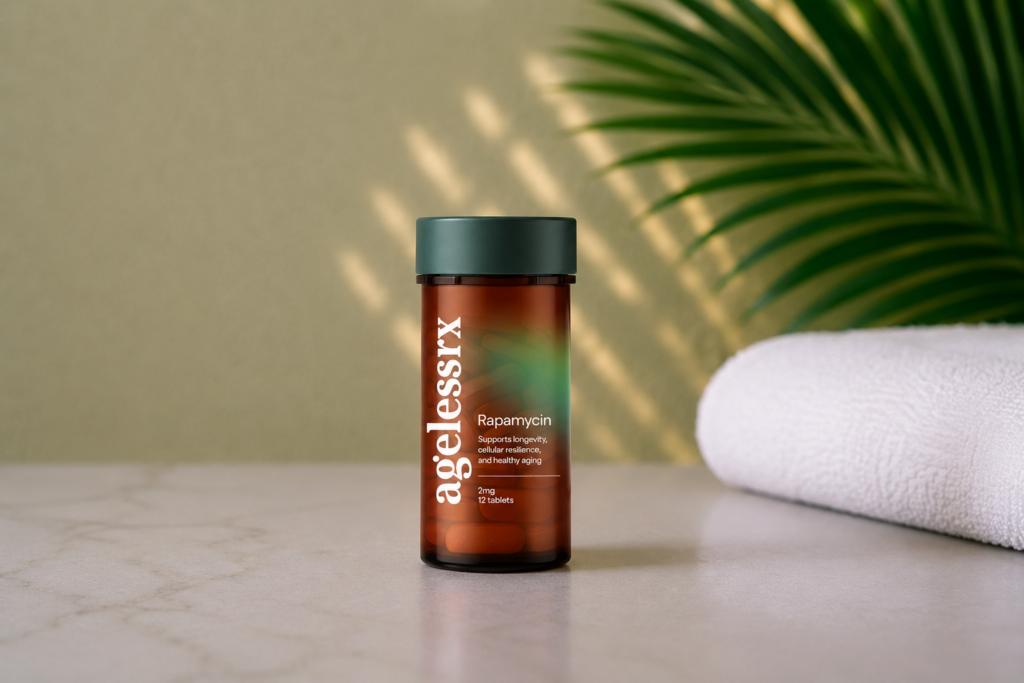
Results of the PEARL Trial: An Expert Analysis

AgelessRx designed and led the PEARL trial, partnering with Lifespan.io and the University of California and funding it through nationwide crowdfunding.
Here’s what we’ll cover in this blog post:
- What is the PEARL trial
- What are the results of the PEARL trial
- What the results mean
- What’s next for Rapamycin research
After a year-long trial and years of careful analysis, the results of the PEARL trial are finally here!
The PEARL trial, which was the first nationwide telemedicine trial, was also one of the largest and longest randomized control trials testing Rapamycin for healthy human aging.
Led by AgelessRx and supported by Lifespan.io, with the University of California, the PEARL trial is among the first of its kind, providing scientists with valuable, real-world data to expand research into Rapamycin.
So, what are the results of the PEARL trial? Is Rapamycin safe and effective for human longevity, and what does this mean for the future of Rapamycin research?
Here, we’ll summarize the discussion from our PEARL webinar, where our experts and partners answer all these questions and more.
Setting the Stage for PEARL
In recent years, Rapamycin has been championed by researchers and longevity enthusiasts alike for its potential as a gerotherapeutic agent (a treatment that targets the biology of aging itself). That’s because Rapamycin has improved the lifespan of every organism that researchers have tested so far, including yeast, worms, mice, monkeys, and dogs. As Dr. Matt Kaeberlein describes, “it really is the gold standard for pharmacological interventions that can positively modulate the biology of aging.”
The only problem? There’s very little research and clinical studies on longevity doses of Rapamycin in humans. That means researchers don’t know what dose is best to promote healthy aging and functioning while minimizing side effects.
Of the few clinical trials with Rapamycin in humans, one of the most notable was a 2014 study led by Joan Mannick, in which researchers showed that Everolimus, a derivative of Sirolimus, improved the immune system of elderly patients.
This, in part, led to growing interest in the longevity community. However, there weren’t many other studies supporting proper prescription or dosing, and some within the clinical and scientific community had concerns about its safety.
All these questions and concerns are what led to the PEARL trial, which was conceived to provide some of the first science-backed answers to these questions.
What Is the PEARL Trial?
The PEARL trial (Participatory Evaluation of Aging with Rapamycin for Longevity) was a randomized, double-blind, placebo-controlled clinical trial studying the safety and efficacy of Rapamycin for healthy aging
The trial was organized by AgelessRx, Lifespan.io, and the University of California, with the primary goal of testing various dosing options for Rapamycin, assessing side effects, and determining overall safety. It’s notable as one of the largest and longest randomized control trials for Rapamycin in human aging, as well as one of the first crowd-funded clinical trials.
PEARL was among the largest and longest studies on human Rapamycin use available at the time. While other studies had been short and narrow, the PEARL trial analyzed a broad range of healthspan metrics in aging individuals, providing real-world human evidence.
The study followed 114 healthy individuals aged 50-85 over a period of 12 months, beginning in 2019. Some individuals received 5-10mg of Compounded Rapamycin once weekly, which is equivalent to 1.4-2.9mg of Generic Rapamycin. Other participants received a placebo.
Researchers observed the participants for evidence of side effects or adverse reactions, like changes in blood biomarkers for cholesterol, sugar metabolism, inflammation, and liver and kidney function.
The participants also went through regular testing for additional health and quality of life benefits, including DEXA scans measuring body composition changes, lean muscle mass, bone density, and visceral fat.
The key questions that PEARL aimed to answer were:
- How safe and well-tolerated is Rapamycin?
- What is the optimal dose for slowing age-related decline?
- Are there sex-specific differences?
- Does Rapamycin show potential as an effective healthspan-enhancing intervention in normal, aging adults?
Because all the participants were longevity enthusiasts who were interested in Rapamycin, the average baseline health was higher than normal for this trial. Still, the results showed noteworthy changes, even among a group that was already quite healthy.
What Are the Results of the PEARL Trial?
Overall, the results from the PEARL trial were just as reaffirming as they were surprising, though there was also a substantial variability in some of the results. Here are the key findings that our partners and resident experts noticed during the PEARL trial:
Rapamycin’s Effects on Visceral Fat
Loss of visceral fat was one of the primary clinical endpoints for the PEARL trial.
Though there were no statistically meaningful differences to visceral fat by the end of the trial, those who took Rapamycin were more likely to lose visceral fat than those in the placebo group. After 48 weeks, more participants in the Rapamycin groups lost visceral fat than in the placebo groups. But researchers need more data to determine whether Rapamycin is truly effective at reducing visceral fat content.
Rapamycin Safety
The PEARL trial successfully showed that Rapamycin is a safe and well-tolerated treatment when taken at low doses with intermittent (weekly) administration.
There were very few individuals who displayed adverse events or side effects in the Rapamycin group compared to the placebo group. Of the side effects that participants did experience, mild gastrointestinal issues were the most common.
May Boost Lean Muscle Mass
DEXA scans helped reveal several body composition benefits for Rapamycin. Chief among these was a statistically meaningful improvement to lean muscle mass. This was seen particularly in women taking the 10 mg dose.
That means Rapamycin may help boost or maintain overall muscle mass. As Dr. Kaeberlein noted during the study, “the one piece of data that jumps out to me is the change in lean mass. These results seem real to me.”
Bone Mineral Content & Density
This is where the benefits showed the most inconsistency and variability. Members of all groups saw both increases and decreases to bone mineral content and bone mineral density, regardless of sex or dose.
Men in the 10 mg group saw the most improvement. However, not all men saw the same benefits, and the results did not reach statistical significance. Further, the age range of the participants may have affected the results, as bone degeneration and osteoporosis are especially widespread in post-menopausal women. It’s also possible that such benefits may take much longer to fully materialize. These findings have since prompted our in-house Research Team to actively investigate skeletal health and bone mineral density as an ongoing area of inquiry.
Quality of Life & Joint Health
Participants took several self-reported surveys, including the SF-36 for quality of life, and WOMAC for joint health and mobility.
Because most were already quite healthy, most of the quality-of-life results weren’t statistically meaningful, but there were still some improvements in all groups over the trial period, with women seeing the most benefits. Women in the 10 mg group showed a statistically meaningful improvement in self-reported pain, which is consistent with previous reports on the effects of Rapamycin. There were also noticeable improvements in the 5 mg Rapamycin group for general health, neither being gender specific.
Results for group WOMAC scores were largely underwhelming. However, there were no statistically meaningful differences between treatment groups and placebo for any of the measures. This includes physical function, stiffness, or pain.
Sex-Specific Differences
Of all the benefits mentioned above, women participants showed the most benefit overall, especially for the 10mg dose.
This was especially true for benefits to lean muscle mass, where all women in the 10mg group saw marked improvements. Women saw better results across measures of pain, with the 10mg group exhibiting the strongest self-reported benefits in this measure.
However, the PEARL trial had much fewer women participants than men, with only eight women in the 10mg group. Further, it’s not clear if men could benefit from higher doses. This would suggest patients may need unique and personalized dosing protocols to see the best benefits. Because we haven’t seen a correlation with weight, height, or BMI with how one responds to Rapamycin in any of our studies, there could be underlying biological factors that inform this difference, beyond a size difference between men and women.
Still, this could be evidence that Rapamycin benefits may be more pronounced in women than in men.
What Do These Results Mean?
So, what can we take away from the PEARL trial? As a safety and efficacy trial, the PEARL trial showed that Rapamycin, when taken weekly for one year, is safe for healthy adults to take for longevity. It also showed that Rapamycin may be able to reduce some aspects of age-related decline in generally healthy adults.
But we’ve only just taken our first steps into the world of human Rapamycin testing. That means it’s still too early to draw any certain conclusions from the results of the PEARL trial. It is still too early to assume that any of these findings are certain benefits of Rapamycin. However, we need more rigorous clinical trials that independently validate and expand on results from the trial.
The PEARL trial also set the stage for follow-up studies, providing a foundation for other researchers to build upon. That is the true value of the PEARL trial: blazing a trail for other researchers to follow and expand, so we can confirm once and for all whether all the longevity potential seen from Rapamycin in animal studies can be translated to humans.
What’s Next for Rapamycin Research?
The PEARL trial created one of the first safety and efficacy profiles for Rapamycin in humans. Researchers can use it as a basis for future studies. Now, other scientists have more information to refine future study designs and build upon the results of the PEARL trial.
From there, more and more studies on Rapamycin can be funded, in turn expanding access to this potential longevity-enhancing medication.
It’s true, though, that plenty of questions remain for Rapamycin. We have evidence that it’s safe, and likely effective for some users; we just don’t fully understand why.
Our in-house Research Team has continued to build on the PEARL trial’s data, tracking long-term Rapamycin use among consenting participants. That work has already produced peer-reviewed results. In 2025, AgelessRx published a case report drawing on PEARL data, one of the first peer-reviewed outputs from this trial. Ongoing research is also helping clarify what dose and regimen works best, and whether benefits build and improve over time.
If you’d like to learn more about Rapamycin, get started with a free visit with one of our prescribers today. Your experience could help shape the future of Rapamycin research.
Where Rapamycin Research Stands in 2026
The PEARL trial’s formal publication marked a turning point. Other scientists can now build directly on the trial’s design, endpoints, and findings.
In August 2025, a review published reviewed the full body of clinical evidence for off-label Rapamycin use in healthy adults. Researchers found encouraging early signals, particularly around immune function and body composition, while confirming that larger and longer trials are still needed before any firm conclusions can be drawn.
Put together, the research picture in 2026 looks like this: PEARL set the foundation, follow-on studies are actively filling in the gaps, and the scientific case for continued investigation keeps growing stronger.
Frequently Asked Questions
All information as presented here is sourced from the AgelessRx PEARL Trial Results Webinar, hosted August 27, 2024, unless another source is provided.
For a look at how this geroscience lens applies to Long COVID, see The Pivotal Link Between the Biology of Aging and Long COVID.
Note: The above statements have not been evaluated by the Food and Drug Administration. This product is not intended to diagnose, treat, cure, or prevent any disease.