
Daily Tadalafil Side Effects: What to Expect & How to Manage Them


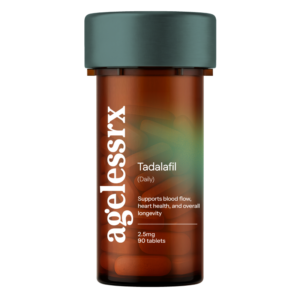
Starting daily Tadalafil means getting used to how the medication feels in your body. For some people, that may include a headache, stuffy nose, indigestion, or other mild side effects, particularly when first starting treatment.
Many common side effects become less noticeable as your body adjusts to daily use. Others may be a reason to check in with your clinician, especially if they’re persistent, severe, or unusual.
So, what can you expect when taking daily Tadalafil? Here’s a closer look at the most common side effects, how long they may last, and the symptoms that warrant medical attention.
Key takeaways:
- Headache and flushing are common Tadalafil side effects
- Daily low-dose Tadalafil (2.5-5 mg) may cause fewer side effects than higher as-needed doses
- Never combine Tadalafil with nitrates
- Seek immediate care for an erection lasting over 4 hours, sudden vision loss, or sudden hearing loss
- AgelessRx offers daily Tadalafil at 2.5 mg and 5 mg with clinician review
How Does Tadalafil Work in the Body?
Tadalafil belongs to a class of medications called PDE5 inhibitors. PDE5 is an enzyme that breaks down cGMP, a molecule that helps smooth muscle relax and blood vessels widen. Tadalafil blocks PDE5, allowing cGMP to stick around longer and blood vessels to stay more relaxed.
Why Blood Vessel Widening Causes Side Effects
PDE5 is found throughout the body. This is one reason researchers are studying daily low-dose Tadalafil for cardiovascular and other health effects beyond erectile dysfunction.
This blood vessel-widening effect also explains several common Tadalafil side effects. Headaches, flushing, and lower blood pressure can all occur as blood vessels relax and widen.
What Are the Common Side Effects of Daily Tadalafil?
Feeling something new after starting a medication can be unsettling, even when you know side effects are possible. The good news is that most people tolerate daily low-dose Tadalafil well. When side effects do occur, they are often mild and may become less noticeable as your body adjusts.
The most commonly reported Tadalafil side effects include the following, though individual experience may vary:
- Headache
- Indigestion or dyspepsia
- Back pain
- Muscle aches or myalgia
- Flushing
- Stuffy or runny nose
How Long Do Side Effects Last?
Many of these effects are temporary. Back pain and muscle aches associated with Tadalafil typically resolve within 48 hours. If side effects persist or become difficult to manage, contact your clinician.
What Are the Serious but Rare Tadalafil Side Effects?
Serious Tadalafil side effects are rare, but are important to watch for.
Seek emergency care immediately:
- Priapism: An erection lasting more than 4 hours. Without treatment, it can cause permanent tissue damage.
- Sudden vision loss: Vision loss in one or both eyes may be a sign of a rare eye condition called non-arteritic anterior ischemic optic neuropathy (NAION).
Stop taking Tadalafil and call your doctor right away:
- Sudden hearing loss: A sudden decrease or loss of hearing may occur with ringing in the ears or dizziness.
- Severe dizziness, fainting, or chest pain: These may indicate a significant drop in blood pressure, especially if you recently took a nitrate or alpha-blocker.
These reactions are uncommon, but they require prompt medical attention. If you experience any of them, stop taking Tadalafil and seek care right away.
Daily vs. As-Needed Tadalafil: How Do Side Effects Compare?
How Dose Affects Blood Levels
How you take Tadalafil changes how much of the medication is in your bloodstream at once. As-needed doses (10-20 mg) create higher peak concentrations, while daily low-dose Tadalafil (2.5-5 mg) maintains a lower, steadier level.
That difference can affect how side effects feel. Higher doses may make effects like headache or flushing more noticeable, while daily dosing avoids the larger peaks of as-needed use.
What Clinical Studies Show
Clinical studies of daily Tadalafil have found that most reported side effects are mild to moderate. Your individual experience, however, can depend on your dose, health history, and other medications.
|
Daily Low-Dose (2.5-5 mg) |
As-Needed (10-20 mg) | |
|---|---|---|
|
Blood level pattern |
Steady state |
Peak and trough |
|
Side effect timing |
Often 7-10 days |
Tied to each dose |
|
Typical severity |
Mostly mild |
Mild to moderate |
|
Primary use case at AgelessRx |
Longevity protocol |
ED only |
As-needed higher doses are prescribed exclusively for erectile dysfunction and are not expected to carry the same longevity-focused cardiovascular benefits associated with the daily protocol.
What Medication Interactions and Foods Should You Avoid With Tadalafil?
Before starting daily Tadalafil, your clinician needs to know what else you take. Some medications can strengthen Tadalafil’s blood-pressure-lowering effects or change how quickly your body processes it.
The Nitrate Interaction
The most important interaction is nitrates. Combining Tadalafil with nitrate medications, including nitroglycerin, can cause a dangerous drop in blood pressure. Because Tadalafil stays in the body longer than many other PDE5 inhibitors, nitrates generally should not be given until at least 48 hours after the last Tadalafil dose, and only under medical supervision.
Other Drug and Food Interactions
Other interactions to know include:
- Alpha-blockers: Combining them with Tadalafil may increase the risk of low blood pressure, dizziness, or fainting.
- Riociguat (Adempas): Riociguat is a medication used to treat pulmonary arterial hypertension. Combining it with Tadalafil can cause a severe, potentially life-threatening drop in blood pressure. Do not take these two medications together.
- Recreational nitrates (“poppers”): Recreational drugs such as amyl nitrate or butyl nitrate also contain nitrates. They carry the same dangerous blood pressure interaction as prescription nitrate medications, and the combination with Tadalafil should be avoided.
- Certain antifungals, antibiotics, and HIV medications: Some can slow how quickly your body breaks down Tadalafil, increasing your exposure to the medication.
Who Should Use Caution or Avoid Taking Tadalafil?
Tadalafil is appropriate for a wide range of adults, but certain health histories require extra scrutiny before starting. (If you’re wondering about Tadalafil for women, the evidence picture looks different and is worth reviewing separately.)
People who should avoid Tadalafil or discuss it carefully with a clinician include:
- Anyone currently taking nitrate medications for chest pain or heart conditions
- Those with a recent history of heart attack, stroke, or unstable angina
- People with uncontrolled high or low blood pressure
- Anyone with severe liver disease
- Those with hereditary degenerative retinal disorders, such as retinitis pigmentosa
- Individuals with a history of NAION (sudden vision loss linked to optic nerve blood flow)
If any of these apply to you, talk with your clinician before starting Tadalafil so they can determine whether it’s safe and appropriate for you.
How Can You Manage Tadalafil Side Effects?
Side effects don’t always mean Tadalafil isn’t a good fit. Sometimes, small changes can make a noticeable difference in how you feel day to day.
- Stay hydrated. Dehydration can make headaches and dizziness worse.
- Take Tadalafil consistently. Take your prescribed dose around the same time each day.
- Limit alcohol. Larger amounts can worsen headache, dizziness, flushing, and low blood pressure.
- Stick with your prescribed dose. Talk with your clinician before making any changes.
- Manage aches carefully. Over-the-counter pain relievers may help with back pain or muscle aches, but check with your clinician if you’re unsure what’s safe for you.
Pay attention to how you feel rather than trying to power through uncomfortable symptoms. If a side effect persists, gets worse, or starts interfering with your day, let your clinician know.
Tadalafil for Longevity at AgelessRx
Clinician-Reviewed Prescriptions
At AgelessRx, Tadalafil is available as a daily low-dose longevity protocol in 2.5 mg and 5 mg doses. Every prescription requires review by a US-licensed clinician, who considers your health history, current medications, and potential contraindications before determining if Tadalafil is appropriate for you.
And daily Tadalafil doesn’t have to mean another pill. AgelessRx now offers our first-ever Tadalafil Longevity Gummy, a once-daily chewable that combines 2.5 mg of Tadalafil with 600 IU of Vitamin D3. For those who prefer a traditional format, daily Tadalafil tablets are also available.
Understanding what to expect from daily Tadalafil can make side effects easier to recognize and manage. Most are mild, but it’s important to know which symptoms require medical attention.
Note: The above statements have not been reviewed by the Food and Drug Administration. This product is not intended to diagnose, treat, cure, or prevent any disease.