
Plain-Spoken Q&A on Libido, Hair & Weight

Something is off, and it is hard to bring up in a five-minute appointment. Low libido, unexpected hair loss, and weight that will not budge despite doing everything right tend to get chalked up to aging and left there. This is a closer look at what those three things are actually signaling in the body.
Key takeaways:
- Low libido, hair loss, and unexplained weight gain are biological signals, not character flaws
- Normal bloodwork does not rule out HSDD; the hypothalamus governs desire through pathways standard panels miss
- Stress-induced hair loss is often reversible within several months, but androgenetic alopecia causes progressive follicle damage
- Adults gain an average of 1-2 pounds per year from metabolic changes alone, independent of diet or activity changes
The Silence Around These Topics
Most people notice something is off long before they say it out loud. The scale keeps creeping. The hairbrush catches more than it used to. Sex feels like something that happens to other people now. And yet, when the appointment comes, none of it makes the list, swallowed by embarrassment, the quiet assumption that nothing can be done, or the fear that naming the problem makes it more real.
That silence has a cost. Low libido, hair loss, and unexplained weight gain can each signal something measurable in the body: hormones shifting, nutrient stores depleting, metabolic function drifting. These are biological mechanisms, and most of them have pathways worth investigating.
Why Is My Sex Drive So Low?
Testosterone drives libido in both men and women, and it declines gradually starting around age 35. But estrogen changes during perimenopause and menopause can reduce genital sensitivity and dampen desire well before a woman reaches her last period. Thyroid dysfunction, both hypo and hyper, disrupts the hormonal environment broadly enough to suppress sexual interest even when reproductive hormones test within normal range.
Dopamine signaling matters too. Research suggests that age-related changes in the brain’s motivation and reward circuitry may reduce interest in sex independently of hormone levels, which is why some people with normal testosterone and estrogen still report low drive.
Medications are a frequently overlooked piece. SSRIs, certain antihypertensives, beta-blockers, and some diuretics are all associated with reduced libido. If a medication change lined up with a shift in desire, that connection is worth raising with a clinician.
Does Low Libido Always Come Down to Hormones?
Sleep deprivation may suppress testosterone and disrupt the hypothalamic-pituitary axis. It also independently reduces dopamine activity, the brain system most directly tied to desire, motivation, and reward. Chronic stress may raise cortisol in ways that compete with sex hormones at the receptor level while shifting the brain’s resources toward threat-response and away from wanting. Neither mechanism is primarily a hormone story.
Mental health conditions, particularly depression and anxiety, suppress libido through the same dopamine and serotonin pathways that govern mood, making low desire a symptom of overall brain function instead of a signal from the reproductive endocrine system.
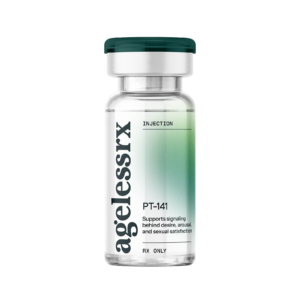
Hormone therapy targets endocrine deficiency. A peptide like PT-141 targets melanocortin receptors in the hypothalamus, triggering a dopamine-mediated response that can restore desire signaling even when hormone levels appear normal on labs. These are separate biological systems. A person whose bloodwork looks fine but who still has no interest in sex may be experiencing a central signaling issue, not a hormone deficiency.
When Low Desire Becomes a Recognized Medical Condition
Persistent low desire that causes distress and has no obvious situational explanation has a clinical name: Hypoactive Sexual Desire Disorder, or HSDD. For a clinical picture to take shape, symptoms generally need to be present for at least six months and cause meaningful personal distress. That timeline separates a rough patch from a pattern the body is not correcting on its own.
HSDD affects both men and women, though women carry a higher diagnosis rate, partly because the condition intersects with perimenopause and postmenopausal hormonal changes. For men, it is often framed as reduced drive that does not track with stress or life circumstance.
One of the more frustrating features of HSDD is that standard bloodwork can come back clean. Testosterone, estrogen, and thyroid panels look fine, so the clinician has nothing obvious to flag, and the patient walks out with reassurance but no answers. What those panels do not capture is central nervous system signaling. The hypothalamus governs desire through melanocortin and dopamine pathways, and those can shift with age, chronic stress, or hormonal transitions without leaving a visible mark on a standard hormone panel.
Getting a diagnosis matters because reassurance alone does not restore a biological signal.
Why Is My Hair Falling Out?
Androgenetic alopecia is the most common type. In men, DHT (a testosterone derivative) binds to hair follicles and progressively miniaturizes them, producing the receding hairline and crown thinning most people picture with male pattern baldness. Women experience it too, typically as diffuse thinning hair along the part. By midlife, research suggests a large portion of both men and women show some degree of hormone-related hair loss.
Telogen effluvium presents differently: a sudden shed three to four months after a stressor like surgery, severe illness, or rapid weight loss. Follicles shift prematurely into a resting phase and release together. Hair typically regrows once the stressor resolves.
|
Hair Loss Type |
Cause |
Pattern |
Reversible? |
|---|---|---|---|
|
Androgenetic Alopecia |
DHT miniaturizes follicles over time |
Receding hairline / crown thinning (men); diffuse thinning along part (women) |
No. Follicle damage is progressive |
|
Telogen Effluvium |
Stressor (surgery, illness, rapid weight loss) moves follicles into resting phase |
Sudden, diffuse shed 2-4 months after stressor |
Yes. Regrowth typically begins in 3-6 months |
|
Thyroid-Related Loss |
Hypo- or hyperthyroidism reduces metabolic signals for active growth phase |
Diffuse thinning across whole scalp |
Often yes. Responds once thyroid levels are corrected |
|
Insulin Resistance-Driven |
High androgens worsen DHT-related follicle miniaturization |
Worsens alongside weight gain or blood sugar dysregulation |
Partially. Improving metabolic health can slow progression |
Other Common Culprits Worth Knowing
- Thyroid dysfunction affects growth across the whole scalp. Hypothyroidism reduces the metabolic signals that keep follicles in active growth phase, and hair often responds once thyroid levels are corrected.
- Insulin resistance drives androgen production, worsening DHT-related loss in susceptible people. Hair thinning can worsen alongside weight gain or blood sugar dysregulation, which is why improving metabolic health sometimes produces noticeable hair improvements even when that was not the original goal.
Is Stress-Induced Hair Loss Reversible?
Generally, yes. Telogen effluvium resolves once the triggering stressor is removed, which separates it from androgenetic alopecia, where follicle damage is progressive.
The delay is what confuses most people. Hair follicles shift into a resting phase during the stressor, then shed together roughly two to four months later. By the time the loss is visible, the original event may feel distant or unrelated.
Regrowth typically begins within three to six months of resolving the trigger, though full return can take a year. Research indicates that heavy psychological stress substantially raises the likelihood of notable shedding in women. Persistent or worsening shed after the stressor has passed warrants a closer look, since telogen effluvium can sometimes unmask underlying androgenetic alopecia that was previously subclinical.
Why Am I Gaining Weight Even Though My Habits Have Not Changed?
Resting metabolic rate declines with age as muscle mass drops and cellular energy production becomes less efficient. Research suggests adults may gain weight steadily across adulthood without meaningful changes in diet or activity. The same calories that held weight steady at 35 can produce slow, steady gain by 45 because the metabolic baseline shifted, not because habits slipped.
Estrogen loss during perimenopause redistributes fat from hips and thighs toward the abdomen, raising visceral fat even when total body weight stays similar. Visceral fat drives inflammation and insulin resistance in a self-reinforcing cycle that diet alone rarely interrupts.
Insulin resistance is the third piece, and it often develops quietly in people who appear lean and active. As cells grow less responsive to insulin, the body produces more to compensate, promoting fat storage and suppressing fat burning. A person can be eating well, exercising regularly, and still watching the scale climb because their metabolic signaling no longer works the way it did a decade earlier.
When Libido, Hair, and Weight Issues Share a Common Root
Insulin resistance, cortisol dysregulation, thyroid disruption, and the hormonal changes of perimenopause or andropause each affect multiple systems at once. When low libido, hair thinning, and unexplained weight gain arrive together, they are often downstream signals of the same upstream dysfunction instead of three separate problems requiring three separate fixes.
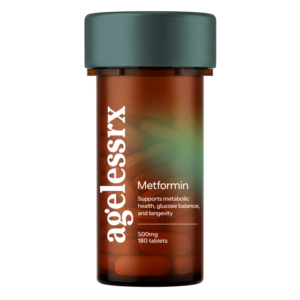
- Metformin is a well-studied tool for insulin resistance, and the connection matters: insulin resistance promotes androgen overproduction, which worsens DHT-related hair loss, disrupts the hormonal environment that supports sexual desire, and slows fat metabolism in ways that produce weight gain independent of calories consumed.
- Chronically high cortisol suppresses sex hormone production, moves the body into fat-storage mode, and disrupts the thyroid axis, which governs metabolic rate and hair follicle cycling.
- An underactive thyroid slows metabolism, suppresses sexual interest, and extends the resting phase of hair follicles. Labs can return within the low end of “normal range” and still produce meaningful functional disruption.
Treating each symptom in isolation, a topical for hair, a diet for weight, reassurance for libido, rarely resolves any of them fully when a shared driver is operating underneath. That is not a failure of willpower or individual treatments. It is a targeting problem.
How to Actually Bring These Questions Up With a Clinician
Before any appointment, write down exactly what you have noticed and when it started. Clinicians make faster progress with specifics than with general concern. “My hair has been coming out in larger amounts for about four months, starting around the time I stopped sleeping well” gives a clinician far more to work with than “my hair feels thinner.”
A few concrete ways to prepare:
- Track timelines. Note when each symptom started and whether anything changed around that time, such as medications, illness, major stress, or diet changes.
- Name the distress, not merely the symptom. If low libido is affecting your relationship or your sense of self, say so, because that context shapes how a clinician ranks follow-up.
How AgelessRx Approaches These Questions
Our Stanford PhD-led Research Team designs and executes registered clinical trials, including a Microdosing GLP-1 longevity trial studying outcomes in healthy adults. The science that informs our clinical protocols is science we are actively helping to generate.
Our clinical approach is built around a person that traditional care has underserved: someone whose labs look normal, who has been told to wait and see, and who is still noticing real changes in desire, hair, or weight. Those are biological signals worth investigating, not reassuring away.
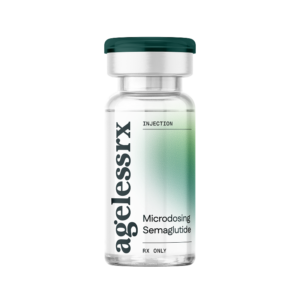
For libido, our clinicians can discuss options that target dopaminergic and melanocortin signaling in the hypothalamus, a biologically distinct system from hormone therapy and one that standard bloodwork does not capture. For metabolic aging and the weight changes that accompany it, our approach is grounded in the biology of metabolic drift: how insulin resistance, declining resting metabolic rate, and visceral fat accumulation compound over time, and which interventions have the strongest evidence base for interrupting those pathways. Patients interested in Microdosing GLP-1 protocols can connect with a US-licensed medical provider to review currently available options. For the upstream hormonal and inflammatory drivers connecting all three concerns, Metformin and Low Dose Naltrexone are part of our broader longevity-focused protocols, each reviewed by a Scientific Advisory Board and supported by an ongoing clinical research program.
Knowing that these changes often share a single upstream driver gives you something concrete to bring to a clinician instead of a vague list of complaints. The questions are not that hard to ask once you know what to say.
Note: The above statements have not been evaluated by the Food and Drug Administration. This product is not intended to diagnose, treat, cure, or prevent any disease.