
How PT-141 Peptide May Help Low Libido in Menopause

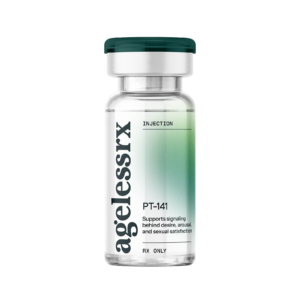

Plenty of women reach menopause, get their hormones sorted, and still find that low libido just won’t budge. That disconnect is real, and it’s rooted in neuroscience. Desire is largely brain-driven, and the signaling pathways involved respond to something different than estrogen. PT-141 works in the brain to support women with hypoactive sexual desire disorder. Understanding how it differs from hormone therapy helps clarify the bigger picture.
Key takeaways:
- Dopaminergic and melanocortin pathways in the hypothalamus generate desire.
- Perimenopause and menopause disrupt those central signaling circuits, not just circulating hormone levels
- Persistent low desire during perimenopause and menopause has a neurological basis, not purely a psychological one
- Hormone therapy addresses physical menopause symptoms but does not directly reactivate the central desire circuits
- PT-141 works at the brain level by binding to melanocortin receptors and triggering dopamine-mediated arousal signaling
- Clinical research shows PT-141 may meaningfully improve desire and reduce distress related to low libido in women
When Low Desire Is More Than Situational
Persistent low sexual desire that isn’t tied to stress or relationship issues, and causes real personal distress, is worth taking seriously. Clinicians sometimes use the term hypoactive sexual desire disorder (HSDD) to describe this pattern, but the label matters less than the experience: desire has gone quiet in a way that feels out of character and hasn’t resolved on its own.
This kind of persistent low desire has a biological explanation. It isn’t a personality trait or a psychological failing. Research estimates that HSDD affects a meaningful share of women during the menopausal transition. Rates may rise as hormonal changes accelerate through perimenopause and beyond. Understanding that distinction is the first step toward knowing what options actually exist.
How Desire Signaling Changes During Perimenopause and Menopause
Hormonal changes during perimenopause and menopause do more than affect temperature regulation and sleep. Estrogen and testosterone both decline during this window, and those drops have a direct effect on how desire is generated in the brain.
Sexual desire in women is largely centrally mediated, meaning it originates in brain signaling and not purely in genital blood flow. As estrogen falls, the sensitivity of melanocortin receptors, the same receptors PT-141 targets, can become dysregulated. This makes spontaneous desire harder to access.
Why Hormone Therapy Alone May Not Restore Desire
Estrogen therapy relieves many of menopause’s physical symptoms, and for a lot of women it helps considerably. But for those already on women’s hormone care who still notice that desire feels flat or absent, there’s a biological explanation that often goes unacknowledged.
The signaling system involved in sexual motivation extends beyond the hormonal pathways targeted by estrogen therapy. Correcting estrogen levels doesn’t automatically reactivate those central desire circuits. Both systems matter, and they respond to different interventions. That’s why some women on hormone therapy describe a disconnect: the physical discomfort improves, but the pull toward intimacy stays quiet.
What PT-141 Is and How It Works
PT-141, known generically as Bremelanotide, is a synthetic peptide originating from alpha-melanocyte-stimulating hormone. Unlike approaches that act on blood vessels or hormone receptors, it crosses the blood-brain barrier, binds to melanocortin-4 (MC4) receptors in the hypothalamus, and triggers a dopamine-mediated signaling cascade that amplifies arousal at its neurological source.
This sets it apart from PDE5 inhibitors, which increase blood flow to genital tissue to support physical arousal but leave desire itself untouched. PT-141 works earlier in that sequence, where the brain generates motivation toward sexual activity before any physical response has begun.
What the Clinical Research Shows
Clinical research has shown that PT-141 may produce meaningful improvements in sexual desire compared to placebo in women experiencing persistent low libido. A clinical review found that PT-141, as a melanocortin receptor agonist, improved desire, arousal, and pleasure across multiple trials.
How PT-141 Works Alongside Hormone Therapy
Many women find that women’s hormone therapy alone doesn’t fully restore sexual desire, even when estrogen and progesterone levels are well-managed. That’s because desire and physical comfort are governed by separate biological systems, and correcting one doesn’t automatically reactivate the other. PT-141 may offer a complementary path by acting on melanocortin receptors in the brain to trigger desire at a neurological level and not through the hormonal axis.
Longevity science increasingly recognizes sexual health as part of the broader picture of healthspan, not a standalone issue. The two approaches work on distinct pathways: hormone therapy addresses the physical side of menopausal changes, while PT-141 targets the central nervous system signaling tied to arousal and motivation.
|
Hormone Therapy (e.g., Estrogen/bHRT) |
PT-141 (Bremelanotide) | |
|---|---|---|
|
How it works |
Restores circulating estrogen (and progesterone/testosterone) levels |
Binds to MC4 receptors in the brain; triggers dopamine-mediated arousal signaling |
|
Primary target |
Hormonal axis: corrects systemic hormone deficiency |
Central nervous system: activates neurological desire pathways |
|
What it improves |
Hot flashes, vaginal dryness, sleep, genital comfort |
Sexual desire, motivation toward intimacy, distress related to low libido |
|
What it may not cover |
Central desire circuits; some women on bHRT still feel desire is flat or absent |
Physical menopause symptoms (not a hormone replacement) |
|
Can they be used together? |
Yes: the two act on separate pathways and can complement each other under clinician guidance | |
Side Effects and What to Expect
Nausea, flushing, headaches, and fatigue are the most common side effects. These effects tend to be temporary and dose-dependent, meaning lower doses often reduce their intensity without sacrificing results.
For women who experience nausea, taking PT-141 with a light meal and staying well-hydrated may help reduce its intensity. Starting at a lower dose is often the most practical first step before adjusting upward with provider guidance.
Who Should Not Use PT-141
PT-141 is not appropriate for everyone. Women with uncontrolled high blood pressure, serious cardiovascular dysfunction, active or recent cancer within the past two years, pregnancy, or breastfeeding should avoid it.
Only combine PT-141 with PDE5 inhibitors, such as sildenafil, under direct medical supervision, as the combination may increase risk. Patients should also not use PT-141 with naltrexone because it may make naltrexone less effective.
Sexual Wellness as Part of the Broader Healthspan Picture
Research in over 15,000 middle-aged adults found that higher sexual activity frequency was associated with reduced all-cause mortality risk, including cancer. Sexual function may reflect the state of broader cardiovascular health and not sit apart from it. For women managing hypoactive sexual desire disorder (HSDD) during menopause, that framing moves the conversation from comfort to something closer to clinical relevance, and into the broader work of maximizing results with longevity therapies.
Final Thoughts on PT-141 and Low Libido in Women
Desire doesn’t disappear because something is wrong with you. The neuroscience behind low libido is real, and as longevity science continues to map the intersections between neuroendocrine aging, hormonal change, and quality of life, tools like PT-141 that target central signaling pathways are increasingly relevant to the conversation. If this sounds relevant to your situation, a clinician-guided consultation is the right place to work through whether it fits your broader health picture.
Note: The above statements have not been reviewed by the Food and Drug Administration. This product is not intended to diagnose, treat, cure, or prevent any disease.