


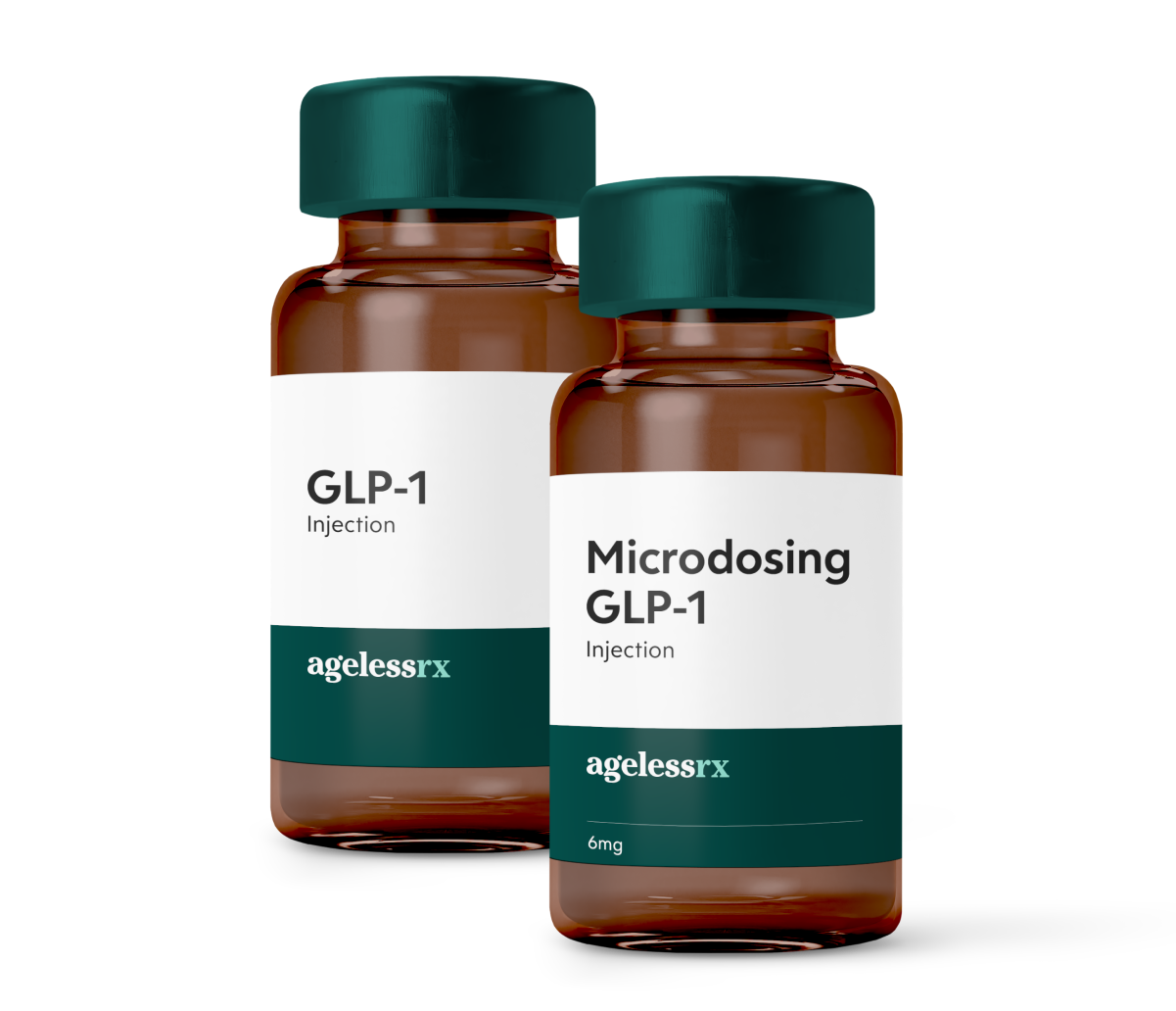

GLP-1 BENEFITS
Do more, age less
- GLP-1s mimics glucagon-like peptide (GLP-1), a hormone that regulates appetite and food intake.
- Both options are guided by licensed clinicians and prescribed only if appropriate for your goals.
- The difference lies in the dosage, pace, and potential experience.
GLP-1: MICRODOSE VS. FULL DOSE
What’s the difference?
Microdosing
- Lower doses taken consistently over time
- May reduce the risk of side effects¹
- May support moderate weight loss of up to 10 pounds over 40 weeks²
- Often considered by those seeking a gentler introduction or maintenance approach
Full dose
- Follows standard clinical dosing protocols
- Patients taking Wegovy® lost 10–15% of their body weight on average over one year³
- Titrated carefully over time to support tolerability
- Considered for those who qualify and are seeking more significant change

Our customers think we’re excellent
-
 Robert I.
Great experience so far, I’ve only been a customer for a month now but I’m already down 6 lbs. Looking forward to what I can achieve in the long run.
-
Kristi G.
I’m looking forward to continuing my journey towards being healthier. Morbid obesity is really hard on your joints. I can tell a big difference – a big difference – after just losing 15 lbs!
-
Dave P.
I’d give 6 stars if possible!! I was skeptical. But no longer. The products are of highest quality and customer service is fast, convenient and thorough. Highly recommend!
-
Christina A.
No hidden fees, no monthly fees. I only pay for the medication itself. I can’t stop raving about AgelessRx because every other company I looked into was the complete opposite.
-
Roxana T.
Wonderful, all this work and support being done by the various folks at AgelessRx is helping me toward weight loss and life longevity. Thank you all so very much!
-
Kevin D.
Customer service is excellent and timely response. The research and development of this company is phenomenal. Very educational.
Available treatments
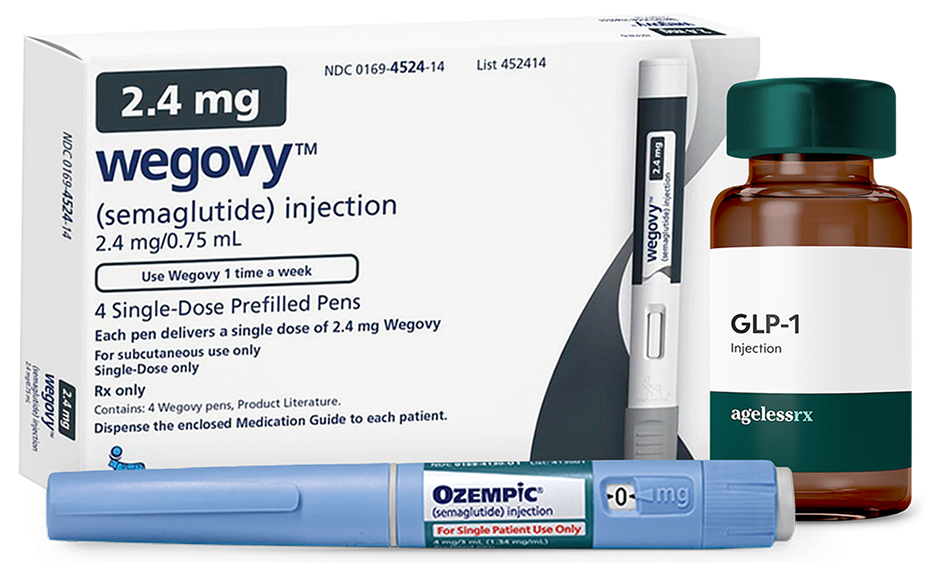
Injectable GLP-1 Treatments
Starting at $139
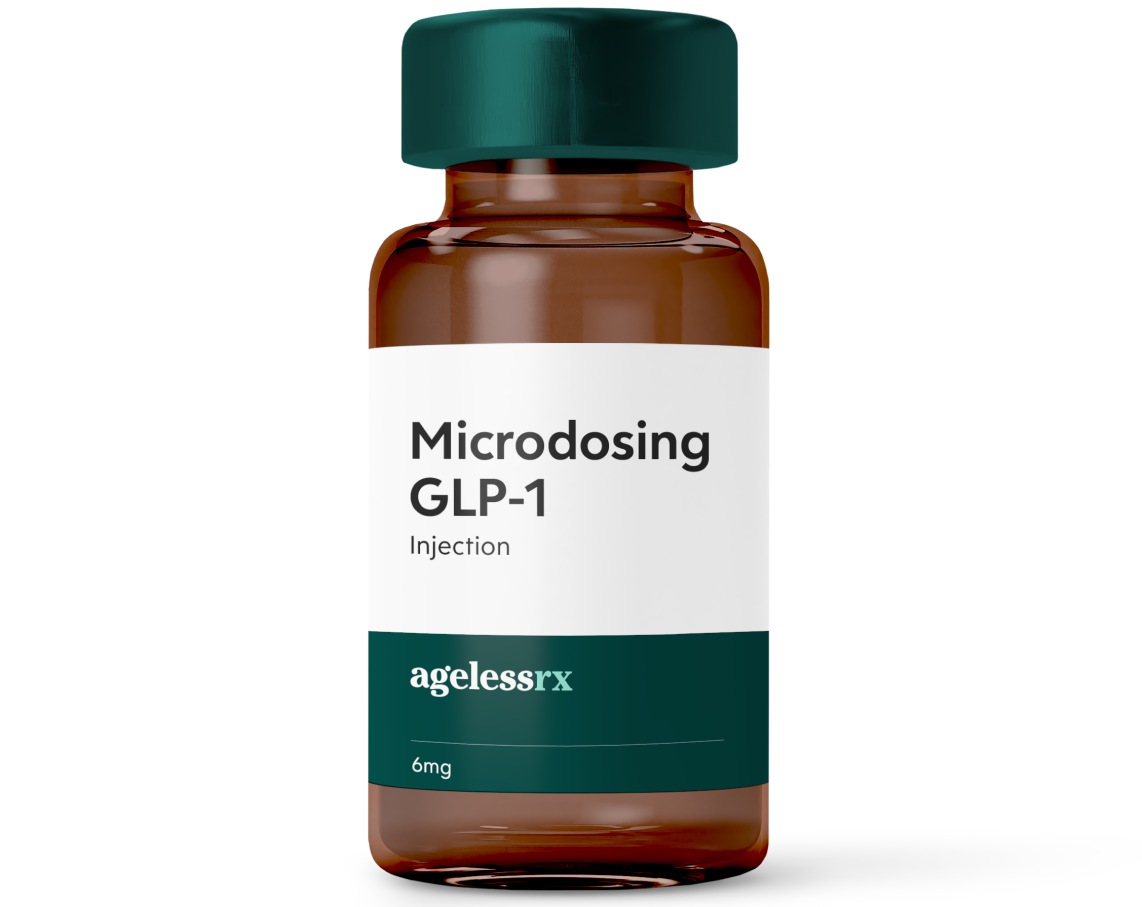
Microdosing GLP-1
Starting at $99
Talk to your healthcare provider to see if a GLP-1 treatment is right for you. Prescription products require an online consultation with a physician who will determine if a prescription is appropriate. See individual product page for important safety information. Benefits outlined on agelessrx.com are based on 3rd party studies.
Note: The above statements have not been evaluated by the Food and Drug Administration. These products are not intended to diagnose, treat, cure, or prevent any disease.
FAQs
How do GLP-1 medications work?
GLP-1 medications are also known as GLP-1 receptor agonists (GLP-1 RAs), which imitate the natural GLP-1 hormone, responsible for regulating our blood sugar levels, insulin, and hunger. GLP-1 RAs work by reducing the amount of glucose delivered into the bloodstream, encouraging more insulin production from your pancreas. They also act on the digestive system to delay gastric emptying, delaying the release of food from the stomach and modulating brain activity to suppress appetite.
See all FAQsImportant safety information and common side effects
GLP-1 medications should be used with a reduced-calorie meal plan and increased physical activity.
Do not use Wegovy® or Ozempic® with other GLP-1 receptor agonist medicines, or any other products containing Semaglutide.
Most common GLP-1 side effects
The most common side effects of Semaglutide (GLP-1) medications include nausea, diarrhea, vomiting, constipation, abdominal (stomach) pain, headache, fatigue, dyspepsia (indigestion), dizziness, abdominal distension, eructation (belching), hypoglycemia (low blood sugar) in patients with type 2 diabetes, flatulence (gas buildup), gastroenteritis (an intestinal infection), and gastroesophageal reflux disease (a type of digestive disorder).
The above is only a summary. For a full list of possible side effects, and other important safety information, please reference the Mayo Clinic’s list of Semaglutide side effects.
Other important safety information
Wegovy® is FDA approved to treat weight loss in adults with a BMI of 30 or greater. It’s also approved for those with a BMI of 27 or greater who have a weight-related medical condition.
Ozempic® is FDA approved to treat type 2 diabetes.
Approval for treatment is not guaranteed. Eligibility and approval are always at the discretion of the prescriber, who will determine eligibility based on an assessment of your complete health profile.
Do not use Wegovy® or Ozempic® if you are allergic to Semaglutide or any of its ingredients.
Do not use Zepbound® if you are allergic to Tirzepatide.
Though rare, allergic reactions to Liraglutide are still possible. If you notice any shortness of breath or swelling around your face, tongue, or throat after using Compounded Liraglutide, stop use and contact emergency services right away. Mild allergic reactions around the injection site are normal and not cause for emergency.
Do not use Wegovy®, Ozempic®, Zepbound®, or Compounded Liraglutide if you are currently pregnant, breastfeeding, or plan to become pregnant or breastfeed.
Do not use Wegovy®, Ozempic®, or Compounded Liraglutide if you or any of your family have ever had a type of thyroid cancer called medullary thyroid carcinoma (MTC), or if you have an endocrine system condition called multiple endocrine neoplasia syndrome type 2 (MEN 2).
Zepbound® should not be used by anyone who has a personal or family history of medullary thyroid carcinoma (MTC), multiple endocrine neoplasia syndrome 2 (MEN2), or pancreatitis.
Tirzepatide may make oral contraceptives less effective. If you’re taking an oral contraceptive, ask your prescriber about potential alternatives before starting Tirzepatide, or switch to a non-oral contraceptive.
Tell your healthcare provider about all the medicines you take, including prescription and over-the-counter medicines, vitamins, and herbal supplements. Semaglutide (GLP-1) medications may affect the way some medicines work, and some medicines may affect the way Semaglutide works. Tell your healthcare provider if you are taking other medicines to treat diabetes, including sulfonylureas or insulin.
Please visit Ozempic.com or Wegovy.com for a full list of important safety information for these medications.
Note: These products alone are not intended to diagnose, treat, cure, or prevent any disease. Please consult a medical professional to determine whether or not GLP-1 medications could be appropriate for you.
Our idea of bedtime reading? Clinical trials.
We vet everything on PubMed so you don’t have to. Here’s what the science says.
| 1. A human trial analyzing patients on Semaglutide injections, showing patients who stopped at lower doses of GLP-1 medications experienced less side effects. | JAMA Network, 2022 |
| 2. The results of the Novo Nordisk-sponsored SUSTAIN 7 clinical trial include weight loss outcomes for 301 participants with type 2 diabetes taking 0.5mg of Semaglutide, in addition to Metformin, showing an average of 10 pounds lost over 40 weeks. | Lancet Diabetes Endocrinol, 2018 |
| 3. Exposure-response analysis for evaluation of semaglutide dose levels in type 2 diabetes showed that patients taking Wegovy® lost 10–15% of their body weight on average over one year | Diabetes Obes Metab., 2018 |