
Is DMAE Safe for Skincare?

Research generally supports the safety of topical DMAE skincare when used at appropriate concentrations. In human clinical research, participants tolerated 3% DMAE gel well and reported no adverse reactions during 16 weeks of daily use.
So why are there still questions about DMAE safety? Much of the concern traces back to a 2007 laboratory study that observed cellular changes in fibroblasts exposed to DMAE. Those findings can sound alarming without context, but researchers used study conditions that differed significantly from how skincare products formulate and use DMAE.
Below, we break down what that study actually found, how it compares with human clinical research, and what the broader evidence says about DMAE safety and effectiveness.
Key takeaways:
- DMAE is often safe at 1-3% concentrations; a 16-week human trial reported zero adverse reactions
- The 2007 lab study that raised concerns used high, alkaline concentrations not found in cosmetic products
- Human clinical trials have not replicated the lab-based cellular changes observed in that study
- DMAE firms and tightens skin, while retinoids support cell turnover, so you can safely layer the two
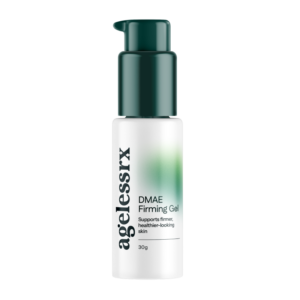
- AgelessRx offers DMAE Firming Gel as a prescription-grade formulation matched to an individual profile
What Is DMAE?
DMAE is a naturally occurring compound used in skincare. Researchers have celebrated DMAE for its ability to improve skin elasticity, reduce fine lines, and enhance overall firmness. It’s one of the few skincare agents shown in clinical studies to deliver skin-tightening effects, making it popular in anti-aging products.
What Did the 2007 Fibroblast Study Find About DMAE?
One of the key studies that raises concerns about DMAE safety is the 2007 study published by Morissette et al. in the British Journal of Dermatology.
In this study, researchers tested DMAE on fibroblast cultures and rabbit skin. The researchers observed a process called vacuolization in fibroblast cells. Vacuolization is a response to cellular damage that may sometimes indicate cell death. Vacuolization often occurs when cells are under stress, leading some to conclude that DMAE might induce cell damage, particularly at high concentrations.
The study also indicated that DMAE impaired fibroblast division temporarily. This raised concerns about the long-term effects on skin regeneration and aging.
However, the same study noted that these adverse effects were reversible after washing the cells. In the analysis, researchers on the 2007 study noted no permanent damage.
What Does the 2007 DMAE Study Mean for Skincare?
While the findings of the 2007 study warrant consideration, it’s important to put them into context. The conditions under which the effects occurred aren’t representative of typical cosmetic use. This includes high concentrations and the use of an alkaline form of DMAE.
Here are some key considerations:
- Concentration Differences: The concentrations used in the study were far higher than those found in over-the-counter skincare products. AgelessRx’s DMAE cream, for example, uses a 3% concentration, which is well within the safety margins that researchers have confirmed in clinical trials.
- pH Balance: The DMAE used in the study was highly alkaline, whereas most cosmetic formulations are pH-balanced, including AgelessRx’s formulation, which reduces the likelihood of cellular stress and damage.
- Animal vs. Human Skin: The rabbit skin test is not directly translatable to human skin, which has different sensitivities and regenerative abilities. For that reason, human-based studies are more relevant for understanding DMAE’s real-world impact.
What Does Clinical Research Say About DMAE Safety?
One of the most cited studies confirming the safety of DMAE in humans is a 2005 clinical trial. This trial was conducted by Dr. Rachel Grossman and published in the American Journal of Clinical Dermatology.
In this trial, participants applied 3% DMAE gel daily for 16 weeks and experienced marked improvements in skin firmness, fine lines, and facial contour. Importantly, no adverse reactions such as redness, peeling, or irritation occurred during or after the trial period. The study even showed that patients kept benefits for weeks after stopping the application.
Further, a 2002 split-face study conducted by Uhoda et al. showed that DMAE can effectively increase skin firmness without negative effects. This study compared DMAE-treated skin with untreated areas, showing measurable improvements in skin elasticity on the treated side.
Is DMAE Safe for Long-Term Use?
The 2005 Grossman clinical trial, which applied 3% DMAE gel daily for 16 weeks, reported no adverse reactions such as redness, peeling, or irritation throughout the entire study period. That level of tolerability over a 16-week daily-use window supports the ingredient’s safety profile for most adults following standard cosmetic protocols.
Some older laboratory research noted concerns around repeated exposure at high concentrations, which is one reason a clinician-guided protocol matters when starting any new topical active. Importantly, the reversible effects observed in those lab-based studies have not been replicated in human clinical trials using standard cosmetic concentrations. The cellular changes seen in controlled lab settings do not appear to translate to real-world topical use at the concentrations found in properly prepared skincare products.
What About DMAE Concentration?
For those still concerned about the potential risks, it’s important to consider the concentration of DMAE in the product. Most research, including the 2005 Grossman study, supports the safety of 3% DMAE for daily use.
However, formulations with 1% DMAE are also available for individuals with particularly sensitive skin. These formulations offer a safer starting point for those hesitant to use stronger concentrations.
What to Look for in a DMAE Product: OTC vs. Prescription-Grade Formulations
A major challenge with over-the-counter DMAE products is formulation stability. DMAE is sensitive to the chemistry of its base formulation, and most consumer moisturizers do not account for DMAE stability. As a result, the DMAE in many OTC products may have limited functional activity by the time it reaches the skin. Consumers reading ingredient labels have no way to verify whether the DMAE in a product is still active.
DMAE Firming Gel from AgelessRx is a prescription-grade formulation developed to account for these stability considerations. Because a clinical evaluation is required before access, clinicians can match the formulation to an individual profile instead of offering it as a one-size-fits-all product. That clinician-guided pathway separates it from the wide field of OTC DMAE creams, where the gap between label claim and functional delivery can be notable.
What Is DMAE Made From, and Who Should Avoid It?
Researchers often describe DMAE as an analog of choline, a nutrient the body also produces naturally and gets from foods like salmon, sardines, and anchovies. This natural origin is part of why experts generally consider DMAE skincare gentle enough for most skin types, including sensitive skin, when prepared at an appropriate concentration.
That said, a few precautions are worth knowing before starting any DMAE product. People taking certain medications, including cholinesterase inhibitors, anticholinergic or cholinergic prescriptions, or blood thinners, should talk with a healthcare provider first, since DMAE works through some of the same pathways these medications target. Experts also do not recommend DMAE during pregnancy or breastfeeding or for anyone with a known allergy to fish or fish-based ingredients. As always, share your full medication list with your provider before adding a new product to your routine.
How Does DMAE Compare to Retinol for Aging Skin?
DMAE and retinol-based ingredients like tretinoin are often mentioned together because they help aging skin in different ways. Researchers believe retinoids work by supporting skin cell turnover and helping maintain collagen, which may help with the appearance of fine lines and wrinkles over time. DMAE, by contrast, is associated with skin-firming and tightening effects instead of cell turnover.
|
DMAE |
Retinol / Tretinoin | |
|---|---|---|
|
Primary mechanism |
Stabilizes cell membranes; may support acetylcholine activity for skin tone |
Promotes skin cell turnover; supports collagen maintenance |
|
Main skin benefit |
Firming and tightening |
Fine line reduction; texture improvement |
|
Typical results timeline |
Noticeable changes within several weeks; measurable improvements at 16 weeks |
Gradual improvement over weeks to months of consistent use |
|
Sun sensitivity |
No increased photosensitivity reported |
Increases sun sensitivity; daily SPF required |
|
Sensitive skin suitability |
Well tolerated at 1-3% |
May cause initial dryness or flaking; lower-strength options available |
|
Can be combined? |
Yes. Many people use DMAE in the morning and a retinoid at night, since they work through different pathways | |
Because they work through different mechanisms, many people layer the two instead of choosing one over the other, for example, using a DMAE formula earlier in the day and a retinol or tretinoin product at night. If you’re combining both, introduce new actives gradually and pair them with daily sunscreen, since retinoids can increase sun sensitivity.
DMAE Is Safe and Effective When Used Properly
DMAE remains a widely used and effective ingredient in anti-aging skincare products. While some early laboratory studies raised concerns, extensive clinical research has shown that DMAE, when used in appropriate concentrations and formulations, is both safe and beneficial.
The reversible nature of the cellular changes observed in lab studies, coupled with long-term human trials showing no adverse effects, reassures us that DMAE is a reliable tool for improving skin appearance.
At AgelessRx, we make certain that our DMAE formulations are both effective and safe for daily use. If you have any further questions or concerns, we encourage you to start your consultation. Your skin’s health is our priority.
Note: The above statements have not been evaluated by the Food and Drug Administration. This product is not intended to diagnose, treat, cure, or prevent any disease.