
The Celebrity Longevity Trio: What Science Says About NAD+, B12, and Peptides

Here’s what we’ll cover in this blog post:
- Understanding Gwyneth Paltrow’s longevity trio
- What is NAD+ and how does it support longevity?
- Why is B12 important?
- How peptides fit into the future of longevity
- How to know what’s right for your longevity plan
If you feel like everyone is talking about NAD+ or peptides, you’re not alone. Longevity has officially become mainstream, moving beyond niche biohacking circles into everyday wellness conversations, and few people have helped shine the spotlight on it more than Gwyneth Paltrow.
In a recent ELLE interview, Paltrow shared an update on her current longevity lineup, which includes three of today’s most talked-about longevity interventions: NAD+, B12, and peptides.
NAD+, B12, and peptides are showing up everywhere because they’re tied to biological pathways that researchers and clinicians have been studying for decades, with growing interest in how these pathways influence aging, energy, and long-term healthspan.
Key takeaways:
- NAD+ declines with age, reducing mitochondrial function and cellular repair capacity
- Up to 35% of adults may have low B12, often unknowingly, accelerating brain degeneration
- Glutathione (GSH) levels drop by up to 40% by age 60, showing up as inflammation, brain fog, and fatigue
- Sermorelin is the only peptide that can be legally compounded to target age-related growth hormone decline
- No longevity protocol is one-size-fits-all; the right interventions depend on your biology and health goals
What is NAD+ and how does it support longevity?
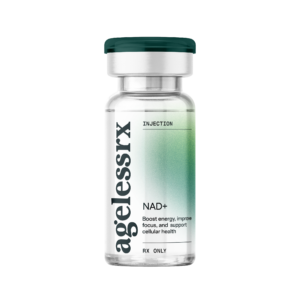
NAD+ (nicotinamide adenine dinucleotide) is a coenzyme found in every cell of your body, and it plays a central role in cellular energy production, stress response, and repair. It acts as a critical “helper” molecule that allows enzymes involved in metabolism and DNA repair to function properly, making it necessary for day-to-day cellular performance.
NAD+ levels naturally decline with age. This decline contributes to reduced mitochondrial output, slower recovery from stress, and diminished cellular resilience over time. Lower levels have been associated with age-related diseases like heart disease, Alzheimer’s, and inflammatory conditions.
Restoring or supporting NAD+ pathways has become a focus in longevity science because it may slow cellular aging processes. It’s why researchers (and now celebrities) are turning their attention here.
How NAD+ is delivered
- Oral precursors like NR or NMN (efficacy and bioavailability can vary between individuals, many supplements have poor quality control, and evidence is still developing)
- NAD+ Injections (direct delivery of the molecule your cells need, increasingly used in longevity clinic protocols for more predictable absorption and dosing)
- NAD+ Patches (for gradual and consistent delivery throughout the day)
- NAD+ Nasal Spray (delivery closer to the brain for cognitive function and brain health)
Why is B12 important?
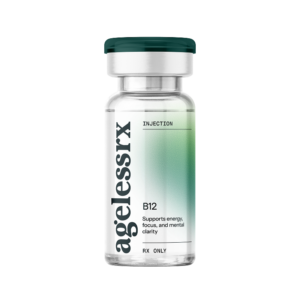
Vitamin B12 is a key nutrient for energy metabolism, oxygen delivery, cognitive function, and brain health. It’s one of the most foundational nutrients in clinical medicine, and it becomes especially relevant for people with dietary restrictions, gut issues, or increased metabolic demand because it’s harder to maintain optimal levels. B12 absorption drops with age, with many people only able to absorb 1-2% of what you find in an oral supplement. Up to 35% of adults may have low B12, often without realizing it, making B12 Injections a powerful tool for closing this nutrient gap.
Low B12 levels can lead to fatigue, brain fog, poor endurance, and even cognitive issues affecting memory, focus, and mood. It’s been shown that individuals with sub-clinical B12 deficiencies, meaning they are in low but still generally healthy ranges, have accelerated brain degeneration compared to those with higher levels.
Common forms of B12
- Methylcobalamin (high bioavailability)
- Cyanocobalamin (commonly used, but less preferred in some clinical contexts)
- Hydroxocobalamin (often used in injectable protocols)
How B12 is delivered
- Oral supplements
- Sublingual tabs
- B12 Injections (bypasses the gut to provide the highest level of bioavailability)
B12 is a reminder of something central to how longevity science actually works: foundational biological mechanisms matter as much as newer interventions. Maintaining cellular energy production, neurological integrity, and oxygen delivery at the system level is not a baseline to check off; it is an ongoing biological priority. Delivery precision matters because even well-understood nutrients can fail to reach therapeutic thresholds when absorption is compromised by age, gut function, or increased metabolic demand.
How do peptides fit into the future of longevity?
Peptides are short chains of amino acids that can act as signaling molecules for repair and regeneration in the body.
Certain peptides are being studied for their potential roles in recovery, metabolic health, and activating longevity pathways, though the science varies widely depending on the specific peptide.
Sermorelin, for example, is one of the few commonly discussed peptides that was FDA approved for individuals with growth hormone deficiency. Sermorelin supports growth hormone signaling and has been shown to improve body composition, energy, recovery, and cognitive function, even in generally healthy elderly individuals. Sermorelin is unique as a potential longevity tool because it is the only peptide that can be legally compounded and prescribed to target age-related growth hormone decline. It’s evidence-backed, recognized as safe, and follows more rigorous quality control standards.
Glutathione (GSH) is another peptide making waves in the longevity industry, and for good reason. GSH is our body’s master antioxidant, responsible for protecting nearly every cell from age-related damage and detoxifying harmful compounds. Our cells lose that protection over time. GSH levels are shown to decline by up to 40% by the time we’re 60, and this shows up as wrinkles, chronic inflammation, brain fog, and fatigue. GSH is another staple in Gwenyth Paltrow’s longevity stack, especially for skin health, detoxification, and general antioxidant and anti-inflammatory support for healthy longevity.
Peptides represent a promising area of ongoing research, but they are also a category where clinical oversight and evidence-based application are especially important. Not all peptides work the same way, and they each have varying levels of quality control and supporting evidence; for a fuller breakdown, see our overview of how peptides work and when to use. Appropriate use should be guided by the specific compound and the strength of the clinical evidence.
|
Intervention |
Primary Role |
Delivery Formats |
Key Benefits |
|---|---|---|---|
|
NAD+ |
Cellular energy production, DNA repair, stress response |
Injections, oral precursors (NR/NMN), patches, nasal spray |
Supports mitochondrial function, cellular resilience, and recovery; may slow cellular aging processes |
|
B12 |
Energy metabolism, oxygen delivery, cognitive and neurological function |
Injections, oral supplements, sublingual tabs |
Closes common nutrient gaps; supports brain health, energy, and red blood cell production, especially relevant as absorption declines with age |
|
Peptides |
Signaling molecules for repair, regeneration, and longevity pathways |
Injectable (e.g., Sermorelin, Glutathione) |
Varies by peptide; Sermorelin supports growth hormone signaling and body composition; Glutathione (GSH) protects cells from oxidative damage and supports detoxification |
Gwyneth Paltrow’s longevity routine isn’t unheard of, but speaking about it so openly shows a greater shift: more people care about their longevity, are asking better questions, and thinking beyond reactive healthcare. What once felt niche or reserved for elite athletes and private clinics is now entering everyday wellness conversations, accelerating public awareness around prevention and proactive health choices.
Celebrity wellness can spark curiosity, and curiosity is often the first step toward prevention. When high-profile figures like Gwyneth Paltrow openly share their health routines, it lowers the barrier to entry for these conversations and encourages people to ask about the “why” behind their own fatigue, brain fog, or declining resilience instead of normalizing it as inevitable aging.
NAD+, B12, and peptides are tools that, when used properly, may meaningfully extend healthspan.
How to decide if NAD+ Injections, B12 Shots, or Peptides are right for you
There is no one-size-fits-all answer. Something may be popular and be completely wrong for you. The real question is which interventions are most appropriate for you, based on your health goals and unique biology.
- Start with our guide on starting a long-term longevity plan, whether that includes NAD+, B12, peptides, or another longevity tool
If Gwyneth gets more people asking those questions? We’ll toast to that.
Curious about how to build your longevity protocol?
Building a longevity protocol starts with understanding your own biology. The Longevity Quiz is a science-backed starting point that helps identify which interventions may be worth pursuing based on your health goals, biological context, and where you are in your healthspan journey. The right strategy is personalized, proactive, and designed to compound over time.
Get started with our Longevity Quiz, a simple, science-backed tool that helps identify which protocols may be worth considering based on your health goals. The right strategy is personalized, proactive, and built to support your health for years to come.
Take the quiz and get your personalized insights. Take the Longevity Quiz to begin.
Common FAQs
When is the best time to start taking NAD+?
There is no single “right” age to begin NAD+ support. Many people start looking into NAD+ as they notice changes in energy, recovery, cognitive clarity, or stress resilience, which often occur in midlife but can happen earlier depending on lifestyle, training volume, sleep quality, or chronic stress exposure. Athletes, high performers, and individuals with demanding schedules may experience increased cellular energy demands earlier than expected.
The decision to begin NAD+ support is best guided by individual health goals, biological markers, and whether supporting cellular energy and repair pathways aligns with a proactive longevity strategy. Instead of waiting for symptoms to worsen, many people view NAD+ as a preventative tool aimed at maintaining function, resilience, and metabolic performance over time.
Why is NAD+ important for long-term health and longevity?
NAD+ plays a central role in how cells produce energy, respond to stress, and repair damage over time. It is required for mitochondrial function, DNA repair enzymes, and cellular signaling pathways involved in aging biology. As NAD+ levels decline with age, these systems become less efficient, which may contribute to fatigue, slower recovery, cognitive changes, and reduced stress tolerance.
Supporting NAD+ pathways is important because it helps cells operate more efficiently under both daily and physiological stress. From a longevity perspective, the goal is preserving cellular performance and resilience in order to support long-term healthspan and biological function as we age.
Are NAD+ injections safe?
NAD+ injections are generally considered safe when used under clinical guidance. NAD+ is a molecule naturally produced by the body, and injectable protocols are designed to support levels that naturally decline with age. When administered appropriately, NAD+ is typically well tolerated.
Some individuals may experience mild, temporary effects such as flushing, nausea, warmth, or injection site discomfort, particularly during dose escalation or early use. Proper handling and storage of injectable medications is also critical for safety. Following recognized sterility standards for multi-dose injectables, including the 28-day use rule, helps reduce contamination risk. As with any injectable therapy, individualized dosing, gradual titration, and clinician oversight play a key role in optimizing both safety and outcomes.
Can NAD+ help with weight loss?
NAD+ is not a weight loss medication, but it plays a key role in metabolic health, mitochondrial energy production, and insulin sensitivity. By supporting how efficiently cells convert nutrients into usable energy, NAD+ may help improve metabolic flexibility and reduce fatigue that can interfere with consistent movement and training. Any changes in body composition tend to be gradual, not rapid or dramatic. NAD+ support works best when combined with nutrition, resistance training, aerobic exercise, and other longevity interventions that target weight loss directly.
Will B12 injections give you energy?
B12 Injections may support energy levels, especially for individuals who are low or deficient in B12. Vitamin B12 is important for red blood cell production, oxygen delivery, and cellular energy metabolism. When levels are suboptimal, fatigue, weakness, and brain fog are common. While B12 injections are not stimulants, restoring adequate levels may help the body generate energy more efficiently at the cellular level. Many people describe the effect as more stable, steady energy instead of a sudden spike or crash.
Are there any side effects of B12 shots?
Vitamin B12 is generally well tolerated, whether delivered orally or by injection, and side effects are uncommon. When they do occur, they are typically mild and localized, such as temporary redness, itching, or soreness at the injection site. Rotating injection sites and using a warm compress can help minimize irritation.
Less commonly, higher doses may be associated with headache, nausea, digestive upset, or fatigue. These effects are more often seen during deficiency correction and tend to decrease as levels stabilize under clinician-guided dosing.
Is vitamin B12 safe?
Vitamin B12 is considered very safe for most people and has been used in clinical medicine for decades. Because it is a water-soluble vitamin, excess amounts are generally excreted and not stored, which lowers the risk of toxicity. Both oral and injectable forms are well tolerated when used appropriately. As with any supplement or therapy, dosing and delivery should be tailored to individual needs. Clinician guidance helps keep supplementation focused on long-term health, not unnecessary overuse.
Do peptides work for everyone?
Peptides do not have a universal effect, and their benefits depend on the specific peptide, individual biology, and health goals. Factors such as age, hormone levels, metabolic health, recovery demands, and overall lifestyle all influence how someone responds. Because peptides act as targeted signaling molecules (not broad supplements), results tend to be most meaningful when their use is personalized and guided by clinical context rather than applied as a one-size-fits-all solution.
Note: The above statements have not been reviewed by the Food and Drug Administration. This product is not intended to diagnose, treat, cure, or prevent any disease.