Skip to content

How to Dose with NAD+

We’re committed to your longevity and results, so we’re here to make NAD+ dosing as simple as possible.

Here’s how to get the most from your dose of NAD+.

Key Takeaways:

  • Start NAD+ at 0.1 ml and titrate up to the target dose of 0.4 ml, 2-3 times per week
  • Never exceed 0.4 ml per injection; higher doses increase side effects without added benefit
  • NAD+ supports energy, mood, and DNA repair, with best results after several months of consistent use
  • Injections, NAD+ Patches, and NAD+ Nasal Spray each bypass digestion but differ in onset speed and release profile
  • Our study shows how LDN combined with NAD+ improved quality of life scores in long COVID patients over 12 weeks

Preparing Your Dose

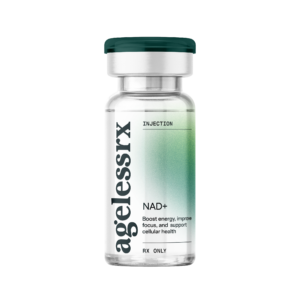
Depending on which NAD+ protocol you selected for your medical evaluation, you will receive either a 2.5 ml vial or a 5 ml vial of NAD+.

Your package will contain everything you need for that month’s worth of doses, including syringes, needles, and alcohol wipes. Each of these may be packaged separately, so check the contents of your shipment thoroughly before discarding.

Before getting started, immediately refrigerate your vial. Next, be sure to draw up your NAD+ solution, and remember to sterilize the top of the vial with an alcohol wipe each time.

As a subcutaneous injection, NAD+ is best administered on either your stomach or upper arm. To avoid irritation, administer the injection in a different location than the last one.

Finally, choose a dosing schedule that works for you. For example, if you’ll be injecting 3 times per week, decide whether Monday/Wednesday/Friday is a viable schedule to keep on a consistent date. Try setting alarms or calendar reminders to keep you on track.

Dosing & Titrating with NAD+

NAD+ is most commonly prescribed at a dose of 0.4 ml, taken 2-3 times per week. For many users, this dose has been associated with a good balance of energy and weight management benefits, with a low occurrence of side effects.

However, it’s important to ease yourself into the target dose. To do this, you’ll start with a smaller dose and gradually ramp up to the target dose over time.

For your first dose, you’ll likely start by injecting 0.1 ml. Pay careful attention to how the body responds to the initial dose to decide when it’s best to ramp up. Keep in mind, you should speak with a clinician during this process.

When you’re ready, you may titrate up to a dose of 0.25 ml, up to 3 times per week. Follow the same process as above before moving up to the target dose of 0.4 ml.

Maintaining Your Dose

Increasing to a dose of 0.4 ml may enhance the benefits of NAD+, but this may not be true for everyone.

To determine which dose provides the best benefits for you, your prescriber may recommend that you stay on a 0.4 ml dose 3 times a week for 1-2 months, then reduce to a lower maintenance dose of 0.25 ml to 0.4 ml 2 times per week.

As you proceed, keep in mind that you should always follow the instructions of your prescriber and never use more than 0.4 ml per injection. Doses higher than 0.4 ml may exacerbate side effects like anxiety, insomnia, and heart palpitations without proportionally increasing the benefits.

As such, you shouldn’t exceed a 0.4 ml dose within any 24-hour period. Keep this in mind if you miss a dose.

What Are the Benefits of NAD+?

According to feedback from our prescribers, 87% noticed an improvement in energy by their third check-in. Beyond that, 79% reported an improvement to their moods, while 78% reported better memory and focus.*

But those are just the benefits you can notice from a self-evaluation. After all, NAD+ is a critical coenzyme found in every cell in the body, but these levels decrease with age. NAD+ injections provide a wide range of additional longevity benefits, like DNA repair, improved immunity, and reduced inflammation.

But these outcomes don’t happen overnight. The best outcomes for NAD+ injections were reported after several months of dedicated use. So if you don’t notice the outcomes you were looking for, try adjusting your dose and, most importantly, stick with it.

NAD+ vs NADH: What’s the Difference?

Both NAD+ and NADH are two forms of the same molecule, nicotinamide adenine dinucleotide. NAD+ is the oxidized form, ready to accept electrons from cellular reactions. NADH is the reduced form, carrying those electrons forward to power energy production. The two convert back and forth continuously inside cells.

This cycling drives the electron transport chain, the process your mitochondria use to generate ATP. NADH delivers electrons to the chain, releases them to produce energy, and converts back to NAD+ in the process. Without a steady supply of NAD+ to keep the chain running, cellular energy production slows down.

NAD+ is the primary target for longevity supplementation because it is the form the body draws on to initiate cellular energy, DNA repair through PARP enzymes, and sirtuin activation. Sirtuins are proteins linked to the regulation of inflammation and biological aging. NADH moves energy forward, but NAD+ is what keeps the cycle going in the first place.

NAD+ and Brain Health

The brain is one of the most energy-demanding organs in the body, and neurons rely on a steady supply of NAD+ to keep mitochondria running at full capacity. When NAD+ levels drop, the cellular machinery neurons depend on for ATP production slows down, which can affect how clearly and quickly the brain operates.

NAD+ also directly activates sirtuins, including SIRT1, which plays a neuroprotective role in the brain. Research on NAD+ and sirtuin activation shows a direct correlation between NAD+ levels and sirtuin activity, with sirtuins helping to manage inflammation and cellular stress responses in neuronal tissue. Preclinical data from a review of NAD-boosting molecules points to a consistent pattern of improved brain health markers when NAD+ levels are supported.

Most of the strongest findings to date come from preclinical models or people managing specific conditions, so it is worth keeping expectations grounded. That said, the body of research points toward a meaningful relationship between NAD+ levels and how well the brain performs as we get older.

NAD+ and Long COVID

Recent research points to a potential role for NAD+ in easing the persistent fatigue and reduced quality of life tied to long COVID. SARS-CoV-2 infection appears to deplete cellular NAD+ by upregulating PARP genes and activating CD38 on immune cells, both of which consume large amounts of NAD+. When NAD+ levels fall, SIRT1 activity is impaired and the cellular machinery needed to manage inflammation and mitochondrial energy production slows down.

Our in-house Research Team published a pilot study looking at the combined use of Low-Dose Naltrexone (LDN) and NAD+ in patients with persistent fatigue following COVID-19. The study consisted of 36 participants aged 18 to 65, with confirmed COVID-19 and moderate-to-severe fatigue over a 12-week treatment period.

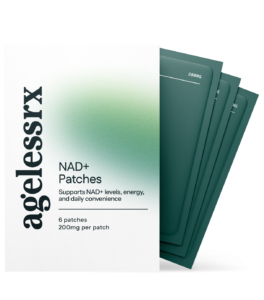
Participants received LDN along with NAD+ delivered via patches once weekly. Over 12 weeks, mean total SF-36 quality of life scores improved from 36.5 to 52.1 (p < 0.0001), and Chalder Fatigue Scale scores decreased from 25.9 to 17.4 (p < 0.0001). That baseline Chalder score of 25.9 is comparable to scores seen in clinical ME/CFS patients. About 52% of participants were classified as clinically responsive, defined as a greater than 20% improvement in SF-36 scores with a week-12 score at or above 55. The treatment was generally safe and well tolerated, with the most common side effect being temporary skin irritation at the NAD+ patch site.

Because this was a single-arm pilot with no control group, improvements could partially reflect placebo effect or natural disease recovery, and larger randomized controlled trials are needed to confirm these findings. That said, the results offer an early signal that restoring NAD+ levels and modulating inflammation together may meaningfully improve how long COVID patients feel day to day.

NAD+ Patches and Transdermal Delivery

Not everyone wants to self-inject, and that is exactly where NAD+ Patches (transdermal) come in. Understanding how each delivery route works helps you choose the right format for your lifestyle and goals.

Patches vs. Injections

Both avoid the digestive route, but they differ in speed and peak concentration. Injections deliver NAD+ subcutaneously in a single bolus, so the compound enters circulation quickly. Patches release NAD+ gradually over the wear period, which may produce a more even level of delivery. For some users, that steady-state profile is more comfortable; for others, the faster onset of an injection is preferred.

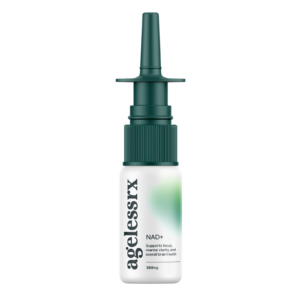
NAD+ Nasal Spray represents a third route: absorption through the nasal mucosa, which has a rich blood supply and offers rapid uptake. Some customers prefer it for the convenience of no needles and no patch site preparation. The right format depends on tolerance for self-injection, dosing schedule, and how the body responds to each route. Your clinician can help you decide which delivery method fits your protocol.

Delivery Method

How It Works

Onset Speed

Release Profile

Needles?

Best Suited For

NAD+ Injection

Subcutaneous bolus absorbed directly into circulation

Fast

Single bolus

Yes

Those who prefer fast onset and precise dosing control

NAD+ Patches

Iontophoresis drives NAD+ through the skin over the wear period

Gradual

Steady release

No

Those who prefer steady delivery without injections

NAD+ Nasal Spray

Absorbed through the nasal mucosa’s rich blood supply

Fast

Single dose

No

Those who value convenience and rapid uptake

NAD+ and Skin Health

NAD+ plays a direct role in how skin cells repair UV-induced damage. PARP enzymes use NAD+ as a substrate to detect and repair DNA strand breaks caused by ultraviolet radiation. When NAD+ levels are adequate, PARP activity is responsive. When levels decline, the repair process slows and UV-related damage can accumulate in skin cells over time.

Some customers combine NAD+ with Glutathione as part of a broader skin and longevity protocol. Glutathione is thought to influence melanin production by inhibiting tyrosinase, the enzyme responsible for driving eumelanin synthesis. By slowing eumelanin output, Glutathione may shift pigment production toward pheomelanin, which is lighter in color. Research points to this as the likely mechanism behind its skin-brightening properties.

Together, NAD+ and Glutathione target two separate aspects of skin health: DNA repair at the cellular level and pigment regulation. We offer both products, and your clinician can help you decide whether combining them fits your goals.

Note: The above statements have not been evaluated by the Food and Drug Administration. This product is not intended to diagnose, treat, cure, or prevent any disease.

*Data was self-reported by 193 surveyed customers on their third check-in of use between 4/7/22 & 11/27/23 by AgelessRx customers who were approved for a NAD+ injection prescription after completing an assessment with a medical provider.

Share this Article

Frequently asked questions

01 Does NAD+ help with mental clarity and focus?

NAD+ supports neuronal energy production and sirtuin activation, both of which influence how clearly and quickly the brain operates. Among our customers who self-reported outcomes at their third check-in, approximately 74% noted an improvement in cognitive function.* NAD+ Nasal Spray is a popular choice for customers focused on brain performance, as absorption through the nasal mucosa allows for rapid uptake. Benefits tend to build over weeks of consistent use instead of appearing after a single dose.

02 What are the benefits of NAD+ Injections?

According to feedback from our prescribers, 87% noticed an improvement in energy by their third check-in, 79% reported an improvement to their moods, and 78% reported better memory and focus. NAD+ Injections also provide longevity benefits like DNA repair, improved immunity, and reduced inflammation. The best outcomes were reported after several months of dedicated use.

03 What is the difference between NAD+ and NADH?

Both NAD+ and NADH are two forms of the same molecule, nicotinamide adenine dinucleotide. NAD+ is the oxidized form, ready to accept electrons from cellular reactions, while NADH is the reduced form, carrying those electrons forward to power energy production. NAD+ is the primary target for longevity supplementation because it is the form the body draws on to initiate cellular energy, DNA repair through PARP enzymes, and sirtuin activation.