


Sermorelin Injection Product Guide
Sermorelin stimulates your body’s natural production of growth hormone by acting on the pituitary gland, supporting physiologic hormone rhythms. Compared to direct HGH therapy, it may offer a lower risk of long-term suppression of the body’s own production.
The information presented here is only applicable for patients who have been prescribed Sermorelin after their AgelessRx provider deemed it appropriate.
Quick tips
Here are some simple steps to help you get the most from each dose:
- Refrigerate your vials upon arrival
- Take Sermorelin at night
- Try to take your dose around the same time of night
- Take Sermorelin on an empty stomach (at least 2 hours after eating)
- Rotate injection sites with each injection
- Be sure to properly discard vials and syringes
Getting started
When you first receive your Sermorelin, ensure proper storage guidelines to maintain the quality of the solution.
Follow the instructions for properly drawing and administering Sermorelin.
Always dose according to your doctor-guided titration schedule.
Learn the best strategy for reducing side effects in your first weeks.
Storage
To maintain the utmost quality, it is best to refrigerate your Sermorelin vials between 36°F and 46°F. If your vial has been stored below 36°F or above 46°F for an extended time, the solution may become ineffective.
Once you pierce the vial, the solution will last for 28 days. You must discard pierced vials after 28 days, even if there is still some solution remaining—this applies to all multi-dose vials (MDVs). Unpierced vials will last between 45-120 days, depending on your pharmacy. Please check the storage instructions included with your prescription to confirm the beyond use date (BUD) for your medication.
You may safely travel with your Sermorelin vials so long as the above conditions are met while traveling. Be sure to travel with a refrigerated case and to bring your own sharps disposal container if you will not have access to one.
Drawing and administering Sermorelin
How to draw your solution
Before your first use, take the time to review how to properly draw your solution.
Next, ensure that you are drawing the correct amount of solution according to your titration schedule. Your current dose will always be displayed on your vial—use this as a reminder before you begin.
It is important to sterilize the top of the vial with an alcohol wipe each time before drawing up the solution.
How to measure units on your syringe
If you’re new to subcutaneous injections, follow this quick guide to understand the measurements on your syringe.
Your weekly doses are measured in milliliters (ml) to units. Before getting started, check to see how many units are in your weekly dose.
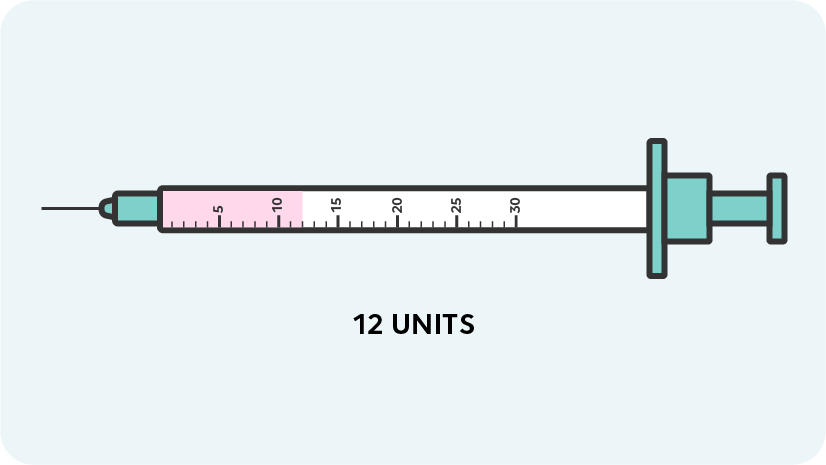
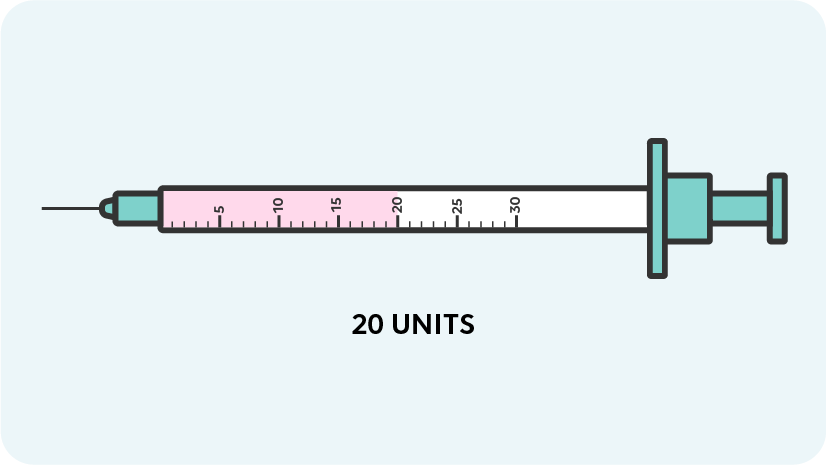
The label on your subcutaneous syringe shows units. Each unit represents 0.01ml, so every 10 units represents 0.1ml.
Each small line on the syringe represents 1 unit, and each large line represents 10 units. So, if your dose calls for 20 units, simply draw your solution up to the line that reads “20.”
If your weekly dose calls for a measurement not clearly labeled on the syringe (like 25 units), pay close attention to the markers between the large lines when drawing up your dose. There may be even smaller measurement lines on the syringe that are more difficult to see. Count these carefully as you draw up your dose to ensure the most accurate measurement.
How to administer your solution
Sermorelin is delivered via subcutaneous injection, which means that you will inject the solution into a fatty layer of tissue, such as your abdomen or your thigh. If you’re new to self-administered injections, take the time to review how to properly administer your injection before proceeding.
As a general rule, you should grip the syringe with your dominant hand, and grasp the injection site with the other hand.
If you can grasp at least 2 inches of skin, then deliver the injection at a 90° angle (or, straight in). If you cannot grasp at least 2 inches of skin, deliver the injection at a 45° angle.
To avoid irritation, try switching injection sites each week. Take Sermorelin on an empty stomach, or at least 2 hours after you’ve eaten. Always take Sermorelin at night.
After you have administered your injection, discard the needle and syringe in an FDA-approved sharps container. Never reuse the needle or the syringe once it has been used.
Sermorelin titration schedule
Sermorelin is always prescribed with a doctor-guided titration schedule to gradually introduce the medication to your body.
Please note: your titration instructions will vary by pharmacy. Check the prescription label on your medication to confirm your pharmacy.
Precision Pharmacy:
| Week | Dose/Units | Frequency |
| Weeks 1-4 | 0.1ml (10 units) | 5 nights weekly |
| Weeks 5+ | 0.15ml (15 units) | 5 nights weekly |
ProRx:
| Week | Dose/Units | Frequency |
| Weeks 1-4 | 0.08ml (8 units) | 5 nights weekly |
| Weeks 5+ | 0.12ml (12 units) | 5 nights weekly |
Your titration instructions may differ from those above. Your prescriber will clearly inform you if they recommend unique titration instructions for you. Always follow your prescriber’s instructions.
Always take Sermorelin at night to coincide with your body’s natural growth hormone (GH) production cycle. For the best results, take Sermorelin on an empty stomach, or at least 2 hours after you eat.
If you forget your titration schedule, you can always check your Rx bottle or your AgelessRx portal.
If you miss a dose of Sermorelin, take it as soon as possible. If it’s almost time for your next dose, or if more than a day has passed since your last dose, skip the dose you missed and take your next dose when you normally would.
If you feel you’re not hitting your health goals on your current dose or the maximum dose, contact your prescriber.
Common side effects
The most common side effects of Sermorelin include:
- Pain, redness, or irritation at the injection site
- Face or neck flushing
- Headache
- Nausea
Sermorelin is generally well-tolerated, with minimal side effects that often go away on their own within a week or two.
For a full list of side effects, please review Healthline’s Sermorelin resources.
Potential Drug Interactions
Sermorelin has no known major drug interactions, but may have the following interactions with certain drugs:
- Glucocorticoids (prednisone) – May blunt growth hormone (GH) release.
- Oral estrogens – May increase IGF-1 resistance.
- Insulin or sulfonylureas – May alter glycemic control.
- Somatostatin analogs – May antagonize Sermorelin’s effects.
- Dopamine antagonists – May disrupt human growth hormone (HGH) regulation.
- GABAergic meds – May reduce pulsatility of HGH release.
- Beta blockers (clonidine) – May decrease the effectiveness of Sermorelin.
- Other secretagogues/peptides – May result in unsafe levels of HGH.
Please inform your AgelessRx prescriber of all medications you are taking, including supplements and over-the counter medications.
Important safety information
Sermorelin is only for patients who are at least 30 years old. Patients who are under 30 should explore other longevity solutions.
Your prescriber may ask you for additional information if you have one of the following conditions:
- Hypothyroidism – Untreated hypothyroidism can impair a patient’s growth hormone (GH) response. Patients with hypothyroidism may be asked to show that their condition is treated and managed.
- Hyperglycemia or diabetes – Taking Sermorelin with untreated hyperglycemia or diabetes may further impair glycemic control. Patients with hyperglycemia or diabetes may be asked to show that their condition is treated and managed.
Sermorelin should not be used by anyone with moderate to severe liver dysfunction or kidney disease.
Do not use Sermorelin if you have an active cancer, or if you have had cancer within the last two years.
Do not use Sermorelin if you are pregnant, breastfeeding, or planning to become pregnant or breastfeed. If you become pregnant while taking Sermorelin, consult your prescriber before continuing with your next dose.
Though rare, allergic reactions to Sermorelin are still possible. If you notice any shortness of breath or swelling around your face, tongue, or throat after using Sermorelin, stop use and contact emergency services right away. Mild allergic reactions around the injection site are normal and not cause for emergency.
As with any prescription medication, the dose prescribed is for you and you alone. Do not, under any circumstances, allow anyone else to use your Sermorelin.