

Editor’s note: This article was written by AgelessRx Co-Founder, Dr. Sajad Zalzala based on his experience and expertise.
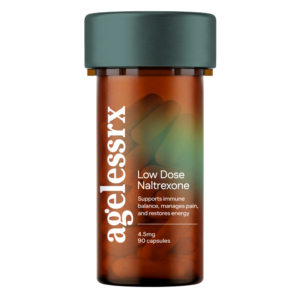
Low Dose Naltrexone is a once-daily prescription therapy that many people turn to for help with chronic inflammation, autoimmune conditions, and post-viral fatigue. I have successfully prescribed it to thousands of patients over the last several years, and the vast majority experience meaningful symptom relief. A good number report life-changing results. AgelessRx has also contributed to the published peer-reviewed evidence base on LDN, including observational and clinical research across thousands of patients.
Over my decades of clinical experience, I’ve learned several key strategies that help patients get the most from their LDN prescription. As you research LDN, or as you prepare to start, I’m here to share some helpful tips to help you maximize the benefits of your LDN prescription.
Key Takeaways
- The standard LDN dose is 4.5 mg/day, but roughly 20-30% of patients find a different dose works better. Start at 1.5 mg and adjust slowly every 10 to 14 days
- Taking LDN at bedtime (between 9 pm and 2 am) may support the endorphin rebalancing that occurs in the morning
- Most side effects subside with continued use; adjusting the dose or timing is the first step in managing them
- Removing gluten and dairy while eating a wider variety of vegetables may support immune function and complement LDN therapy
Work to Find Your ‘Goldilocks’ Dose
The right dose varies by individual, and finding it is key to getting the most from LDN therapy. The dose most commonly prescribed for LDN is 4.5 mg daily, however, in my clinical experience, a meaningful number of patients (roughly 20-30% based on patient feedback) find that a different dose works better for them. Individual responses vary, and the right dose is best determined in partnership with your clinician.
Why does dose matter? Too low a dose and you may not notice much, if any, improvements in symptoms. Too high a dose, and side effects may not be tolerable and it may not be as effective. Our clinicians use a personalized, evidence-based protocol to identify the right starting dose for each patient, guided by health history, current medications, and individual goals. Communication is the most reliable tool in that process: share any changes or unwanted side effects promptly, including through the AgelessRx New Patient Check-In sent within the first month of starting a prescription.
Starting and Titrating Your Dose
To find your Goldilocks dose, the only true way is through trial and error. At AgelessRx, we start patients on a standard protocol using 1.5 mg capsules.
- Begin with 1.5 mg (one capsule) per day at bedtime for the first 10 to 14 days.
- If well tolerated, increase to 3 mg (two 1.5 mg capsules) per day for the next 10 to 14 days.
- Increase to 4.5 mg (three capsules) per day, the standard maintenance dose.
- If side effects occur at any step, hold at your current dose or reduce to the previous dose and wait an additional 10 to 14 days before increasing again.
- If 1.5 mg is not tolerated, contact AgelessRx to request 0.5 mg capsules for a slower ramp-up.
If a lower dose suits you better, our clinicians can adjust down to 3 mg or 1.5 mg. For those who need more, the protocol can go up to 9 mg (six 1.5 mg capsules or two 4.5 mg capsules daily). While 4.5 mg is the standard maintenance target, starting there is generally not recommended because titrating up slowly gives the body time to adjust and reduces the likelihood of side effects.
Take LDN at Bedtime
For most patients, it may be best to take LDN at bedtime between the hours of 9 pm and 2 am. At low doses, naltrexone temporarily and partially blocks opioid receptors for roughly 4 to 6 hours after ingestion. When that blockade clears, typically in the early morning hours, the body responds by upregulating its own endorphin production (a rebound effect) thought to support immune modulation and contribute to LDN’s anti-inflammatory effects. Some researchers also point to LDN’s action on glial cells via TLR4 antagonism as a secondary pathway for reducing neuroinflammation. This may also be due to endorphin activity. The endorphin system is most active in the morning, when the temporary blocking of the endorphin receptors by LDN (taken the night before) wears off and, as a result, allows a rebalancing of the endorphin system.
It is recommended to take LDN once daily; however, splitting the dose may be beneficial in specific circumstances. Some patients report success taking LDN twice per day to help mitigate side effects (half dose in the morning and half at night before bedtime). If splitting the dose does not help after two weeks, message our medical team in your Customer Portal so they can adjust your protocol. A minority of patients cannot tolerate taking LDN at night, or do better with it during the daytime. Your provider can help determine which approach works best for you.
Common LDN Side Effects
Most LDN side effects are mild and typically resolve within the first 3 to 5 days as the body adjusts, though they can last a few weeks in some individuals. They tend to appear when first starting LDN or after a dose increase.
- Vivid dreams or unusual dreams
- Mild insomnia or sleep disturbance
- Headache
- Mild nausea
- Brief anxiety
While fatigue is sometimes reported during the initial adjustment period, this is typically short-lived; over time, LDN is more commonly associated with improved energy and reduced fatigue as inflammation decreases. Adjusting the timing or dose is the usual first step for managing these effects, and the next section covers how to do that. Serious side effects are rare. If side effects persist beyond a few weeks or feel severe, contact your clinician.
Adjust Your Dose
Most LDN side effects tend to subside with continued use of LDN, often within a few days to a week, though this can vary by individual. If side effects are bothersome, you can help minimize them by simply adjusting the dose. This is largely why AgelessRx starts new LDN patients at a lower dosage with a slow ramp up to the prescribed dose.
If, for any reason, 1.5 mg still causes unwanted side effects, you can contact us to request 0.5 mg capsules to get you started on a lower dose and work up more slowly.
Another option is to take a 1.5 mg capsule every other day, or every third day, and increase the frequency slowly. Changing the time of day that you take LDN can also help; if so, you may consider taking LDN in the morning or afternoon to help reduce some common side effects, such as sleep disturbance.
What to Expect: LDN Timeline
One of the most common questions from new LDN patients is how long it takes to notice results. The honest answer is that it varies, but there are patterns worth knowing about.
Many patients notice early changes within the first two to four weeks, often in the form of improved sleep quality or a modest reduction in fatigue. More meaningful improvements in pain levels and inflammation tend to build over two to three months of consistent use, as the endorphin and immune-modulating effects accumulate. In an AgelessRx observational study, the majority reported at least one measurable improvement in symptoms, including aches and pains, fatigue, inflammation, and mood, by their second check-in.
It is worth noting that results can feel inconsistent early on. Some patients go through a brief adjustment period where symptoms fluctuate before stabilizing. Staying in communication with your clinician during the first one to two months, and adjusting the dose if needed, makes a meaningful difference in outcomes. Patience and a gradual titration approach are the keys to getting the most from this protocol.
Change Your Eating Habits
Diet can play a large role in common health issues and symptoms. Dietary choices may help maximize the benefits of Low Dose Naltrexone and may also help mitigate side effects. Generally, removing gluten (wheat) and dairy from the diet, as well as eating a wider variety of vegetables, may help support immune function and healthy endorphin levels. Together with LDN, these dietary changes may have positive effects on daily life, and our guide on dietary guidelines for longevity offers useful additional context.
Practical starting points:
- Replace wheat-based bread and pasta with rice, quinoa, or root vegetables
- Swap dairy milk and cheese for almond, oat, or coconut-based alternatives
- Add at least one extra serving of non-starchy vegetables (leafy greens, broccoli, or zucchini) to your largest meal each day
- Include anti-inflammatory foods such as wild-caught fish, olive oil, and berries
- Limit processed foods and added sugars, which may promote the chronic inflammation LDN is intended to address
Other Forms of LDN
Capsules are the most common format, but other forms are available through various telemedicine services. The table below outlines the key differences.
Comparing LDN Delivery Formats
|
Format |
Availability |
Key Advantages |
Considerations |
|---|---|---|---|
|
Capsules |
Most widely available |
Effective, generally well tolerated, easy to take, most affordable |
Standard option; offered by AgelessRx in 0.5 mg, 1.5 mg, and 4.5 mg strengths |
|
Tablets |
Limited (few compounding pharmacies) |
Can be split in half for easier low-dose titration |
Much less commonly available than capsules |
|
Sublingual Tablets |
Less widely available |
Good option for patients who have difficulty digesting capsules |
Not as accessible as capsules or tablets |
|
Liquid |
Available through select compounding pharmacies |
Allows very low starting doses and fine-grained incremental increases; may help patients with absorption issues |
Higher price point, often requires refrigeration, needs a syringe or measuring cup per dose |
Presently, AgelessRx only offers consultations and prescriptions for LDN capsules in 0.5 mg, 1.5 mg, or 4.5 mg strengths. Other doses and dosage forms are available by prescription through local clinics or other online telemedicine services, such as LDNResearchTrust.org.
LDN Research: What’s New in 2026
Interest in LDN’s clinical applications continues to build. A 2026 peer-reviewed article covering LDN’s growing role in long COVID care reflects the broader momentum in this area, and an active clinical trial enrolling patients with ME/CFS and long COVID is adding to the formal evidence base for LDN’s effects on post-viral fatigue and neurological symptoms.
Our Research Team has contributed to this research, including an LDN healthspan study and our PEARL Trial LDN bone health findings. Our 2024 published LDN-NAD+ pilot study found meaningful improvements in quality-of-life and fatigue scores in long COVID patients, suggesting that a two-pathway approach may offer stronger results than either treatment alone.
LDN Interactions and Considerations
Before starting or adjusting Low Dose Naltrexone, it helps to know how it may interact with other medications or supplements you are already taking.
- GLP-1 medications: LDN and GLP-1 agonists are sometimes used together, as both influence inflammation and metabolic health. Patients who take or are considering a GLP-1 medication should discuss combining the two with their clinician before doing so.
- Magnesium: There is no known interaction between magnesium and LDN. Some patients take magnesium alongside LDN for sleep support. Talk to your clinician about the best timing for each.
- Levothyroxine and other thyroid medications: LDN may affect thyroid hormone levels. Patients on thyroid medication should monitor their levels more closely when starting LDN and contact their clinician if symptoms such as a racing heart or increased anxiety develop.
- Stopping or tapering LDN: LDN can generally be stopped without a formal taper, but consult your clinician before discontinuing to make sure the approach is right for your situation.
Note: The above statements have not been evaluated by the Food and Drug Administration. This product is not intended to diagnose, treat, cure, or prevent any disease.