
Andrew Huberman on Why Olympic Athletes Are Taking Tadalafil (and What It Means for Brain Aging)

Here’s what we’ll cover in this blog post:
- Why Olympic athletes may use Tadalafil for performance
- How Tadalafil supports blood flow and brain health
- What is the best dose of Tadalafil for longevity?
- Can women benefit from Tadalafil for longevity?
When asked what top athletes are doing to enhance performance and recovery in this year’s Olympics, Andrew Huberman, Ph.D., neuroscientist and host of the Huberman Lab Podcast, says they are taking vasodilators like Tadalafil. Not to address erectile dysfunction (ED), but to enhance blood flow and recovery throughout the body, including the heart, brain, and muscles.
Why are Olympic athletes taking Tadalafil?
The effects of Tadalafil are not dissimilar to what intensive exercise does for the body. Tadalafil inhibits PDE5, which increases nitric oxide (NO) signaling that relaxes and widens blood vessels to support healthy blood flow. That’s why low-dose Tadalafil is considered an exercise-mimetic and may be effective as a performance enhancer for elite athletes.
Olympic athletes optimize for small gains; even fractional improvements can mean the difference between a gold medal and no placement. Enhanced blood flow may:
- Improve oxygen delivery to working muscle
- Support recovery between training sessions
- Enhance endurance under hypoxic (low oxygen) conditions
- Improve temperature regulation and metabolic efficiency
These physiological improvements in blood flow can occur within weeks, translating to significant performance gains for those competing. But the bigger question is what does better blood flow mean for long-term health?
How Tadalafil may support brain health and longevity
Hubermans’ recommendations for Tadalafil aren’t limited to elite athletes training for the Winter Olympics. In a recent interview, Huberman emphasized that he believes every male, 40 and older, should be taking low-dose Tadalafil as a preventative, especially if they’re interested in optimizing cognitive performance or concerned about dementia risk. This is supported by evidence from long-term studies suggesting that men taking Tadalafil for ED have a 44% reduced risk of Alzheimer’s.
How does Tadalafil reduce Alzheimer’s risk?
The science behind Tadalafil’s potential impact on brain health and Alzheimer’s prevention is strong:
- Studies show that nitric oxide signaling declines with age, and blood vessels become constricted and narrowed, which limits blood flow and oxygen delivery to the brain.
- Brain cells can’t store energy; they require a constant supply of healthy blood flow to deliver energy-rich nutrients to them. Even brief drops in blood flow to the brain can disrupt brain function and may contribute to the development of Alzheimer’s, often years before symptoms appear.
- Brain imaging studies suggest that blood flow issues may be one of the earliest drivers.
- Research by the American Heart Association suggests that up to 1 in 3 dementia cases could be prevented by maintaining healthy blood flow to the brain, making it one of the largest modifiable contributors to Alzheimer’s disease.
The robust observational evidence and biological mechanisms supporting Tadalafil’s effects on brain health, combined with Huberman’s advocacy as an expert neuroscientist, make low-dose Tadalafil a compelling addition to Alzheimer’s prevention strategies.
And the evidence stretches well beyond dementia prevention. Tadalafil use is associated with protection from several types of cancer, 60% reduced incidence of heart disease, and a 44% reduction in all-cause mortality, another way of saying protection from all forms of disease and death.
Ironically, its wild success for ED may have distracted the world from its most impactful benefits – healthy longevity.
How does Tadalafil enhance longevity?
As we age, blood vessels become constricted and narrowed, obstructing blood flow to organs. Imagine your circulatory system is a six-lane superhighway in your 20s – moving oxygen, nutrients, and blood freely to your organs.
By middle age? That highway shrinks to a one-lane road. Traffic backs up and your brain, heart, and muscles don’t get what they need. Tadalafil increases the production of nitric oxide, widening blood vessels and reopening lanes throughout the body, not just for ED, but improving blood flow to organs across the body.
What is the best dose of Tadalafil for longevity?
Dosing is critical; while higher doses of Tadalafil are typically used for ED and hypertension (20-40 mg), daily low doses between 2.5-5 mg have demonstrated to be enough to tap into the health and longevity benefits.
This is an extremely important distinction. Tadalafil has already demonstrated a favorable safety profile in large observational studies, including generally healthy individuals with ED. But for long-term use, lower doses are always preferred to minimize risk of long-term side effects. In Tadalafil’s case, lower daily doses seem to be optimal for longevity benefits.
Can women benefit from Tadalafil for longevity?
In his interview, Huberman recommends low-dose Tadalafil as a preventative for all men over 40, but is there reason to believe that Tadalafil may also improve health and longevity in women?
While it’s true that the long-term data for women doesn’t exist, that’s because of a glaring treatment bias: Tadalafil is most commonly prescribed to men for ED.
What most people don’t realize is that Tadalafil is also FDA-approved and effective for treating pulmonary hypertension inboth men and women. Further,women share the same vascular biology and core nitric oxide signaling pathways as men.
From an aging perspective, vascular health plays a major role in cognitive decline, regardless of sex. In fact, women are 2x as likely to develop Alzheimer’s as men, and risk compounds during perimenopause and menopause when vascular health is known to decline.
It would be premature to conclude that the observational data in men should apply to women, but it would be a significant oversight to assume Tadalafil has no relevance for women when:
- Vascular biology is so similar
- Risk of Alzheimer’s and heart disease skyrockets after menopause
- It has already demonstrated vascular benefits in women
What is lacking is longitudinal data linking daily low-dose Tadalafil with reduced incidence of heart disease and dementia in women. That absence reflects historical prescribing patterns more than biological implausibility.
A smarter approach to brain health
There is no denying that vascular health sits at the core of longevity and performance. Healthy blood flow is the life support system for all of the organs in our body
Daily, low-dose Tadalafil, just 2.5-5 mg per day, may be a critical consideration for those with an active lifestyle looking for a performance edge, and those interested in improving vascular health, brain aging, cognitive performance, and recovery as they age – regardless of sex.
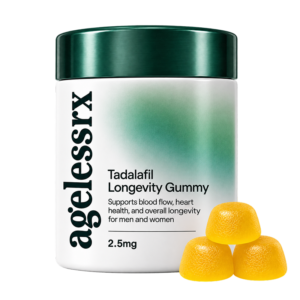
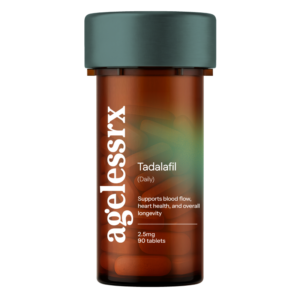
If you’re interested in an evidence-based, clinician-guided strategy for supporting brain health and longevity, see if daily low-dose Tadalafil is right for you, available as a traditional tablet or our new Tadalafil Longevity Gummy.
Note: The above statements have not been evaluated by the Food and Drug Administration. This product is not intended to diagnose, treat, cure, or prevent any disease.